Architectural Ruins: The History and Aesthetics of Decay
Derived from the Latin word ruina, meaning "a collapse," ruins are the remaining architectural fragments of a civilization. These structures, once intact, have fallen into partial or total disrepair. This decay is rarely the result of a single event; rather, it is often a combination of lack of maintenance, deliberate human destruction, and the relentless forces of nature.
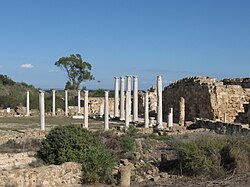
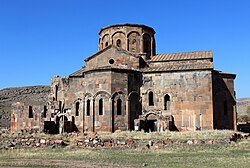
From the sprawling complexes of ancient Egypt and the Indus Valley to the Incan and Mayan sites of the Americas, ruins serve as vital records for historians, archaeologists, and anthropologists. Whether they were once fortifications, universities, or entire cities, these sites offer a window into the past. To protect these areas of outstanding value to humanity, many have been designated as UNESCO World Heritage Sites.
Key Facts
- Primary Causes: Natural disasters, armed conflict, population decline, weathering, and scavenging.
- Global Presence: Notable ruins exist across the Mediterranean Basin, ancient China, Iran, Iraq, India, and the Americas.
- Ruin Value: A design concept where buildings are constructed to leave aesthetically pleasing ruins after collapse.
- Preservation: Many ruins are protected as UNESCO World Heritage Sites to ensure their survival.
The Ruin of Cities
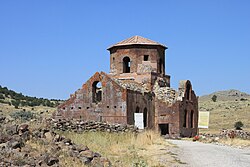
Historically, ancient cities were often highly militarized. Because they were central targets during wartime, they were frequently sacked and ruined. A prime example is Delhi, India, which has been destroyed and rebuilt seven to ten times. Each successive ruler rebuilt the city in their own style, often overlapping or building adjacent to the previous ruins, leaving a layered architectural history in the modern city layout.
In the 20th century, the scale of urban ruin shifted toward total warfare. Cities such as Warsaw, Dresden, Berlin, and Stalingrad were left in ruins following World War II. More recently, localized conflicts have caused significant destruction in cities like Baghdad, Kabul, and Sarajevo.
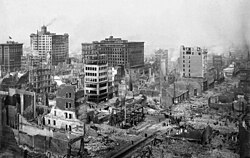
Natural disasters also play a decisive role in creating ruins. The Roman city of Pompeii was frozen in time by a volcanic eruption in the 1st century CE. Similarly, a massive earthquake and tsunami destroyed Lisbon in 1755, and the 1906 San Francisco earthquake left much of the city in ruin.
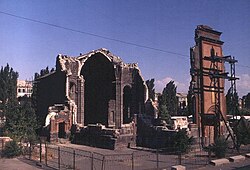
Deliberate Destruction and Social Factors
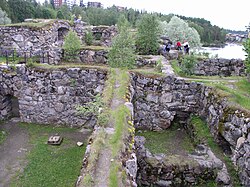
Not all ruins are the result of war or nature; some are created by social, political, or economic mandates. In Rome, the spoliation of public monuments occurred as early as the fourth century, with marble being burned for agricultural lime well into the nineteenth century.
Political shifts in Europe also led to widespread decay. During the 16th century, Henry VIII's Dissolution of the Monasteries saw the confiscation of monastic properties. Many abbeys fell into ruin after their valuable assets, such as lead roofs, were stripped away.

Economic policies have also played a role. In the 20th century, some Scottish landowners deliberately removed the roofs of structures like Slains Castle to avoid property taxes that applied only to roofed buildings. Similarly, the English parliament ordered the destruction of Beverston Castle to prevent its use by Royalist opposition, and in Ireland, grand Georgian houses were sometimes encouraged to fall into ruin as they were viewed as symbols of British rule.
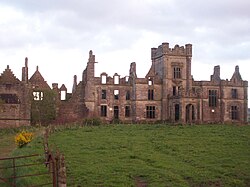
Industrial and Modern Ruins
Modern ruins often differ in material. Steel towers are typically dismantled for recycling or relocation, though their expensive-to-remove basements—such as that of the Deutschlandsender Herzberg/Elster radio mast—often remain. Large wooden tower basements, like those at Transmitter Ismaning, are similarly left behind due to the difficulty of removal.
In recent years, there has been a growing interest in "Rust Belt" ruins—the decaying remains of post-industrial factories and infrastructure, particularly in cities like Detroit, Michigan.
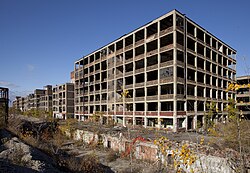
The Aesthetics of Decay
The perception of ruins has evolved significantly over time. In the Middle Ages, Roman ruins were often viewed as mere quarries for building materials or as symbols of the world's decay before the Second Coming. However, the Renaissance brought a shift toward all' antica (in the ancient style), where ruins were appreciated for their innate beauty and used as models for purified architecture.
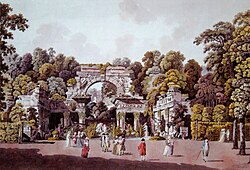
During the Romantic era, ruins—especially castles—became focal points for poets and painters, symbolizing nostalgia and nationalism. This led to the concept of Ruin Value (Ruinenwert), the idea that a building should be designed so that its eventual collapse results in an aesthetically pleasing and durable ruin. This theory was later popularized in the 20th century by Albert Speer.

| Cause of Ruin | Primary Driver | Notable Example |
|---|---|---|
| Natural Disaster | Volcanoes, Earthquakes | Pompeii, Italy |
| Armed Conflict | Warfare, Sacking | Warsaw, Poland |
| Political/Social | Religious Dissolution | Whitby Abbey, England |
| Economic | Tax Avoidance | Slains Castle, Scotland |
| Industrial Decline | Economic Shift | Detroit Factories, USA |
Frequently Asked Questions
What is the difference between a ruin and a derelict building?
While both involve decay, ruins are generally the remains of a civilization's architecture that have fallen into disrepair over a long period, often carrying historical or aesthetic significance, whereas derelict buildings are typically abandoned modern structures.
What is "Ruin Value"?
Ruin Value (Ruinenwert) is the architectural concept of designing a building so that it remains aesthetically pleasing and structurally recognizable even after it has collapsed and been left without maintenance.
Why were some Scottish castles deliberately ruined?
Some owners removed the roofs of their castles in the 20th century to avoid paying substantial property taxes that were only levied on structures with roofs.
How do ruins help historians and archaeologists?
Ruins provide physical evidence of past civilizations, including their military strategies, religious practices, social hierarchies, and urban planning, allowing researchers to reconstruct ancient ways of life.
Which organizations help preserve ruins?
UNESCO is a primary organization that identifies and preserves ruins as World Heritage Sites, recognizing them as areas of outstanding value to humanity.