Roca Cup: The Historic Football Rivalry Between Argentina and Brazil
Long before the modern era of global football tournaments, the Roca Cup (Spanish: Copa Roca) served as a premier stage for the intense rivalry between the national teams of Argentina and Brazil. Established in 1914, this competition was more than just a series of matches; it was a diplomatic effort to foster a healthy sporting rivalry and accelerate the development of football in South America.
The tournament holds a special place in sporting history as the first trophy, whether official or unofficial, ever won by the Brazil national team. Spanning over six decades, the competition was played on an irregular basis, reflecting the evolving nature of international football administration.
Key Facts
- Founded: 1914 by General Julio Argentino Roca.
- Participants: Argentina and Brazil national teams.
- Duration: Active from 1914 until its abolition in 1976.
- Most Successful Team: Brazil, with 8 titles.
- Last Champion: Brazil (1976).
- Historical Significance: Marked the first international trophy win for Brazil.
The Origins and Early Years
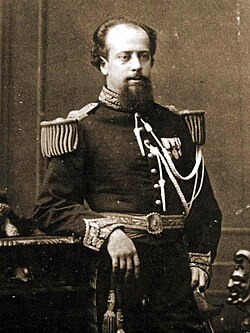
The competition was the brainchild of General Julio Argentino Roca, a football enthusiast and former President of Argentina who was serving as the Argentine ambassador to Brazil in 1913. Roca believed that regular matches between the two nations would create a productive rivalry. He donated a trophy to the Federación Argentina de Football (FAF), a dissident body at the time.
Initially, the format was simple: the competition would be played for three consecutive years in a single-leg format, and the country with two wins would keep the trophy permanently. However, the early years were marked by administrative shifts. In 1915, the FAF merged with the Argentine Football Association (AFA), leading to a hiatus in play.
The competition resumed in 1922 when the Brazilian Football Confederation (CBF) agreed to play. Brazil won this edition, claiming ownership of the cup. However, this specific victory remains a point of contention; the AFA does not consider the 1922 match official because Brazil utilized their "B team," while the primary squad was competing in the 1922 Copa America final against Paraguay.
Evolution of the Format and Mid-Century Drama
By 1938, the AFA and CBF agreed to revive the competition with a new format: the trophy would be held by the most recent winner. If the first two matches ended in draws or were split with one win each, a third tie-breaking leg would be played.
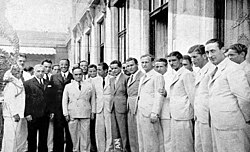
The 1939 edition was particularly volatile. After Argentina secured a 5–1 victory in Rio de Janeiro, the second match descended into chaos. The Argentine team left the pitch in protest after a penalty was awarded to Brazil, during which time Brazil scored a third goal. This led to the scheduling of third and fourth matches in São Paulo to resolve the conflict, ultimately resulting in an Argentine victory.
The Era of Brazilian Dominance
The 1950s and 60s saw a shift toward Brazilian supremacy. A landmark moment occurred during the 1957 match at the Maracanã stadium, where a young Pelé made his debut for the Brazil national team under coach Sylvio Pirillo, scoring his first international goal.
From 1940 onward, Brazil won every edition of the cup, with the sole exception of the 1971 tournament, which ended in a tie after two draws and was declared a shared victory.
Competition Summary
| Category | Details |
|---|---|
| Organizers | AFA (Argentina) and CBF (Brazil) |
| Timeline | 1914 – 1976 |
| Total Titles (Brazil) | 8 |
| Total Titles (Argentina) | 4 (including shared 1971 title) |
| Final Format | Two-legged series decided by goal difference (since 1957) |
Frequently Asked Questions
Who founded the Roca Cup?
The competition was created in 1913 by General Julio Argentino Roca, a former President of Argentina and football enthusiast who was the Argentine ambassador to Brazil at the time.
Why is the 1922 match disputed?
The Argentine Football Association (AFA) does not recognize the 1922 match as official because Brazil played with their B team, as the main squad was playing the Copa America final against Paraguay on the same day.
Which player made a famous debut in the Roca Cup?
Pelé made his debut for the Brazil national team during the 1957 Roca Cup match at the Maracanã, where he scored his first goal for his country.
How was the winner determined in later years?
While early editions used a points or playoff system, from 1957 onwards, the champion was determined by the goal difference between the two matches played in each edition.
When did the Roca Cup end?
The competition was abolished in 1976, with Brazil emerging as the final champions.