Football in Argentina: A Legacy of Passion and Global Dominance
Football is far more than just a sport in Argentina; it is a fundamental pillar of the national culture. From the bustling streets of Buenos Aires to the quietest rural towns, the game is played by people of all ages. With approximately 90% of the population declaring allegiance to a local club, football serves as a unifying force across the country.
The scale of the sport is immense. According to FIFA, Argentina boasts a total of 2,658,811 players, including 331,811 registered athletes, supported by 3,377 clubs and over 37,000 officials. This deep-rooted passion has translated into a storied history of international success and a professional league system that is among the oldest and most competitive in the world.
Key Facts
- World Cup Success: Argentina has won the FIFA World Cup three times (1978, 1986, 2022).
- Continental Dominance: The national team has secured 16 Copa América titles.
- Historical Roots: Football was introduced by British immigrants in the late 19th century.
- League Heritage: The Argentine league, founded in 1891, is the fifth-oldest recognized league of a FIFA member.
- Club Prowess: Argentine clubs hold the record for the most Intercontinental Cups (9) and Copa Libertadores (25) titles.
The Origins and Evolution of the Game
Football arrived in Argentina during the latter half of the 19th century, brought over by British immigrants settling in Buenos Aires. The sport quickly took hold, leading to the first recorded match in June 1867.
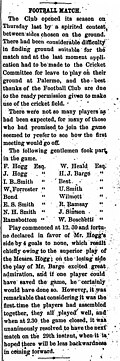
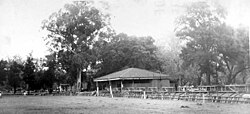
The early development of the sport was centered around the British community, with the Buenos Aires Cricket Club Ground serving as a pivotal venue for the game's introduction.
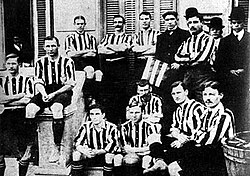
By 1891, the first Argentine league was contested, and the Argentine Football Association (AFA) was established in 1893, making it the eighth-oldest governing body of its kind globally. As the 20th century dawned, Argentina began to assert itself on the international stage, competing in the first Copa América in 1916 and winning its first title in 1921.
National Team Achievements
The Argentina national team is a global powerhouse, holding the record for the most official titles of any nation with 23. Beyond their three FIFA World Cup victories, they have been runners-up in 1930, 1990, 2014, and 2026. Their success extends to other formats, including a 1992 FIFA Confederations Cup win and two Olympic gold medals (2004 and 2008).
The youth system is equally impressive, with the under-20 team holding a record six U-20 World Cup titles. This tradition of excellence was highlighted in 1979 when a young Diego Maradona helped lead the U-20 squad to victory.
Women's and Futsal Football
Women's football has seen steady growth since the establishment of the national league, the Campeonato de Fútbol Femenino, in 1991. The women's national team won the Campeonato Sudamericano Femenino in 2006 and made their first World Cup appearance in 2007.
Argentina also excels in futsal (a variant of association football played on a smaller, hard court). They have won the FIFUSA/AMF Futsal World Cup twice (1994, 2019) and the FIFA Futsal World Cup in 2016. Furthermore, Argentina is a dominant force in visually impaired futsal, winning world championships in 2002, 2006, and 2023.
The Club System and Domestic Rivalries
The Primera División is the pinnacle of Argentine club football. Originally an amateur competition founded in 1891, it turned professional in 1931. For decades, the league was dominated by the "big five": Boca Juniors, Independiente, Racing Club, River Plate, and San Lorenzo de Almagro. This streak was broken in 1967 by Estudiantes de La Plata.
River Plate currently holds the record for the most domestic championships with 38, followed closely by Boca Juniors with 35. While Buenos Aires is the heart of the sport, clubs from other cities like Rosario (Rosario Central and Newell's Old Boys), La Plata, and Córdoba (Belgrano) have also reached the summit.
International Club Success
Argentine clubs are legendary in South American and global competitions. Boca Juniors is the most successful internationally with 22 titles, including three Intercontinental Cups. Other notable achievements include River Plate and Estudiantes de La Plata winning the Copa Libertadores four times each.
| Club | Domestic Titles | Copa Libertadores | Intercontinental Titles |
|---|---|---|---|
| River Plate | 38 | 4 | 1 |
| Boca Juniors | 35 | 4 | 3 |
| Racing Club | 18 | 1 | 1 |
| Independiente | 16 | 7 | 2 |
| San Lorenzo | 15 | 1 | 0 |
Stadiums and Attendance
The scale of Argentine football is reflected in its massive stadiums. The Mâs Monumental, home to River Plate, is the largest with a capacity of 84,567. Other major venues include La Bombonera (Boca Juniors), Estadio Mario Kempes, El Cilindro (Racing), and Estadio Ciudad de La Plata.
Attendance remains high, with River Plate consistently drawing the largest crowds. In the 2025 season, the league average attendance was 32,255, with River Plate averaging 84,782 spectators per match.
Frequently Asked Questions
When was football first played in Argentina?
The first football match in Argentina took place on June 20, 1867, at the Buenos Aires Cricket Club Ground in Palermo.
Which Argentine club has won the most domestic titles?
River Plate has won the most domestic championships, with a total of 38 titles.
How many FIFA World Cups has Argentina won?
Argentina has won the FIFA World Cup three times, in 1978, 1986, and 2022.
What is the significance of the "big five" in Argentine football?
The "big five" refers to Boca Juniors, Independiente, Racing Club, River Plate, and San Lorenzo de Almagro, who dominated the Primera División for many years before other clubs began winning titles in 1967.
How successful is Argentina in youth football?
Argentina is exceptionally successful at the youth level, holding a record six FIFA Under-20 World Cup titles.