Roberto Baggio: The Divine Ponytail of Italian Football
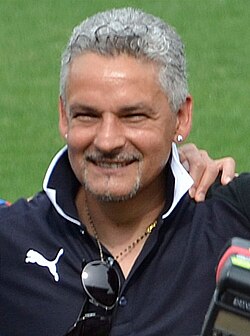
Few players in the history of football have captured the imagination of fans quite like Roberto Baggio. Known for his extraordinary technical skill, vision, and a signature ponytail, Baggio became the face of Italian football during the 1990s. Operating primarily as a second striker or attacking midfielder, he blended the creativity of a playmaker with the clinical finishing of a forward.
Born on February 18, 1967, in Caldogno, Italy, Baggio's journey from a youth player to a global icon is a story of immense talent and enduring resilience. His career spanned over two decades, during which he played for some of the most prestigious clubs in Italy and led the national team to the brink of World Cup glory.

Key Facts
- Full Name: Roberto Baggio
- Positions: Second striker / Attacking midfielder
- Major Individual Honors: Ballon d'Or (1993), FIFA World Player of the Year (1993)
- International Record: 56 caps and 27 goals for Italy
- Club Career Total: 488 league appearances and 218 goals
- World Cup Achievements: Runner-up in 1994, Third Place in 1990
The Rise of a Prodigy: Early Career and Fiorentina
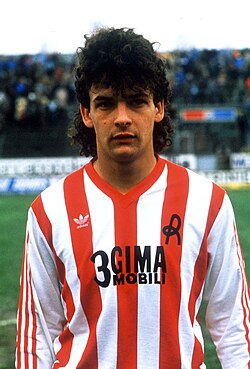
Baggio's professional journey began at Vicenza, where he made his senior debut in 1982. His early years in Serie C1 showcased a level of talent that quickly attracted the attention of top-flight clubs. By the 1984-85 season, he had already scored 14 goals across all competitions for Vicenza.
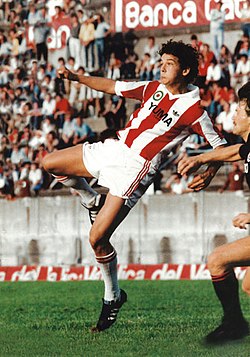
In 1985, Baggio moved to Fiorentina, where he truly began to shine in Serie A. His ability to glide past defenders earned him high praise, with some observers poetically claiming that "the angels sing in his legs." During his five years in Florence, he made 94 league appearances and scored 39 goals, establishing himself as one of the premier talents in Europe.
Dominance at Juventus and AC Milan
Baggio's move to Juventus in 1990 marked the peak of his club career. Over five seasons, he became the heartbeat of the team, scoring 78 league goals in 141 appearances. His tenure in Turin was highlighted by winning the Serie A title and Coppa Italia in 1994-95, as well as the UEFA Cup in 1992-93.
Following his success at Juventus, Baggio joined AC Milan in 1995. While his time there was marked by occasional friction with management—leading to famous comments about the incomprehensibility of him being benched—he still contributed to a Serie A title win in the 1995-96 season.
The Final Chapters: Bologna, Inter, and Brescia
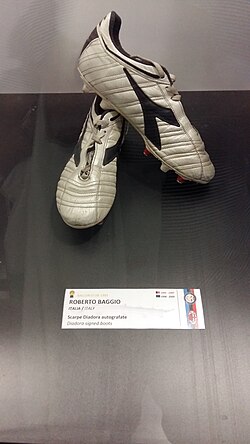
The latter part of Baggio's career saw him move through several other Italian giants. At Bologna (1997-1998), he enjoyed a prolific spell, scoring 22 goals in just 30 league games. He then moved to Inter Milan, where he played 41 league matches and scored 9 goals between 1998 and 2000.
Baggio spent the final act of his playing days at Brescia from 2000 to 2004. Even in the twilight of his career, his class remained evident, as he scored 45 goals in 95 league appearances before retiring from professional football.
International Glory and Heartbreak
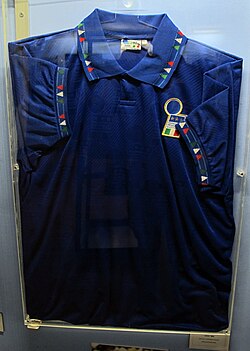
Roberto Baggio's international career is inextricably linked with the FIFA World Cup. In 1990, he helped Italy secure a third-place finish, scoring crucial goals that captivated the home crowd.
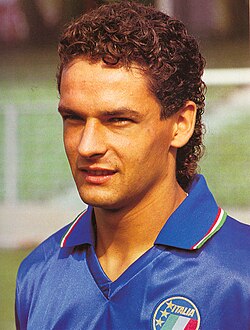
The 1994 World Cup in the United States saw Baggio reach the zenith of his powers. He carried Italy to the final, scoring vital goals against Nigeria, Spain, and Bulgaria. However, the tournament ended in tragedy when Baggio missed the deciding penalty in the final against Brazil. Despite the heartbreak, he was awarded the FIFA World Cup Silver Ball and named to the All-Star Team.
Career Summary and Statistics
Baggio's career is defined by a consistent ability to score and create, regardless of the club he represented. His individual accolades, including the 1993 Ballon d'Or, cement his status as one of the greatest players of the 20th century.
| Club | Years | Apps | Goals |
|---|---|---|---|
| Vicenza | 1982–1985 | 36 | 13 |
| Fiorentina | 1985–1990 | 94 | 39 |
| Juventus | 1990–1995 | 141 | 78 |
| AC Milan | 1995–1997 | 51 | 12 |
| Bologna | 1997–1998 | 30 | 22 |
| Inter Milan | 1998–2000 | 41 | 9 |
| Brescia | 2000–2004 | 95 | 45 |
| Total | 1982–2004 | 488 | 218 |
Frequently Asked Questions
Which individual awards did Roberto Baggio win?
Baggio won the most prestigious individual awards in football, including the Ballon d'Or, the FIFA World Player of the Year, and the World Soccer Player of the Year, all in 1993.
How many goals did Baggio score for the Italian national team?
Roberto Baggio scored 27 goals in 56 appearances for the Italy senior national team between 1988 and 2004.
What happened to Baggio in the 1994 World Cup final?
After leading Italy to the final, Baggio missed the decisive penalty in the shootout against Brazil, resulting in Italy finishing as runners-up.
Which clubs did Roberto Baggio play for during his career?
Baggio played for Vicenza, Fiorentina, Juventus, AC Milan, Bologna, Inter Milan, and Brescia.
What was Baggio's primary playing position?
Baggio primarily played as a second striker or an attacking midfielder, roles that allowed him to utilize his playmaking abilities and scoring instinct.