Robert Caro: The Master of Power and Political Biography
Robert Caro is widely regarded as one of the most meticulous biographers in American history. His work is not merely a chronicle of lives, but a deep dive into the acquisition and use of power. By combining exhaustive research with a narrative style that mirrors the pacing of a novel, Caro transforms historical records into gripping studies of how individuals shape the physical and political landscapes of the United States.
The Power Broker: A Study of Urban Influence
Caro's obsession with power crystallized during his time as a Nieman Fellow at Harvard University (1965–1966). While studying urban planning, he realized that mathematical formulas regarding traffic and population density failed to explain why highways were actually built. He concluded that infrastructure was the result of the will of one man: Robert Moses.
This realization led to The Power Broker: Robert Moses and the Fall of New York. Though Caro initially expected the project to take nine months, the resulting masterpiece took nearly a decade to complete, finally publishing in 1974. The book is celebrated for its narrative flow and academic rigor, particularly in its depiction of the Cross Bronx Expressway construction and its impact on local residents.
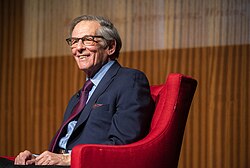
The scale of Caro's research for this volume was unprecedented, involving 522 interviews. These included seven sessions with Robert Moses himself, numerous interviews with general manager Sidney Shapiro, and discussions with Michael Madigan, a 35-year veteran of Moses's staff. Caro's wife, Ina, served as his research assistant, eventually writing her own master's thesis on the Verrazzano–Narrows Bridge as a result of this work.
The Years of Lyndon Johnson
Following the success of The Power Broker, Caro shifted his focus to President Lyndon B. Johnson (LBJ). Encouraged by his editor Robert Gottlieb, Caro sought to explore power on a national scale. To achieve total immersion, Caro temporarily relocated to Washington, D.C., and rural Texas to interview anyone who had known the president.
Originally conceived as a trilogy, The Years of Lyndon Johnson expanded into a projected five-volume series:
- The Path to Power (1982): Covers LBJ's early life and his failed 1941 Senate campaign.
- Means of Ascent (1990): Details his journey from defeat to his 1948 Senate election.
- Master of the Senate (2002): Chronicles his rise to Senate Majority Leader.
- The Passage of Power (2012): Covers the 1960 election, the JFK assassination, and his early presidency.
- The Final Volume (Unpublished): Focused on Vietnam, the Great Society, civil rights, and his retirement.
Caro portrays Johnson as a contradictory figure—both a scheming opportunist and a visionary progressive. He highlights LBJ's skill in passing the Voting Rights Act despite fierce opposition, while also exposing the fraud and ballot-box stuffing used in the 1948 runoff. Caro also investigated the political motivations behind Johnson's World War II Silver Star and his ties to the construction firm Brown and Root (later acquired by Halliburton).
Key Facts
- Research Depth: The Power Broker was based on 522 interviews.
- Project Scope: The LBJ biography expanded from a planned trilogy to five volumes.
- Writing Discipline: Caro maintains a strict daily goal of 1,000 words.
- Tool of Choice: He exclusively uses Smith Corona Electra 210 typewriters.
- Literary Influence: He alternates reading Leo Tolstoy and Edward Gibbon during his writing process.
The Rigorous Writing Process
Caro's methodology is as legendary as his books. To avoid writer's block, he maps out the entire structure of a book on a 22-foot corkboard before writing a single word of the manuscript. He writes multiple drafts in longhand on specific, discontinued white legal pads before typing them.
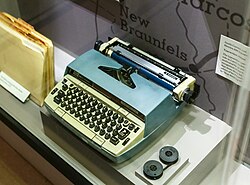
His commitment to traditional tools is absolute. He uses Smith Corona Electra 210 typewriters, maintaining a reserve of machines to provide parts for repairs. Because he retypes manuscripts several times, he uses custom-manufactured cotton ribbons—ordered in quantities of 1,728 units—to ensure a bolder text. He tracks his progress in a ledger and edits using red 314 Berol Draughting pencils.
Summary of Major Works
| Title | Subject | Key Focus | Status |
|---|---|---|---|
| The Power Broker | Robert Moses | Urban planning and power in NY | Published (1974) |
| The Years of Lyndon Johnson | Lyndon B. Johnson | US Presidency and Senate power | 4 of 5 Volumes Published |
| Working | Writing/Research | The art of the biography | Published (2019) |
Frequently Asked Questions
How long did it take Robert Caro to write The Power Broker?
Although he initially expected the book to take nine months, it actually took him from 1965 until 1974 to complete.
What is the status of the final Lyndon Johnson volume?
As of May 2026, Caro had completed 983 pages of the fifth volume, with only 24 pages of notes remaining to finish the book.
Why does Robert Caro use a typewriter instead of a computer?
Caro prefers the tactile process of typing and the specific bold output achieved with cotton ribbons; he has owned as many as 14 Smith Corona typewriters to sustain his workflow.
Did Robert Caro ever write fiction?
Yes, he published several short stories in the 1950s. He also wrote a draft for a novel about an investigative reporter in the 1970s, though his editor, Robert Gottlieb, advised him to abandon it.
What other biographies has Caro considered writing?
Caro has expressed interest in writing a biography of Al Smith, whom he considers one of the most forgotten yet consequential figures in American history.