River Ness: The Historic Waterway of Inverness
The River Ness (Scottish Gaelic: Abhainn Nis) is a short but significant river located within the Great Glen of Scotland. Flowing for approximately 6.2 miles (10 km), it serves as the vital link between the depths of the Highlands and the coast of the Moray Firth. The river begins at Loch Dochfour, situated at the northern end of the famous Loch Ness, and travels northeast through the city of Inverness before reaching its mouth.
For the first half of its journey, the river runs parallel to the Caledonian Canal, a man-made waterway connecting the east and west coasts of Scotland. As it enters Inverness, the river becomes a focal point of the city's geography, featuring the Ness Islands—a collection of wooded islets connected to the mainland by a series of charming footbridges.
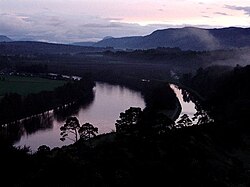
Key Facts
- Source: Loch Dochfour
- Mouth: Moray Firth
- Total Length: 6.2 miles (10.0 km)
- Basin Size: 1,850 km² (710 sq mi)
- Average Discharge: 91 m³/s (3,200 cu ft/s)
- Location: Great Glen, Inverness, Scotland
The Bridges of the River Ness
The River Ness is spanned by numerous bridges, each reflecting a different era of engineering and urban development in Inverness.
Historic and Railway Crossings
The Ness Viaduct is a railway bridge carrying the Far North Line. Originally built in 1862 by Joseph Mitchell, it was largely destroyed by floodwaters in 1989. This disaster was worsened by a low tide in the Beauly Firth, which created a waterfall effect as the river level sat two meters above the harbour waterline. A new bridge was completed in 1990, leaving only four spans of the original structure over a former harbour car park.
Nearby, the Black Bridge (also known as the Waterloo Bridge) was constructed in 1889 for foot and vehicle traffic, replacing a wooden structure from 1808.
Pedestrian and "Bouncy" Bridges
Inverness is home to two unique warren trussed suspension footbridges known locally as the "Bouncy Bridges" because their decks produce a sine wave effect when pedestrians time their steps correctly:
- Greig Street Bridge: Built in 1890, connecting Greig Street and Huntly Street to Bank Street and Church Lane.
- Infirmary Bridge: A sister bridge connecting Ness Walk to the Great Glen Way, though it is more prone to closures for repairs.
Major Road and City Crossings
The Ness Bridge has been the primary crossing since the 15th century. It has undergone several iterations: a timber bridge, a 1685 rebuild featuring a prison cell, an 1850 suspension bridge with a castle-like turret, and finally the modern bridge completed on August 7, 1961.
For modern traffic, the Friars Bridge (opened December 23, 1986) serves as the only dual carriageway crossing, bypassing the city center to connect the A82 to the A9. The newest addition is the Holm Mills Bridge, completed in 2017 to link the A82 at Torvean to the A9 at Drakies via the Southern Distributor Road.
The Ness Islands Bridges
The bridges leading to the Ness Islands have a turbulent history. The original 1828 bridges were washed away in the flood of 1849. They were replaced in 1853 by hybrid suspension-cantilever bridges, which stood until 1988. Unlike the Bouncy Bridges, these did not exhibit the same oscillation effect.
Folklore and Legends
The River Ness is steeped in Scottish mythology. Local folklore suggests the river is inhabited by kelpies—shapeshifting water spirits that take the form of horses or humans to lure unsuspecting travelers into the depths.
The river also holds a place in the history of the Loch Ness Monster. The first claimed sighting occurred here in AD 565, when Saint Columba reportedly banished a "water monster" back into the river after it attempted to attack a disciple swimming across the water.
Another legend recorded by Adomnán describes Saint Columba's visit to King Bridei I of Pictland. During this visit, Columba used a white pebble from the River Ness to heal a wizard named Broichan, who had been suffering from seizures, on the condition that the wizard release an Irish slave-girl. The stone, which miraculously floated on water, was later kept in the royal treasury for healing purposes.
River Ness Summary Table
| Feature | Detail |
|---|---|
| Source | Loch Dochfour |
| Mouth | Moray Firth |
| Length | 6.2 miles (10 km) |
| Basin Area | 1,850 km² (710 sq mi) |
| Average Discharge | 91 m³/s |
| Key Landmarks | Ness Islands, Caledonian Canal |
Frequently Asked Questions
Where does the River Ness begin and end?
The river begins at Loch Dochfour at the northern end of Loch Ness and flows northeast to empty into the Moray Firth at Inverness.
What are the "Bouncy Bridges"?
The Greig Street Bridge and the Infirmary Bridge are known as the "Bouncy Bridges" because their warren trussed suspension design creates a sine wave effect when pedestrians walk in sync.
What happened to the original Ness Viaduct?
The original 1862 railway bridge was nearly entirely washed away by floodwaters in 1989, partly due to a waterfall effect caused by the low tide of the Beauly Firth.
Is there a connection between the River Ness and the Loch Ness Monster?
Yes, the first recorded sighting of the monster is attributed to Saint Columba in AD 565, who is said to have banished the creature in the River Ness.
What are kelpies in the context of the River Ness?
Kelpies are shapeshifting water spirits from Scottish folklore, often appearing as horses or people, who are said to inhabit the river and lure travelers into the water.