Rio de Janeiro: A Comprehensive Overview of Brazil's Vibrant Southeast State
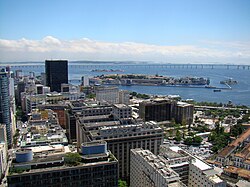
Located in the Southeast region of Brazil, the state of Rio de Janeiro is a powerhouse of culture, economy, and natural beauty. Bordering Minas Gerais, Espírito Santo, and São Paulo, and facing the South Atlantic Ocean, the state is defined by its diverse landscapes—from bustling metropolitan hubs to serene mountainous retreats. Its capital, the city of Rio de Janeiro, holds a prestigious place in history, having served as the capital of the Portuguese Colony, the United Kingdom of Portugal, Brazil and the Algarves, and the independent Brazilian republic until 1960.
Key Facts
- Demonym: Residents of the state are known as fluminenses, while residents of the capital city are cariocas.
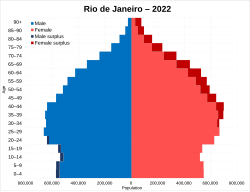
- Population: Approximately 16,055,174 (2022 Census), ranking 3rd in Brazil.
- Economy: A leading industrial hub with a nominal GDP of R$ 949.301 billion (2021).
- HDI: 0.819 (2024), classified as very high.
- Geography: Total area of 43,696.1 km², featuring a mix of coastal plains and highlands.
History and Evolution
European presence in the region began in 1502. The territory was initially part of the captainships of de Tomé and São Vicente. Between 1555 and 1567, the French attempted to establish a colony known as France Antarctique. To counter this, Estácio de Sá founded the city of Rio de Janeiro in March 1565.
The 17th and 18th centuries saw rapid growth driven by cattle raising, sugar cane, and the export of gold from Minas Gerais. In 1763, Rio de Janeiro became the capital of Colonial Brazil. The arrival of the Portuguese royal family in 1808 sparked significant urban reforms, leading to the creation of the Bank of Brazil, the Royal Press, and the Botanical Garden.
The administrative status of the region shifted several times. In 1834, the city became a "neutral city," and later, in 1960, it became the State of Guanabara after the federal capital moved to Brasília. In 1975, Guanabara was incorporated back into the State of Rio de Janeiro.
Geography and Climate
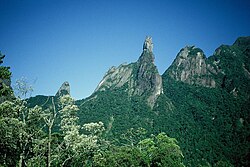
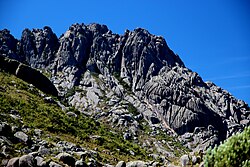
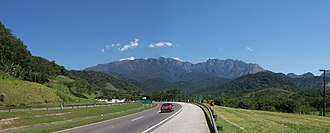
The state's geography is characterized by its dramatic contrast between the coast and the interior mountains. The highest point in the state is Pico das Agulhas Negras.
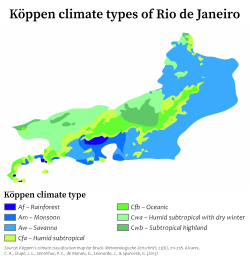
The climate is generally tropical, with rainfall concentrated in the summer months (December to March) and a drier season during the winter (June to September). Most regions receive between 1,000 and 1,500 millimeters of annual rainfall.
Demographics and Society
As of the 2022 Census, the state is home to over 16 million people. Historically, there has been a strong Portuguese influence; in 1890, native-born Portuguese and their children accounted for over 51% of the capital's population.
Religion and Education
Religious diversity is prominent, with Roman Catholicism being the largest group (45.8% in 2010), followed by Protestants (29.4%) and a significant number of people identifying as non-religious (14.6%).
The state is a major educational hub, hosting prestigious public institutions like the Federal University of Rio de Janeiro (UFRJ) and private institutions such as the Pontifical Catholic University of Rio de Janeiro (PUC-RIO) and the Catholic University of Petrópolis.
Economy and Infrastructure
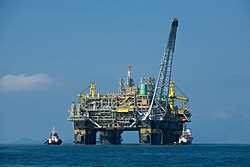
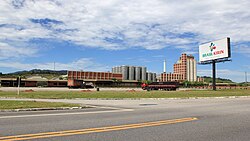
While sugar cane and coffee once dominated the economy, the modern state is driven by industry and services. The industrial sector contributes 51.6% of the GDP, with petroleum being the primary export (44.8%), followed by fuel and siderurgy (steel production).
Agriculture remains relevant in specific niches. Rio de Janeiro is the 4th largest producer of pineapples in Brazil and holds significant positions in the production of tangerines, lemons, and persimmons.
Transport and Logistics
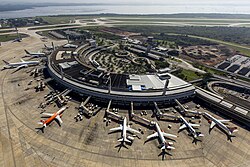
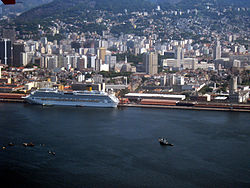
The state is connected by a network of federal highways, including the BR-101 and BR-116. Logistics are anchored by three major ports:
- Port of Rio de Janeiro: A key exporter of iron and steel.
- Port of Itaguaí: Specializes in iron ore and containerized cargo.
- Port of Açu: A private terminal responsible for 30% of Brazil's oil exports and home to the world's largest offshore support base.
Tourism and Landmarks
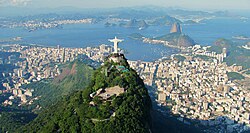
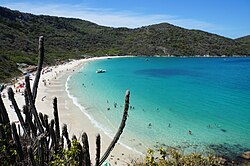
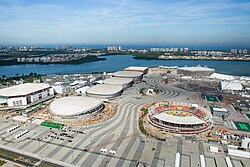
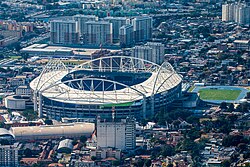
Rio de Janeiro is world-renowned for its tourism, blending urban landmarks with natural wonders. From the Barra Olympic Park and Nilton Santos Olympic Stadium (built for the 2016 Summer Olympics) to the pristine beaches of Arraial do Cabo, the state offers diverse attractions.
| Category | Detail |
|---|---|
| Total Area | 43,696.1 km² |
| Population (2022) | 16,055,174 |
| Nominal GDP (2021) | R$ 949.301 billion |
| HDI (2024) | 0.819 (Very High) |
| Primary Exports | Petroleum, Fuel, Siderurgy |
Frequently Asked Questions
What is the difference between a Carioca and a Fluminense?
A Carioca is a person born in the city of Rio de Janeiro, whereas a Fluminense is anyone born in the state of Rio de Janeiro.
Which is the highest point in the state of Rio de Janeiro?
The highest point in the state is Pico das Agulhas Negras.
What are the main economic drivers of the state?
The economy is primarily driven by the industrial sector (51.6% of GDP), specifically petroleum and fuel exports, and the service sector (47.8% of GDP).
Which ports are most important to the state's logistics?
The most important ports are the Port of Rio de Janeiro, the Port of Itaguaí, and the Port of Açu, the latter being a critical hub for oil exports.
What is the climate like in Rio de Janeiro?
The state has a tropical climate with rains concentrated in the summer (December to March) and a dry season in the winter (June to September).