Richmond Tunnel: The Engineering History of Staten Island's Water Supply
For decades, Staten Island faced a unique challenge among New York City's boroughs: it lacked a direct tunnel connection to the city's massive upstate water supply system. While other boroughs enjoyed stable access via deep-rock tunnels, Staten Island relied on a precarious system of siphons—pipes laid across the harbor floor—that left its water security vulnerable to peak demand in Brooklyn and accidental damage.
The solution arrived in the form of the Richmond Tunnel, a massive engineering undertaking designed to provide a reliable, high-capacity water link. This project not only modernized the island's infrastructure but also transformed its landscape, replacing open-air reservoirs with state-of-the-art underground storage.
The Need for a Direct Connection
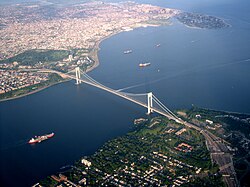
In the 1950s, the Board of Water Supply recognized that the existing infrastructure was insufficient. Staten Island depended on two siphons under the Narrows, completed in 1915 and 1925, with diameters of 36 and 42 inches. These pipes could only supply up to 30 million US gallons per day. During periods of high water usage in Brooklyn, these siphons were often reduced or shut down entirely, forcing the island to rely on artesian wells or the Silver Lake Reservoir.
Beyond capacity, the siphons were fragile. A ship's anchor caused a month-long shutdown in 1922, and corrosion led to further outages. With the proposed construction of the Narrows Bridge expected to spur population growth, the city determined that a deep-rock tunnel was the only viable long-term solution, as it would be protected from surface disturbances.
Planning and the "Richmond Project"
By 1959, the city approved $25 million for a tunnel capable of delivering 300 million US gallons of water daily, connecting Staten Island directly to City Water Tunnel No. 2 in Brooklyn. This broader initiative became known as the "Richmond Project."
The project was divided into phases. The first phase focused on sinking deep shafts in Red Hook, Brooklyn, and Tompkinsville, Staten Island, to facilitate the tunnel's excavation. Subsequent phases included the construction of a pipeline to Silver Lake Park and the installation of massive covered storage tanks to replace the existing open reservoir.
Construction Challenges and the TBM Experiment
Construction began in January 1962 with the excavation of a 950-foot-deep shaft in Tompkinsville. The project faced immediate geological hurdles; in February 1963, sandhogs (specialized tunnel laborers) encountered a massive rock crack 488 feet down, requiring over one million pounds of cement to seal the leak.
One of the most ambitious aspects of the project was the attempt to use a Tunnel Boring Machine (TBM). The contractors leased the Alkirk Hardrock Tunneler, a machine that had never been used on a project before. While intended to halve the excavation time, the TBM was plagued by mechanical failures. Between March and August of one year, no progress was made, and over two years, it only excavated 600 feet. Following pressure from the Laborers Local Union No. 147, the TBM was removed in March 1965 in favor of conventional drilling and blasting.
The Fate of the Excavated Rock
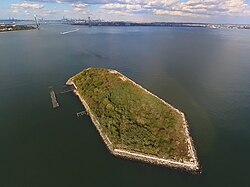
The massive amount of rock removed from the tunnel sparked political debate. While some officials suggested using it for road repair or sea wall fortification in Brooklyn, the city initially planned to use it as fill to join Hoffman and Swinburne islands for recreational use. However, the rock was eventually deemed "poor" quality and was dumped on Staten Island's North Shore instead.
Operation and Modernization
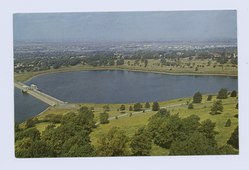
The Richmond Tunnel officially began flowing water in September 1970. Full operational capacity was reached in July 1971 with the completion of the Silver Lake Park underground storage tanks. These tanks, the largest of their kind in the world at the time, could hold 100 million US gallons.
The transition to underground storage offered two major advantages: it eliminated pollution from air and sea gulls and increased water pressure by placing the storage 50 feet higher in elevation than the original reservoir.
| Feature | Original Siphons | Richmond Tunnel System |
|---|---|---|
| Daily Capacity | 30 Million Gallons | 300 Million Gallons |
| Protection | Exposed on harbor floor | Deep within bedrock (~900 ft) |
| Storage Type | Open-air (Silver Lake Reservoir) | Underground covered tanks |
| Reliability | Vulnerable to anchors/corrosion | High stability and pressure |
Key Facts
- Depth: The tunnel runs approximately 900 feet below the harbor.
- Capacity: Designed to supply up to 300 million US gallons of water per day.
- Innovation: Featured the first attempt to use an Alkirk Hardrock Tunneler, though it was eventually replaced by conventional methods.
- Storage: Replaced the Silver Lake Reservoir with the world's largest underground storage tanks at the time.
- Future Integration: The tunnel is slated for connection to City Water Tunnel No. 3, with related shaft work expected to conclude by 2032.
Frequently Asked Questions
Why was the Richmond Tunnel necessary?
Staten Island previously relied on siphons that were prone to damage and had limited capacity. The tunnel provided a direct, high-volume connection to the city's main water supply, ensuring stability during peak demand.
What happened to the Silver Lake Reservoir?
The reservoir was decommissioned and turned into a recreational facility managed by the Parks Department after its water storage functions were moved to massive underground tanks.
Why did the Tunnel Boring Machine (TBM) fail?
The Alkirk Hardrock Tunneler was an experimental piece of equipment that suffered from frequent breakdowns, resulting in minimal progress over two years and leading the contractors to return to traditional drilling and blasting.
Is the Richmond Tunnel still the only water source?
While the Richmond Tunnel is the primary artery, a newer siphon was activated in 2016 to replace the original backup siphons, following a harbor deepening project and delays caused by Hurricane Sandy.