Richard WagnerBayreuth Festspielhausmusic dramaleitmotifThe Ring Cycle

Richard Wagner: The Life and Legacy of a Musical Revolutionary

Richard Wagner: The Life and Legacy of a Musical Revolutionary

Richard Wagner stands as one of the most influential and controversial figures in the history of Western classical music. A composer, conductor, and theorist, Wagner did not merely write operas; he sought to redefine the very nature of theater through his concept of the Gesamtkunstwerk, or "total work of art," which integrated music, drama, poetry, and visual arts into a single, cohesive experience.

Born on May 22, 1813, in Leipzig, Wagner's journey from a young choirmaster to a global icon was marked by artistic obsession, political exile, and a relentless drive to innovate. His works pushed the boundaries of harmony and structure, forever altering the trajectory of music and cinema.
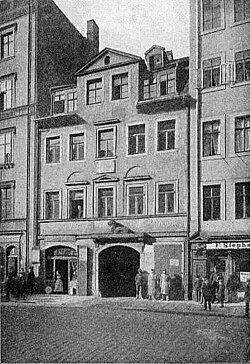
A building with four main storeys with an open shop to one side of an arched entrance and garret windows in the roof. A sculpted figure of an animal is above the arch.
Wagner's birthplace, at 3, the Brühl, Leipzig
: Wagner's birthplace, at 3, the Brühl, Leipzig

Key Facts

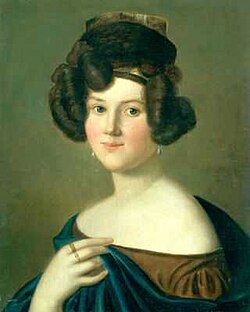
The head and upper torso of a young white woman with dark hair done in an elaborate style. She wears a small hat, a cloak and dress that expose her shoulders and pearl earrings. On her left hand that holds the edge of the cloak, two rings are visible.
Wilhelmine "Minna" Planer (1835), by Alexander von Otterstedt
  • Born: May 22, 1813, in Leipzig, Germany.
  • Died: February 13, 1883, in Venice, Italy.
  • Major Innovation: Developed the leitmotif, a recurring musical theme associated with a particular person, place, or idea.
  • Defining Achievement: Founded the Bayreuth Festspielhaus, a theater specifically designed for his music dramas.
  • Key Patron: King Ludwig II of Bavaria, who provided essential financial and political support.

Early Life and Artistic Foundations
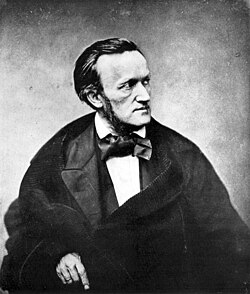
A photograph of the upper half of a man of about fifty viewed from his front right. He wears a cravat and frock coat. He has long sideburns and his dark hair is receding at the temples.
Wagner in Paris, 1861

Wagner's professional career began in 1833 when his brother, Albert, helped him secure a position as a choirmaster at the Theatre Würzburg. It was during this formative period, at the age of 20, that he composed his first complete opera, Die Feen (The Fairies). While the work imitated the style of Carl Maria von Weber, it remained unproduced for fifty years, finally premiering in Munich shortly after Wagner's death in 1883.
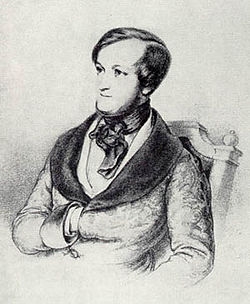
The head and upper body of a young white man with dark hair receding where it is parted on the left. Sideburns run the full length of his face. He wears a cravat and his right hand is tucked between the buttons of his coat.
Wagner c. 1840, by Ernest Benedikt Kietz
: Wagner c. 1840, by Ernest Benedikt Kietz

The Path to Innovation: From Dresden to Exile
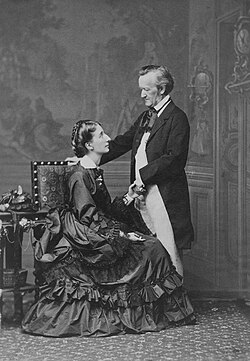
A couple is shown: On the left is a tall woman of about 30. She wears a voluminous dress and is sitting sideways in an upright chair, facing and looking up into the eyes of the man who is on the right. He is about 60, quite short, and balding at the temples. He is dressed in a suit with a tailcoat and wears a cravat. He faces and looks down at the woman. His hand rests on the back of the chair.
Richard and Cosima Wagner, photographed in 1872

Wagner's middle years were characterized by a volatile mix of artistic growth and political turmoil. During his time in Dresden (1842–1849), he continued to refine his craft, but his involvement in political unrest led to a warrant for his arrest on May 16, 1849. This forced him into a long period of exile, first in Switzerland and later in Venice and Paris.
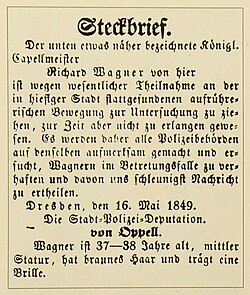
A printed notice in German with elaborate Gothic capitals. Wagner is described as 37 to 38 of middle height with brown hair and glasses.
Warrant for the arrest of Richard Wagner, issued on 16 May 1849
: Warrant for the arrest of Richard Wagner, issued on 16 May 1849

During these years of displacement, Wagner transitioned from writing "Romantic operas" to creating "music dramas." He began the monumental task of composing The Ring of the Nibelung, a cycle of four epic operas. His time in exile was also marked by complex personal relationships, including his connection to Mathilde Wesendonck and his eventual marriage to Cosima Wagner.
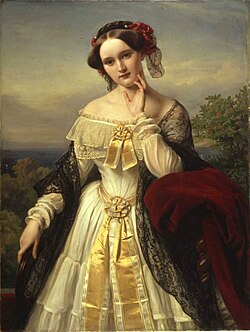
A three-quarter length portrait of a young white woman in the open air. She wears a shawl over an elaborate long-sleeved dress that exposes her shoulders and has a hat on over her centrally parted dark hair.
Portrait of Mathilde Wesendonck (1850) by Karl Ferdinand Sohn
: Portrait of Mathilde Wesendonck (1850) by Karl Ferdinand Sohn

Return, Resurgence, and the Bayreuth Vision
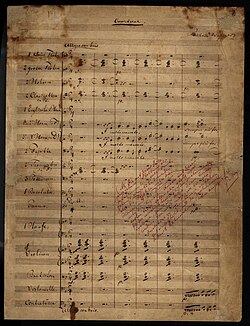
Six bars of music are written across 19 pre-printed staves. The page is headed "Overture". Below the heading to the right is Wagner's name. The tempo indication is allegro con brio. Several lines are written diagonally in lighter handwriting.
Opening of overture to Der fliegende Holländer in Wagner's hand and with his notes to the publisher

Wagner's return to prominence was fueled by the patronage of King Ludwig II of Bavaria. The King's support allowed Wagner to realize his most ambitious dream: the construction of the Bayreuth Festspielhaus. This specialized venue was designed to optimize acoustics and focus the audience's attention entirely on the stage, removing the distractions of traditional opera houses.
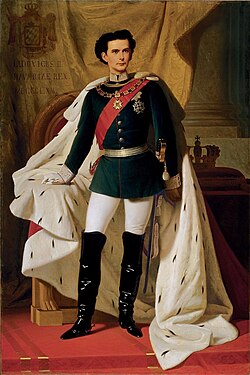
A young man in a dark military jacket, jodhpurs, long boots, and a voluminous ermine robe. He wears a sword at his side, a sash, a chain and a large star. Mainly hidden by his robe is a throne and behind that is a curtain with a crest with Ludwig's name and title in Latin. To one side a cushion holding a crown sits on a table.
Portrait of Ludwig II of Bavaria about the time when he first met Wagner, by Ferdinand von Piloty [de], 1865
: Portrait of Ludwig II of Bavaria about the time when he first met Wagner, by Ferdinand von Piloty [de], 1865

The festival at Bayreuth became the epicenter for the performance of his late masterpieces, including Parsifal, his final work. Wagner spent his last years overseeing the legacy of his music and the management of the festival until his death in Venice in 1883.
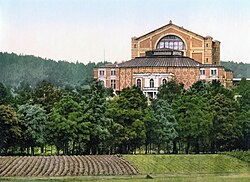
A building stands beyond a part-ploughed field and a row of trees. It has five sections. Farthest away, the tallest part with a v-shaped roof contains the stage. Adjoining it is the auditorium section built of patterned brick. Nearest is the royal entrance, made of stone and brick with arched windows and a portico. Two wings adjoin the auditorium.
The Bayreuth Festspielhaus: photochrom print of c. 1895
: The Bayreuth Festspielhaus: photochrom print of c. 1895

Musical and Theoretical Contributions
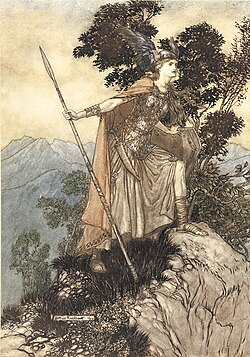
A youthful valkyrie, wearing armour, cloak and winged helmet and holding a spear, stands with one foot on a rock and looks intently towards the right foreground. In the background are trees and mountains.
Brünnhilde the Valkyrie, as illustrated by Arthur Rackham (1910)

Wagner's influence extends far beyond the opera house. He revolutionized musical storytelling through the use of the leitmotif—short, recurring musical phrases that represent specific characters or concepts, allowing the music to provide psychological depth and narrative continuity.

Musical notation showing a theme in F and in 6/8 time on a treble clef.
Leitmotif associated with the horn-call of the hero of Wagner's opera Siegfried
: Leitmotif associated with the horn-call of the hero of Wagner's opera Siegfried

His prose works, spanning eight volumes of translations, further detailed his theories on art, politics, and religion, arguing that music should serve the drama rather than the other way around.
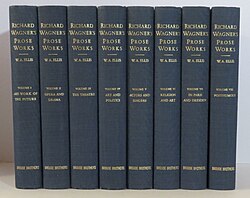
Wagner's prose works, the complete William Ashton Ellis English translations volumes I through VIII
: Wagner's prose works, the complete William Ashton Ellis English translations volumes I through VIII

Summary of Wagner's Operatic Evolution
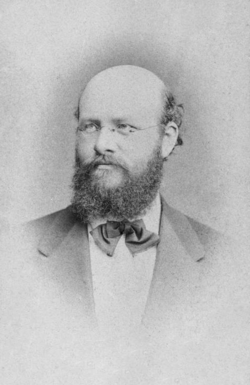
 A photograph of a bearded white man with male-pattern baldness wearing glasses
Franz Betz (by Fritz Luckhardt [de]), who created the role of Hans Sachs in Die Meistersinger, and sang Wotan in the first complete Ring cycle
Evolution of Richard Wagner's Stage Works
Period Category Characteristics Key Examples
Up to 1842 Early Works Imitative of Weber; traditional structures Die Feen
1843–1851 Romantic Operas Transition toward larger scale and deeper drama Der fliegende Holländer, Tannhäuser
1851–1882 Music Dramas Use of leitmotifs; Gesamtkunstwerk concept The Ring Cycle, Tristan und Isolde, Parsifal

Influence and Controversy

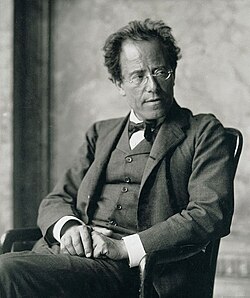
Middle-aged man, seated, facing towards the left but head turned towards the right. He has a high forehead, rimless glasses, and is wearing a dark, crumpled suit
Gustav Mahler in 1907

Wagner's legacy is a duality of artistic genius and personal controversy. While his harmonic innovations paved the way for modern music and heavily influenced the scoring of early cinema, his writings contain documented racism and antisemitism. These views led to his appropriation by the Nazi regime in the 20th century, creating a lasting tension between the appreciation of his art and the condemnation of his beliefs.
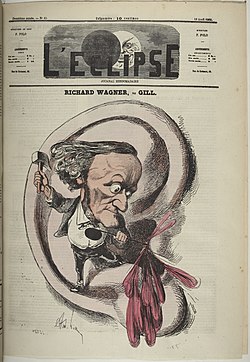
A cartoon showing a misshapen figure of a man with a tiny body below a head with a prominent nose and chin standing on the lobe of a human ear. The figure is hammering the sharp end of a crochet symbol into the inner part of the ear and blood pours out.
André Gill suggesting that Wagner's music was ear-splitting. Cover of L'Éclipse 18 April 1869.
: André Gill suggesting that Wagner's music was ear-splitting. Cover of L'Éclipse 18 April 1869.

Frequently Asked Questions

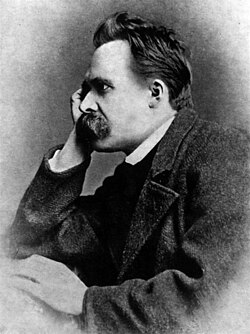
A moustachioed man in his late thirties looks to the left of the photo. His head rests on his far hand.
Friedrich Nietzsche in 1882
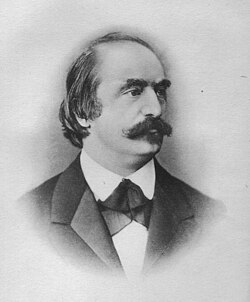
A balding white man aged about 40 with a moustache
Eduard Hanslick

What is a leitmotif?

A leitmotif is a recurring musical theme associated with a specific person, object, or idea. Wagner used these to weave a complex narrative web, allowing the orchestra to signal a character's presence or a hidden emotion even when not explicitly stated in the lyrics.

What was the purpose of the Bayreuth Festspielhaus?

The Festspielhaus was a theater built specifically to stage Wagner's works. It featured a hidden orchestra pit to prevent the musicians from distracting the audience and was designed to create an immersive experience where the drama took center stage.

Who was King Ludwig II of Bavaria?

King Ludwig II was Wagner's most significant patron. He provided the financial means and political protection necessary for Wagner to complete his massive compositions and build the festival house at Bayreuth.

How did Wagner influence modern cinema?

Wagner's use of the leitmotif is the direct ancestor of the modern film score. Composers for major movie franchises use similar techniques to associate specific melodies with characters or themes, a practice rooted in Wagner's music dramas.

Why is Richard Wagner considered controversial?

Beyond his challenging musical style, Wagner is controversial due to his documented antisemitic views and the subsequent appropriation of his music by the Nazi party, which complicates his legacy in the modern era.
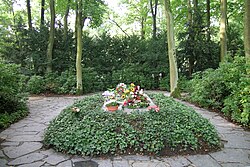
Several floral tributes are laid on a flat gravestone that is in the middle of a large bed full of low leafy plants. A crazy-paved path passes either side of the bed.
The Wagner grave in the Wahnfried garden; in 1977 Cosima's ashes were placed alongside Wagner's body.
: The Wagner grave in the Wahnfried garden; in 1977 Cosima's ashes were placed alongside Wagner's body.

References

  1. On the Brühl as a centre of the Jewish quarter, see e.g. the Leipzig page of the Museum of the Jewish People website, and the Leo Baeck Institute page on the Jewish history of Leipzig, also the "Destroyed German Synagogues" site page on Leipzig, (all accessed 19 April 2020.)
  2. Of their children, two (Carl Gustave and Maria Theresia) died as infants. The others were Wagner's brothers Albert and Carl Julius, and his sisters Rosalie Wagner [de], Luise Brockhaus [de], Clara and Ottilie. Except for Carl Julius becoming a goldsmith, all his siblings developed careers connected with the stage. Wagner also had a younger half-sister, Caecilie, born in 1815 to his mother and her second husband Geyer.[5] See also Wagner family.
  3. This sketch is referred to alternatively as Leubald und Adelaide.
  4. Wagner claimed to have seen Schröder-Devrient in the title role of Fidelio, but it seems more likely that he saw her performance as Romeo in Bellini's I Capuleti e i Montecchi.[19]
  5. Röckel and Bakunin failed to escape and endured long terms of imprisonment.