Richard Stockton: The New Jersey Signer of the Declaration of Independence
Richard Stockton was a pivotal figure in the birth of the United States, serving as a lawyer, jurist, and legislator. Most notably, he holds the distinction of being the first person from New Jersey to sign the Declaration of Independence. Despite an initial reluctance to enter the public sphere, Stockton's intellectual rigor and commitment to his colony led him to the center of the American Revolution.
Key Facts
- Role: Signer of the United States Declaration of Independence.
- Education: Graduated from the College of New Jersey (now Princeton University) in 1748.
- Legal Status: Achieved the rank of serjeant-at-law, the highest legal degree of his time.
- Hardship: Captured by Loyalists in 1776 and imprisoned by the British in New York.
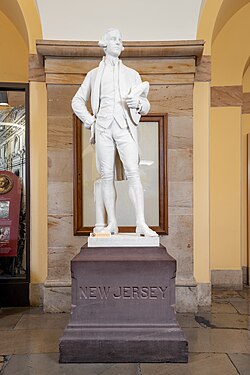
- Legacy: Honored with a statue in the National Statuary Hall Collection and the naming of Stockton University.
Early Life and Legal Career
Born on October 1, 1730, near Princeton, New Jersey, Richard Stockton was the son of John Stockton, a wealthy landowner who played a critical role in bringing the College of New Jersey to Princeton. Richard grew up at the family estate, Morven, and was raised in a slaveholding family, later owning enslaved people himself.
Stockton's academic journey took him through Samuel Finley's academy at Nottingham and the College of New Jersey, where he graduated in 1748. He pursued legal studies under David Ogden, the leading legal professional in the province, and was admitted to the bar in 1754. By 1763, he had earned the degree of serjeant-at-law, marking him as one of the most qualified legal minds in the colonies.
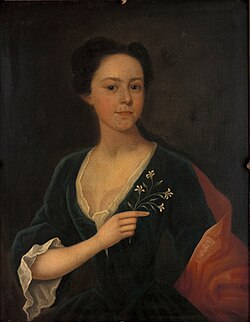
Outside of his professional life, Stockton was married to the poet Annis Boudinot Stockton. Together they had six children, including a son, Richard, who would also become a prominent lawyer and Federalist leader.
Diplomacy and the Path to Revolution
Though he initially expressed a preference for private life over public service, Stockton became a dedicated trustee of the College of New Jersey for 26 years. In the mid-1760s, he traveled to England, Scotland, and Ireland, where his reputation earned him audiences with the most influential figures of the British Empire.
During these travels, Stockton personally presented an address to King George III acknowledging the repeal of the Stamp Act. He also consulted with prominent Parliament members, including Edmund Burke and the Marquess of Rockingham, regarding American affairs. One of his most lasting contributions during this period was recruiting the Reverend John Witherspoon to serve as the president of the College of New Jersey, a move that significantly impacted American higher education.
Upon returning to America, Stockton entered government service, joining the New Jersey Provincial Council in 1768 and the provincial New Jersey Supreme Court in 1774. While he initially sought a moderate path—proposing a plan for American self-government that remained loyal to the Crown—the British government's refusal to compromise pushed him toward the cause of independence.
The Revolutionary War and Imprisonment
In 1776, Stockton was elected to the Second Continental Congress. His influence was such that he nearly became the governor of New Jersey, losing by a single vote to William Livingston. He also declined an appointment as chief justice of the New Jersey Supreme Court to continue his work in Congress.
The war brought severe personal hardship. After a mission to Fort Ticonderoga, Stockton was captured by Loyalists on November 30, 1776, while attempting to move his family to safety. He was marched to British headquarters in Perth Amboy and later moved to Provost Prison in New York. During his captivity, he was placed in irons and treated as a criminal.
Stockton was eventually released on parole on January 13, 1777, after General George Washington intervened. However, the terms of his parole required him to pledge not to interfere in American affairs, which forced his resignation from Congress. His home, Morven, was occupied by General Charles Cornwallis and stripped of its furniture and library.
Final Years and Lasting Legacy
Following his release, Stockton spent nearly two years recovering his health. Despite rumors spread by a Tory rival regarding his loyalty—often confused with his cousin, Major Richard Witham Stockton, who was a British officer—Stockton's commitment to the new nation remained unquestioned by his peers in Congress.
In his final years, he returned to law and teaching. However, he suffered from cancer of the lip and throat, which eventually led to his death on February 28, 1781. He was buried at the Stony Brook Quaker Meeting House Burial Ground in accordance with his family's Quaker traditions.
Today, Richard Stockton is remembered through several honors. He is one of only six signers of the Declaration of Independence represented in the National Statuary Hall Collection. Furthermore, Stockton University in New Jersey stands as a testament to his contributions to the founding of the United States.
| Category | Details |
|---|---|
| Lifespan | October 1, 1730 – February 28, 1781 |
| Primary Achievement | First New Jersey signer of the Declaration of Independence |
| Education | College of New Jersey (AB), 1748 |
| Legal Rank | Serjeant-at-law (1763) |
| Key Political Roles | Continental Congress, NJ Provincial Council, NJ Supreme Court |
| Family Estate | Morven, Princeton, NJ |
Frequently Asked Questions
Why did Richard Stockton resign from the Continental Congress?
Stockton resigned because he was forced to sign a parole agreement with the British to secure his release from prison. This document required him to give his word of honor not to meddle in American affairs during the war.
Was Richard Stockton ever considered a traitor?
While a Tory rival started rumors that he had accepted British protection, and he was often confused with his cousin Major Richard Witham Stockton (who was a British officer), there is no evidence in official records or newspapers of the time that members of Congress doubted his loyalty.
What is the significance of the degree 'serjeant-at-law'?
At the time Stockton received it in 1763, serjeant-at-law was the highest degree of law available, signifying a superior level of legal expertise and status.
How is Richard Stockton honored in New Jersey today?
He is honored through the naming of Stockton University (formerly Stockton State College), a rest area on the New Jersey Turnpike, and Stockton Street in Trenton.
Who was Annis Boudinot Stockton?
Annis Boudinot Stockton was Richard's wife and one of America's first published female poets. She remained a close correspondent and friend of George Washington after her husband's death.