Rhodesian Paralympic Success: A History of Medalists
Between 1960 and 1972, athletes representing Rhodesia achieved remarkable success on the global stage of the Paralympic Games. Over the course of four appearances, the nation established itself as a competitive force, particularly in swimming, athletics, and archery.
The Rhodesian delegation demonstrated consistent excellence, securing a total of 54 medals. This impressive haul included 21 gold, 18 silver, and 15 bronze medals, showcasing the versatility and determination of their athletes across various classifications.
Key Facts
- Total Medal Count: 54 medals (21 Gold, 18 Silver, 15 Bronze).
- Primary Sports: Swimming, Athletics, and Archery.
- Most Successful Games: The 1964 Tokyo Games saw a significant surge in gold medal wins.
- Multi-Sport Athletes: Several athletes, such as Lynette Gilchrist and Leslie Manson-Bishop, won medals in both swimming and athletics.
The Early Years: Rome 1960
Rhodesia's Paralympic journey began in Rome in 1960, where the focus was on precision and skill. Margaret Harriman emerged as a dominant force in archery, a sport requiring immense focus and stability. She secured two gold medals in the FITA round open and the Windsor round open.
The Golden Era: Tokyo 1964
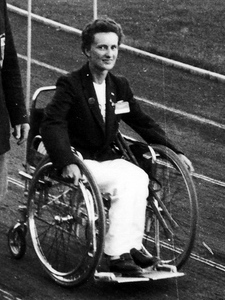
The 1964 Tokyo Games marked a peak in performance for Rhodesian athletes. Margaret Harriman continued her archery dominance, winning gold in the Albion and FITA rounds, and adding a gold in the mixed pairs open dartchery (a hybrid sport combining darts and archery) alongside George Mann.
Lynette Gilchrist and Leslie Manson-Bishop became standout stars in Tokyo. Gilchrist achieved a rare feat by winning gold in both athletics (club throw and javelin throw) and swimming (50m freestyle prone, 50m freestyle supine, and 50m breaststroke). Manson-Bishop also excelled in the pool, taking gold in the 50m freestyle supine and 50m breaststroke.
Continued Excellence: Tel Aviv 1968 and Heidelberg 1972
In the 1968 Tel Aviv Games, the success shifted toward a broader range of athletes. Jacqueline Thompson won gold in the shot put, while Leslie Manson-Bishop and Andrew James Scott added to the gold tally in swimming. Sandra Coppard also secured two gold medals in the 25m freestyle and breaststroke events.
The final appearance in 1972 at the Heidelberg Games saw Andrew James Scott and Sandra James leading the charge. Scott won gold in the 75m individual medley, while James secured gold in both the 25m freestyle and the javelin throw.
Notably, Andrew James Scott's athletic career extended beyond the Rhodesian era; he later competed for Zimbabwe, earning several silver and bronze medals in 1980.
Medal Summary Table
| Games | Gold | Silver | Bronze | Total |
|---|---|---|---|---|
| 1960 Rome | 2 | 0 | 0 | 2 |
| 1964 Tokyo | 11 | 6 | 3 | 20 |
| 1968 Tel Aviv | 5 | 6 | 4 | 15 |
| 1972 Heidelberg | 3 | 6 | 8 | 17 |
| Total | 21 | 18 | 15 | 54 |
Frequently Asked Questions
How many total medals did Rhodesia win in the Paralympics?
Rhodesia won a total of 54 medals, consisting of 21 gold, 18 silver, and 15 bronze.
Who was the most successful archer for Rhodesia?
Margaret Harriman was the most successful archer, winning gold medals across the 1960 Rome and 1964 Tokyo Games in various rounds, including the FITA, Windsor, and Albion rounds.
Which athletes competed in multiple sports?
Lynette Gilchrist and Leslie Manson-Bishop were notable multi-sport athletes, winning medals in both swimming and athletics during the 1964 Tokyo Games.
What is dartchery?
Dartchery is a sport that combines elements of both darts and archery, an event in which Margaret Harriman and George Mann won gold in 1964.
Did any Rhodesian athletes compete for other nations later?
Yes, Andrew James Scott went on to compete for Zimbabwe, where he won several silver and bronze medals in 1980.