Reynaldo Bignone: The Last President of Argentina's Military Junta
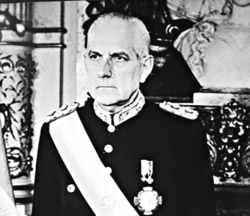
Reynaldo Bignone served as the 48th President of Argentina, marking the final chapter of the National Reorganization Process—the military dictatorship that governed the country through a period of intense state repression. Serving from July 1, 1982, to December 10, 1983, Bignone's tenure was defined by a volatile transition toward democracy, economic instability, and a legacy of human rights abuses that would eventually lead to his life imprisonment.
Key Facts
- Role: De facto President of Argentina (1982–1983).
- Military Rank: Division General of the Argentine Army.
- Key Action: Ordered the destruction of documentation regarding the "disappeared" persons.
- Legal Outcome: Sentenced to life imprisonment for crimes against humanity.
- Death: Died March 7, 2018, at age 90 due to congestive heart failure.
Early Life and Military Ascent
Born on January 21, 1928, in Morón, Greater Buenos Aires, Reynaldo Benito Antonio Bignone was the son of parents with diverse European roots, including Gibraltarian, French, Italian, and German descent. He entered the Army Infantry at the age of 19, beginning a career that saw him study at the Superior School of War and in Francoist Spain. By 1964, he had risen to lead the VI Infantry Regiment.
The Presidency and the Transition to Democracy
Bignone was appointed by the military junta in July 1982. His presidency was characterized by a strained relationship with the media and a gradual, often reluctant, loosening of free speech restrictions. This openness allowed the public's dissatisfaction with the regime to surface, manifesting in satirical publications and frequent protests at the Casa Rosada (the executive office of the President).
Economic Turmoil and Policy Shifts
The Argentine economy during Bignone's term was in crisis, with inflation reaching 200% in 1982 and nearly 400% by 1983. Bignone appointed Domingo Cavallo to the Central Bank and Jose Maria Dagnino Pastore as Economy Minister. However, conflicts over free-market versus protectionist policies led to their replacement in August 1982.
To combat hyperinflation, Economy Minister Jorge Wehbe introduced a new currency, the peso argentino, in June 1983, replacing the peso ley at a rate of 10,000 to one. Despite these efforts and a modest recovery of 4% during his 18-month term, the country remained burdened by massive foreign debt and budget deficits.
The Return to Civilian Rule
As pressure for elections mounted, Bignone oversaw the transition to civilian government. In October 1983, elections were held, resulting in a victory for Raúl Alfonsín of the centrist UCR. Before leaving office, Bignone took measures to protect the military regime, including the shredding of critical documents to hide evidence of state crimes.
Human Rights Abuses and Legal Reckoning
While Bignone was initially acquitted in the 1985 Trial of the Juntas, the legal tide turned in later decades. He became a central figure in investigations into the Dirty War—a period of state-sponsored terrorism involving the kidnapping, torture, and murder of suspected political opponents.
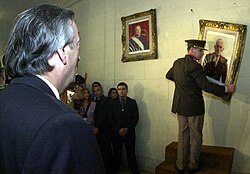
Bignone's legal convictions were numerous and severe:
- 2010: Sentenced to 25 years for the kidnapping and murder of 56 people at the Campo de Mayo complex.
- 2011: Sentenced to life imprisonment for crimes against humanity.
- 2011 (December): An additional 15 years for establishing a secret torture center in a hospital.
- 2012: 15 years for his role in the systematic theft of babies born to detained women.
- 2016: 20 years for participation in Operation Condor, a campaign of political repression and assassination across South American borders.
| Category | Details |
|---|---|
| Term of Office | July 1, 1982 – December 10, 1983 |
| Successor | Raúl Alfonsín |
| Economic Indicators | Inflation ~400% (1983); New currency: Peso Argentino |
| Major Convictions | Crimes against humanity, baby theft, Operation Condor |
| Final Sentence | Life Imprisonment |
Frequently Asked Questions
Who was Reynaldo Bignone?
Reynaldo Bignone was an Argentine general and the final de facto president of the military junta that ruled Argentina during the National Reorganization Process from 1982 to 1983.
What was Bignone's role in the "Dirty War"?
Bignone was involved in the kidnapping, torture, and murder of political dissidents. He specifically ordered the destruction of records concerning the "disappeared" to shield the military from future prosecution.
What was Operation Condor?
Operation Condor was a clandestine campaign of political repression and assassination conducted by right-wing dictatorships in South America. Bignone was convicted for his role in this operation, which resulted in the deaths of over 100 people.
How did Bignone die?
Bignone died on March 7, 2018, at the age of 90 in Buenos Aires. He passed away from congestive heart failure while being treated for a hip fracture at a military hospital.
Why was Bignone sentenced to life in prison?
He was sentenced to life imprisonment due to the nature of his crimes—including the theft of infants and mass murder—which were legally classified as crimes against humanity, meaning they had no statute of limitations.