Regional Red Lists: Assessing Species Extinction Risk at Local Scales
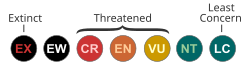
Protecting global biodiversity requires more than just a broad overview of the planet's health; it requires precise, localized data. A Regional Red List is a specialized report that details the threatened status of species within a specific country or region. While based on the global inventory provided by the IUCN Red List of Threatened Species, these regional assessments focus on political management units, allowing the data to feed directly into national and regional planning.
This critical conservation effort is coordinated by the Zoological Society of London, the World Conservation Union (IUCN), and a global network of partners, including universities, national governments, and various non-governmental organizations.
Key Facts
- Purpose: Regional Red Lists identify species at risk of extinction within specific political or geographic boundaries.
- Standardization: They utilize transparent, quantitative criteria developed by the IUCN in 2003 for regional and national application.
- Utility: These lists help determine conservation trends, identify threatened ecosystems, and set priority levels for conservation planning.
- Global Goals: They support the Convention on Biological Diversity (CBD) targets to reduce biodiversity loss.
- Network: A centralized online database is being developed to store and manage Regional Red List assessments and Action Plans globally.
The Role of Regional Assessments in Conservation
While the IUCN Categories and Criteria were originally designed for global assessments, the need for localized guidelines became apparent. By applying these quantitative criteria at a regional level, countries can gain a clearer picture of their specific ecological challenges.
Regional Red Lists provide several strategic advantages:
- Determining the current conservation status and population trends of local species.
- Identifying which species or ecosystems are under the most immediate threat.
- Informing the creation of conservation plans and the setting of priorities.
- Increasing public and political awareness regarding threatened local wildlife.
A practical example of this application can be seen in Mongolia, where Regional Red Lists have been completed for both mammals and fishes. These lists were paired with Summary Conservation Action Plans, which provide specific recommended measures to protect each threatened species.
How a Regional Red List is Created
Any organization or country can develop a Regional Red List by following a repeatable, standardized protocol. The process consists of five primary steps:
- Data Collection: Gathering all relevant information, including species distribution, population trends, habitat details, ecology, life history, existing threats, and current conservation measures.
- Conservation Assessment: Applying the IUCN Regional Categories and Criteria to determine the risk level.
- Expert Review: Holding a regional workshop where experts review assessments, correct errors, and contribute additional data.
- Collation: Compiling all verified assessments into a formal Regional Red List document.
- Action Planning: Optionally creating a Summary Conservation Action Plan to guide future interventions.
Biodiversity Targets and Global Cooperation
In April 2002, during the Convention on Biological Diversity (CBD), 188 nations committed to significantly reducing the rate of biodiversity loss by 2010. Regular compilation of Regional Red Lists allows policy makers and conservationists to track how biodiversity changes over time, helping nations meet their international obligations.
To enhance this effort, a global network is being established. This network includes a centralized online database for storing and managing assessments and Action Plans, enabling different regions to share experiences and improve their conservation strategies.
Case Study: British Conservation Reviews
Britain has a long history of tracking species status through the British Red Data Books, produced between 1977 and 1999. Originally managed by the Nature Conservancy Council (NCC) and later by the Joint Nature Conservation Committee (JNCC), these volumes covered vascular plants, insects, and other invertebrates.
Due to the sheer volume of species—over 20,000 in the case of insects—the JNCC shifted from massive single volumes to individual "Species Status" reviews for specific groups, such as butterflies or water beetles. By 2016, these were integrated into a comprehensive spreadsheet incorporating Biodiversity Action Plan Priority Lists and the Wildlife & Countryside Act schedules.
Defining Rarity in Great Britain
Natural England uses specific quantitative definitions for species that are uncommon but not necessarily rare enough for the Red Data Book:
| Category | Criteria / Definition |
|---|---|
| Nationally Rare | Occurs in 1–15 10 km squares in Great Britain |
| Nationally Scarce | Occurs in 16–100 10 km squares in Great Britain |
| Nationally Important Site | Contains more than 1% of the British population of a species |
| Internationally Important Site | Contains more than 1% of the north-west European population of a species |
Frequently Asked Questions
What is the difference between a global and a regional Red List?
A global Red List assesses the extinction risk of a species across its entire worldwide range, whereas a Regional Red List assesses the risk within a specific country or political management unit.
Who coordinates the Regional Red List project?
The project is coordinated by the Zoological Society of London and the World Conservation Union (IUCN), in partnership with universities, national governments, and other global organizations.
How does a Regional Red List help the environment?
It provides the data necessary to identify the most threatened species and ecosystems, which allows conservationists to prioritize their efforts and create targeted Action Plans to prevent extinction.
What is a Summary Conservation Action Plan?
It is a document that accompanies a Red List, detailing the specific recommended conservation measures required to protect the species identified as threatened.
How are species categorized as "rare" in Great Britain?
Natural England defines "nationally rare" species as those occurring in 1–15 10 km squares in Great Britain, and "nationally scarce" as those occurring in 16–100 10 km squares.