Convention on Biological Diversity: Protecting Global Nature and Genetic Resources
The Convention on Biological Diversity (CBD) is a landmark multilateral environmental agreement designed to protect the variety of life on Earth. Drafted on May 22, 1992, and opened for signature between June 1992 and June 1993 in Rio de Janeiro and New York, the treaty represents a global commitment to biodiversity conservation and the sustainable use of natural resources.
The convention officially entered into force on December 29, 1993, after being ratified by 30 states. Today, it is one of the most widely supported environmental treaties in history, with 196 parties including the European Union, the State of Palestine, the Cook Islands, and Niue. Notably, it includes all United Nations Member States with the sole exception of the United States.
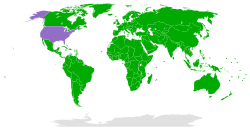
Key Facts
- Effective Date: December 29, 1993.
- Parties: 196 states and entities (all UN members except the USA).
- Depositary: Secretary-General of the United Nations.
- Official Languages: Arabic, Chinese, English, French, Russian, and Spanish.
- Core Focus: Conservation of biological diversity, sustainable use of its components, and fair sharing of genetic resource benefits.
Governance and Implementation
The CBD operates through a structured system of international bodies to ensure that scientific advice is translated into political action. The primary governing body is the Conference of the Parties (COP), which meets periodically to review progress and set new goals. Supporting the COP are the CBD Secretariat and two specialized subsidiary bodies: the Subsidiary Body on Implementation and the Subsidiary Body for Scientific, Technical and Technological Advice (SBSTTA).
To turn global goals into local action, parties implement the convention through two primary mechanisms:
- National Biodiversity Strategies and Action Plans (NBSAP): Tailored national frameworks to integrate biodiversity conservation into broader national planning.
- National Reports: Periodic updates provided by member states to track progress and challenges.
Supplementary Protocols and Strategic Plans
As the understanding of biotechnology and genetic resources evolved, the CBD adopted supplementary agreements to address specific challenges.
The Cartagena Protocol on Biosafety
Adopted on January 29, 2000, and effective since September 11, 2003, this protocol governs the movement of living modified organisms (LMOs)—organisms resulting from modern biotechnology—from one country to another to ensure biosafety.
The Nagoya Protocol
Adopted on October 29, 2010, in Nagoya, Japan, and effective since October 12, 2014, this protocol focuses on Access and Benefit-Sharing (ABS). It provides a legal framework to ensure that the benefits arising from the utilization of genetic resources are shared fairly and equitably.
Strategic Plan for Biodiversity 2011–2020
During COP10, parties agreed upon a revised Strategic Plan featuring the Aichi Biodiversity Targets. These 20 targets were organized under five strategic goals:
- Goal B: Reduce direct pressures on biodiversity and promote sustainable use.
- Goal C: Safeguard ecosystems, species, and genetic diversity to improve biodiversity status.
- Goal D: Enhance the benefits derived from biodiversity and ecosystem services.
- Goal E: Improve implementation through capacity building, knowledge management, and participatory planning.
Timeline of Conference of the Parties (COP)
The COP serves as the decision-making body of the convention. Over the decades, these meetings have shifted from foundational setup to the creation of complex global frameworks.
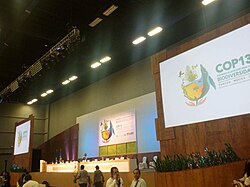
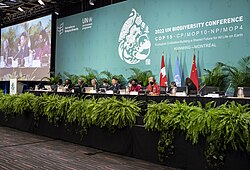
Recent milestones include COP13 in Mexico (2016) and COP15 in Canada (2022), where the Post-2020 Global Biodiversity Framework was developed to replace the Aichi targets. The most recent meetings continue to refine the Kunming-Montreal Global Biodiversity Framework.
| COP | Year | City | Country | Duration (Days) |
|---|---|---|---|---|
| 1 | 1994 | Nassau | Bahamas | 12 |
| 5 | 2000 | Nairobi | Kenya | 12 |
| 10 | 2010 | Nagoya | Japan | 12 |
| 13 | 2016 | Cancún | Mexico | 14 |
| 15 | 2022 | Montreal | Canada | 13 |
| 16 | 2024 | Cali | Colombia | 12 |
Frequently Asked Questions
What is the main purpose of the Convention on Biological Diversity?
The CBD is a multilateral agreement focused on the conservation of biological diversity, the sustainable use of its components, and the fair and equitable sharing of benefits arising from the use of genetic resources.
Which country is not a party to the CBD?
The United States is the only UN Member State that is not a party to the convention.
What is the difference between the Cartagena and Nagoya Protocols?
The Cartagena Protocol focuses on biosafety and the international movement of living modified organisms (LMOs), while the Nagoya Protocol focuses on the legal framework for accessing genetic resources and sharing the benefits derived from them.
What were the Aichi Biodiversity Targets?
The Aichi Targets were a set of 20 specific goals established in 2010 as part of the Strategic Plan for Biodiversity 2011–2020 to address the loss of biodiversity globally.
How do countries implement the CBD's goals?
Countries implement the convention by creating National Biodiversity Strategies and Action Plans (NBSAP) and submitting National Reports to track their progress.