Red Cloud and the Struggle for the Plains
The mid-to-late 19th century was a period of intense conflict on the American frontier, characterized by the clash between the expanding United States and the Native American tribes of the Great Plains. At the center of this struggle was Red Cloud, a prominent leader whose strategic brilliance and diplomatic efforts defined an era of resistance and negotiation.
The conflicts known as Red Cloud's War were not a single battle, but a series of engagements fought between 1866 and 1868. These battles pitted the U.S. Army against a powerful alliance of Northern Cheyenne, Lakota, and Arapaho bands within the Wyoming and Montana Territories.
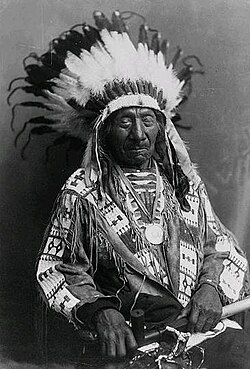
The Fetterman Massacre
One of the most significant events of this period occurred in December 1866. Captain William J. Fetterman was dispatched from Fort Phil Kearny with a detachment of 79 cavalry and infantrymen, along with two civilians. Their objective was to disperse a small Native American war party that had previously attacked a wood-gathering group.
Despite orders to remain behind the Lodge Trail Ridge, Captain Fetterman and Captain Frederick Brown pursued a small decoy band. This decoy was led by the renowned warrior Crazy Horse, who lured the U.S. troops into a massive ambush. More than 2,000 Sioux, Cheyenne, and Arapaho warriors awaited them. The result was the Fetterman Massacre (also known as the Battle of the Hundred Slain), where the entire 81-man U.S. detachment was killed. The Native American forces suffered only 14 casualties, marking the highest U.S. loss of any Plains battle to that date.
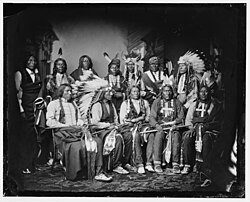
![Original caption: “Red Cloud, in the Great Hall of the Cooper Institute, surrounded by the Indian delegation of braves and squaws [sic], addressing a New York audience on the wrongs done to his people”](/images/6d/e3/6de3a96659f102c8eb277a1738707aab2f5691c244a525ceac0c304d6b60f5d6.jpg)
The Treaty of Fort Laramie (1868)
In the wake of the massacre, a U.S. peace commission toured the Plains in 1867. The commission concluded that the conflicts were driven by white encroachment and competition for vital resources. To resolve the violence, they recommended the establishment of definite territories for the tribes.
This led to the Treaty of Fort Laramie. Red Cloud was the final leader to sign the agreement, refusing to do so until the U.S. government agreed to vacate all forts within their territory. The terms included:
- The abandonment of the new road and the withdrawal of military garrisons.
- The establishment of the Great Sioux Reservation, covering West River territory west of the Missouri River in present-day Nebraska and parts of South Dakota.
- The designation of the Black Hills and the Big Horn as Indian countries, reserved for perpetual occupancy, with no white entry permitted without Sioux consent.
Broken Promises and the Gold Rush
The peace established by the treaty was short-lived. Shortly after the signing, gold was discovered in the Black Hills—an area sacred to the Native Americans. Despite initial small protests from the government to "save face," there was no serious effort to prevent white miners from violating the treaty.
In 1870, Red Cloud traveled to Washington D.C. to meet with President Ulysses S. Grant and Commissioner of Indian Affairs Ely S. Parker. Later, in 1871, the government established the Red Cloud Agency on the Platte River, which later moved to Nebraska near Fort Robinson. While Red Cloud moved his band to the agency to receive government aid, the supplies provided were often inferior in quality and less than what had been promised.
The Great Sioux War of 1876
Tensions peaked in 1874 when Lieutenant Colonel George Custer led a reconnaissance mission that officially reported gold in the Black Hills. In May 1875, Red Cloud, along with Spotted Tail and Lone Horn, traveled to Washington to persuade President Grant to honor the treaties and stop the influx of miners.
The U.S. government offered a settlement of $25,000 for the land and the resettlement of the tribes into Indian Territory. The delegates flatly refused. Spotted Tail famously argued that he would not leave the country where he had put his stake, suggesting that if the new territory was so desirable, the white men should be sent there instead.
Although Red Cloud sought a peaceful diplomatic solution, he did not participate in the Great Sioux War of 1876, which was instead led by Sitting Bull and Crazy Horse. By 1878, the Red Cloud Agency was moved to the forks of the White River in South Dakota and renamed the Pine Ridge Indian Reservation.
Key Facts
- Red Cloud's War: A series of conflicts (1866–1868) between the U.S. Army and an alliance of Lakota, Northern Cheyenne, and Arapaho.
- Fetterman Massacre: A decisive ambush led by Crazy Horse that wiped out an 81-man U.S. detachment.
- Treaty of Fort Laramie: An 1868 agreement that created the Great Sioux Reservation and recognized the Black Hills as Indian territory.
- Black Hills: Sacred land that became the center of conflict following the discovery of gold in 1874.
- Pine Ridge: The final location of the Red Cloud Agency, established as a reservation in South Dakota.
| Year | Event | Outcome |
|---|---|---|
| 1866 | Fetterman Massacre | Complete defeat of U.S. detachment; 81 killed. |
| 1868 | Treaty of Fort Laramie | U.S. forts withdrawn; Great Sioux Reservation created. |
| 1874 | Custer Expedition | Gold discovered in the Black Hills, violating treaty terms. |
| 1875 | Washington Delegation | Red Cloud and others refuse to sell Black Hills for $25,000. |
| 1876 | Great Sioux War | Conflict led by Sitting Bull and Crazy Horse. |
Frequently Asked Questions
Who led the decoy party during the Fetterman Massacre?
The decoy party was led by the prominent warrior Crazy Horse, who lured Captain Fetterman and his troops into an ambush by over 2,000 Native American warriors.
What were the primary terms of the Treaty of Fort Laramie?
The treaty established the Great Sioux Reservation, required the U.S. to abandon its forts in Lakota territory, and designated the Black Hills and Big Horn as lands for the perpetual occupancy of the Sioux.
Why did the peace established by the 1868 treaty fail?
The peace failed primarily because of the discovery of gold in the Black Hills in 1874, which led to a massive influx of white miners and a wholesale violation of the treaty by the U.S. government.
Did Red Cloud fight in the Great Sioux War of 1876?
No, Red Cloud did not take part in the Great Sioux War of 1876; that conflict was led by Sitting Bull and Crazy Horse.
What happened to the Red Cloud Agency?
The agency was moved several times, eventually settling at the forks of the White River in South Dakota, where it became the Pine Ridge Indian Reservation.