Recep Tayyip Erdoğan: The Political Journey of Turkey's 12th President
Recep Tayyip Erdoğan has remained a central figure in Turkish and global politics for decades, evolving from a local municipal leader to the 12th President of Turkey. His tenure is marked by significant infrastructure development, a shift in Turkey's governance structure, and a complex web of international relations that bridge the gap between East and West.
Born in Istanbul in 1954, Erdoğan's political ascent began in local government, eventually leading him to the premiership and the presidency. His leadership of the Justice and Development Party (AK Party) has defined the modern era of the Turkish Republic.
Key Facts
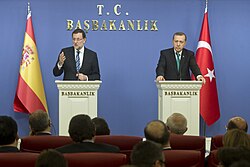
- Current Role: 12th President of Turkey (since August 28, 2014).
- Previous Major Role: 25th Prime Minister of Turkey (2003–2014).
- Political Party: Leader of the Justice and Development Party (AK Party).
- Local Governance: Served as the Mayor of Istanbul from 1994 to 1998.
- Education: Holds a BBA from Marmara University.
- Global Influence: Former Chairman of the Organization of Turkic States.
Early Political Career and Rise to Power
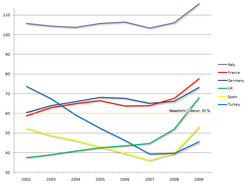
Erdoğan's early political trajectory was characterized by a rise through various Islamist-leaning parties, including the National Salvation Party, the Welfare Party, and the Virtue Party. His first major breakthrough came in 1994 when he was elected Mayor of Istanbul, a role that allowed him to build a reputation for effective urban management.
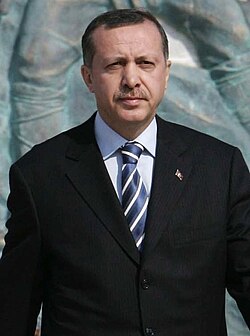
However, his early career was not without obstacles. He faced imprisonment after being convicted for reciting a poem, a period that served as a turning point in his public image. Following this, he co-founded the Justice and Development Party (AK Party) in 2001, positioning it as a conservative democratic movement.
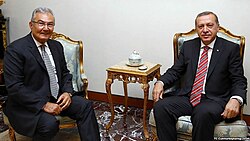
The Premiership (2003–2014)
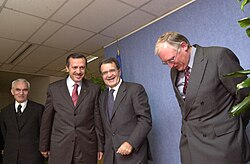
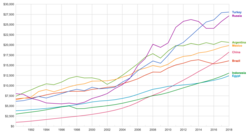
Erdoğan assumed the office of Prime Minister on March 14, 2003. During this decade, Turkey experienced significant economic growth and a push toward European Union integration. His administration focused on infrastructure, healthcare, and education reform.
Under his premiership, Turkey saw the construction of massive projects, including tunnels linking Europe and Asia and new bridges over the Bosporus. Despite these gains, his term was also marked by tensions regarding the Kurdish issue and disputes over press freedom.
The Presidency and Governance Shift
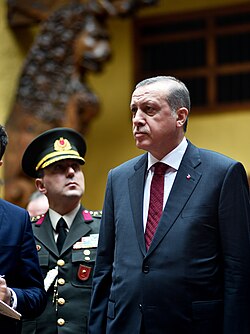
In 2014, Erdoğan transitioned from Prime Minister to the presidency, becoming the first Turkish president to be elected by popular vote. A pivotal moment in his presidency occurred in 2017, when a national referendum shifted Turkey from a parliamentary system to an executive presidency, granting the president significantly more power.
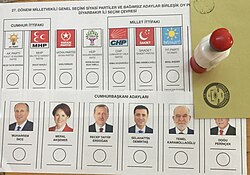
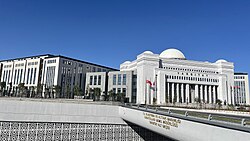
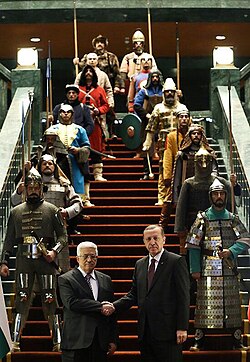
His presidency has been defined by a strong emphasis on national sovereignty and the promotion of Ottomanism—a revival of the cultural and political legacy of the Ottoman Empire. This era also saw the construction of the Presidential Palace and the 1915 Çanakkale Bridge, the world's longest suspension bridge.
![The 1915 Çanakkale Bridge, the longest suspension bridge in the world, was officially opened by Erdoğan in 2022.[118][119]](/images/51/5f/515f7b574c16f23597bb2e434a8c354cc6a2bdb3a2e05df9eae5674c31a2fd55.jpg)
Foreign Policy and Global Diplomacy
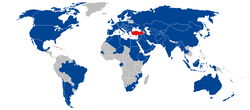
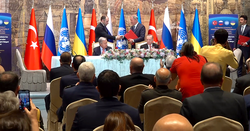
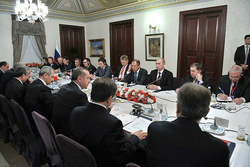
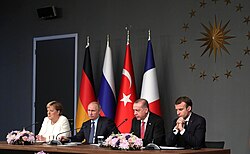
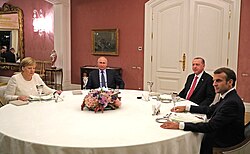
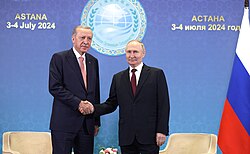
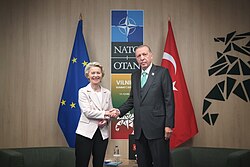
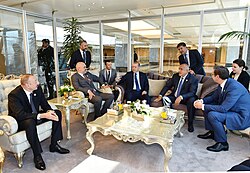
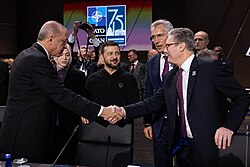
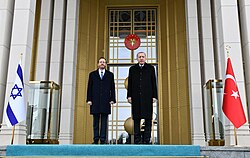
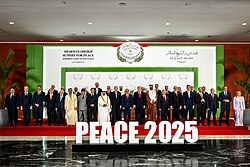
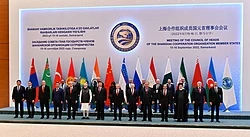
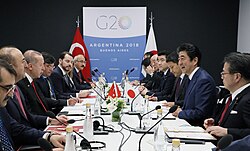
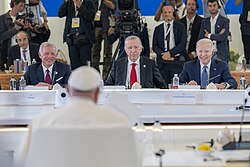
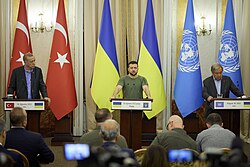
Erdoğan has pursued a multifaceted foreign policy, maintaining strategic relationships with both NATO allies and regional powers like Russia and China. He has played a key role as a mediator in international conflicts, most notably in the 2022 grain export deal between Ukraine and Russia.
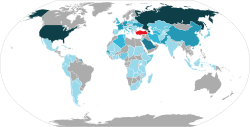
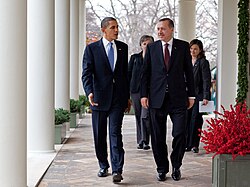
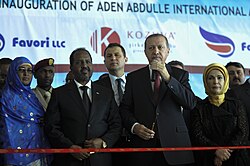
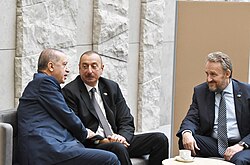
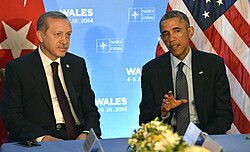
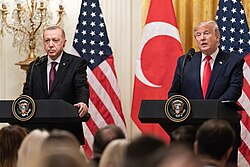
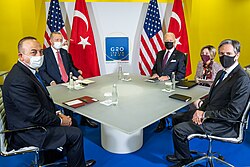
His diplomatic efforts extend across the Balkans, Azerbaijan, and Africa, particularly in Somalia, where Turkey has invested heavily in infrastructure and military cooperation. However, his relations with the United States and the EU have often been strained due to disagreements over human rights and geopolitical interests.
Domestic Challenges and Controversies
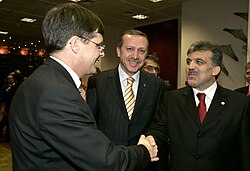
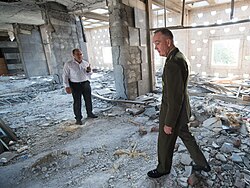
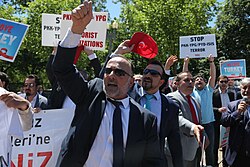
The latter half of Erdoğan's leadership has been marked by significant domestic turmoil. Following a failed coup d'état attempt in 2016, the government declared a state of emergency, leading to widespread purges in the military, judiciary, and civil service.
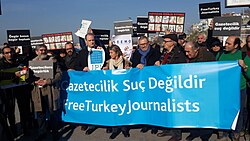
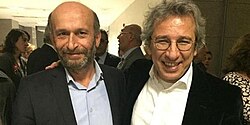
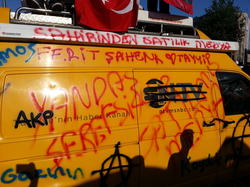
Critics and international observers have raised concerns regarding the suppression of dissent, the imprisonment of journalists, and the arrest of opposition politicians on terrorism charges. These events have led to ongoing debates about the state of democracy and freedom of expression in Turkey.
Summary of Electoral History
Erdoğan's political longevity is reflected in his consistent electoral success, though recent local elections have shown a shifting political landscape.
| Year | Office | Party | Result | Vote Percentage |
|---|---|---|---|---|
| 1994 | Mayor of Istanbul | RP | Won | 25.19% |
| 2002 | Member of Parliament | AK Party | Won | 34.28% |
| 2014 | President | Independent | Won | 51.79% |
| 2018 | President | AK Party | Won | 52.59% |
| 2023 | President | AK Party | Won | 52.16% |
| 2024 | Party Leader (Local) | AK Party | Lost | 35.49% |
Frequently Asked Questions
When did Recep Tayyip Erdoğan become President?
Recep Tayyip Erdoğan assumed the office of the 12th President of Turkey on August 28, 2014.
What is the AK Party?
The Justice and Development Party (AK Party) is a conservative political party co-founded by Erdoğan in 2001, which has been the dominant political force in Turkey for over two decades.
How did the 2017 referendum change Turkey's government?
The 2017 referendum transitioned Turkey from a parliamentary system to an executive presidency, significantly increasing the powers of the president and removing the requirement for a prime minister.
What was the significance of the 2016 coup attempt?
The failed coup d'état attempt in 2016 led to a state of emergency and a series of purges across various state institutions to remove those suspected of involvement in the plot.
What is Erdoğan's role in the Russia-Ukraine conflict?
Erdoğan has acted as a mediator between the two nations, most notably facilitating the signing of the grain export deal in Istanbul in 2022 to ensure global food security.