Ramos Mejía: A Journey Through Argentine History and Heritage
From its origins as a private ranch to its status as a vibrant urban center, Ramos Mejía stands as a testament to the growth and modernization of Argentina. Located in the La Matanza region, the city has evolved from a site of early religious disputes into a hub of educational excellence and transportation innovation.
The Early Years and Land Ownership
The foundation of the city began in 1808 when Francisco Ramos Mejía, the son of a merchant from Seville who had found success in Upper Peru, purchased the land from Martín José de Altolaguirre. The estate gained early notoriety in 1821 as the site of Argentina's first public religious controversy. This conflict arose from a disagreement over the interpretation of biblical canon between Ramos Mejía and the local parish priest, Father Castañeda, which ultimately resulted in Ramos Mejía's exile from the parish.
Following Francisco's death in 1828, the property passed to his wife, María Antonia Segurola de Ramos Mejía. The land's ownership saw turbulence during the mid-19th century; it was confiscated by Governor Juan Manuel de Rosas in 1840 but returned to the widow in 1853 after Rosas was overthrown. She eventually bequeathed the land to her four sons via a living trust.
The Rise of a Transport Hub
The transition from rural ranch to urban settlement was driven by the arrival of the railway. The heirs of the Ramos Mejía estate sold the first lots to the Buenos Aires Western Railway, leading to the opening of a station on September 25, 1858, as part of the nation's first rail line.
By 1871, the town was officially established through the continued sale of land parcels. Growth accelerated with a wave of immigration, and by 1904, the cobblestone Avenida Rivadavia connected the town to Buenos Aires. In 1907, the original station was replaced by a larger structure designed by Dutch architect John Doyer. This building remains one of Argentina's most prominent examples of Victorian architecture and was converted into a museum in 2008.
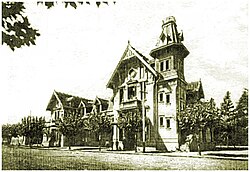
Ramos Mejía continued to be a pioneer in Argentine transit. In 1921, the birth of the colectivos (popular shared taxi services) occurred here with the establishment of Transporte Ideal San Justo. Furthermore, in 1923, the Western Railway line between Ramos Mejía and the Once railway station terminal in Buenos Aires became the first electrified rail line in the country.
Education, Culture, and Notable Figures
The city has long been a center for academic achievement. Key institutions include Ward College (1913), Santo Domingo College (1915), and the Salesian Wilfrid Barón College of Don Bosco (1930). Notably, the future Pope Francis (then Jorge Bergoglio) attended the Salesian college as a sixth-grader.
Cultural life is centered around the Casa de la Cultura, which houses the Leopoldo Marechal Theatre, a premier venue in La Matanza County. The Provincial Legislature officially recognized Ramos Mejía as a city on September 17, 1964.
The city is also the birthplace of several distinguished Argentines, including songwriter María Elena Walsh, comedian Antonio Gasalla, Olympic gold medalist Walter Pérez, screenwriter Damián Szifrón, and political figures such as Governor Daniel Scioli and former Vice President Carlos Ruckauf.
Key Facts
- Founded: Town established in 1871; officially recognized as a city on September 17, 1964.
- Transport Milestones: Site of the first electrified rail line in Argentina (1923) and the origin of the colectivos (1921).
- Architecture: Home to a landmark Victorian station building designed by John Doyer.
- Famous Alumni: Pope Francis studied at the Salesian Wilfrid Barón College of Don Bosco.
- Key Infrastructure: Connected to Buenos Aires via the historic Avenida Rivadavia since 1904.
| Year | Event |
|---|---|
| 1808 | Francisco Ramos Mejía purchases the land. |
| 1858 | Opening of the Buenos Aires Western Railway station. |
| 1871 | Official establishment of the town. |
| 1907 | Completion of the Victorian-style station building. |
| 1921 | Founding of Transporte Ideal San Justo (start of colectivos). |
| 1923 | Electrification of the rail line to Once terminal. |
| 1964 | Official recognition as a city. |
| 2008 | Station building converted into a museum. |
Frequently Asked Questions
Who was Francisco Ramos Mejía?
He was the son of a merchant from Seville who purchased the land in 1808 after returning from a successful nine-year business stay in Upper Peru.
What is the significance of the station building in Ramos Mejía?
Designed by Dutch architect John Doyer in 1907, it is a premier example of Victorian architecture in Argentina and currently serves as a museum.
How did the "colectivos" start in Ramos Mejía?
The popular shared taxi service began in 1921 with the establishment of a company called Transporte Ideal San Justo.
Which famous religious leader has ties to the city?
Pope Francis, born Jorge Bergoglio, attended the Salesian Wilfrid Barón College of Don Bosco as a sixth-grade student.
When did Ramos Mejía officially become a city?
The Provincial Legislature officially recognized it as a city on September 17, 1964.