Rail Transport in Argentina
Argentina possesses one of the most extensive railway legacies in South America, characterized by a complex history of rapid expansion, systemic shifts in ownership, and ongoing modernization. From the golden age of British investment to the current state-led recovery, the rail network remains a vital artery for both urban commuters in Buenos Aires and the transport of agricultural freight across the vast pampas.
The system is currently managed primarily by Trenes Argentinos (the operator) and ADIFSE (the infrastructure company), overseeing a diverse network that utilizes three different track gauges to accommodate various regional needs.
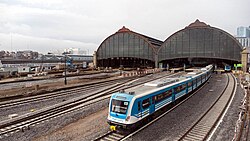
Key Facts
- Total System Length: 17,866 km, ranking it 8th globally.
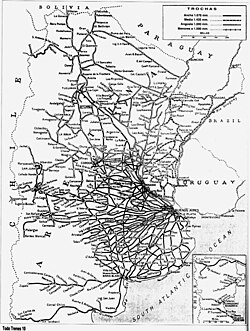
- Primary Gauges: Broad gauge (1,676 mm), Standard gauge (1,435 mm), and Meter gauge (1,000 mm).
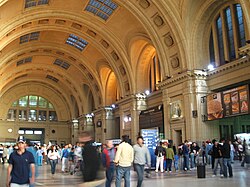
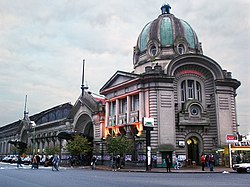
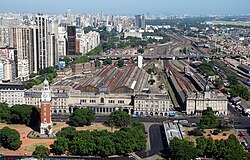
- Busiest Hub: Constitución station, handling approximately 180 million passengers annually.
- Commuter Volume: Over 423 million riders in the Buenos Aires metropolitan area (2018).
- Major Operator: Trenes Argentinos.
Historical Evolution
Development and Expansion
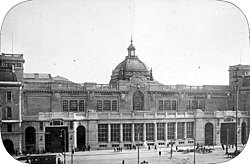
The Argentine railway network grew exponentially between 1860 and 1920. Much of this early infrastructure was funded by British investment, creating a radial system centered on Buenos Aires to facilitate the export of raw materials. By 1920, the system had expanded to approximately 47,000 kilometers, transporting millions of passengers and millions of tonnes of cargo.
Nationalization and the Era of Ferrocarriles Argentinos
The mid-20th century saw the transition to state control with the creation of Ferrocarriles Argentinos. The network was divided into major lines, such as the Belgrano (meter gauge) and the Roca (broad gauge). This era was marked by the production of national rolling stock, exemplified by the "La Justicialista" locomotive inaugurated in 1952.
Privatization and Decline
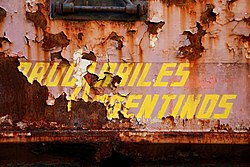
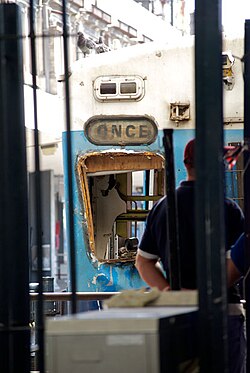
During the privatization period, the state transferred rail operations to private concessions. This era was characterized by a drastic deterioration of infrastructure and the closure of many secondary lines. The decline in safety and maintenance culminated in several tragedies, including the 2012 Once rail disaster, which left 49 people dead and intensified public demand for the return of state control.
Re-nationalization and Recovery
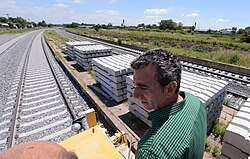
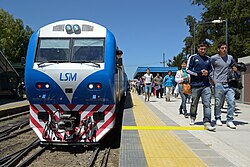
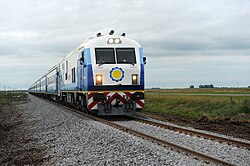
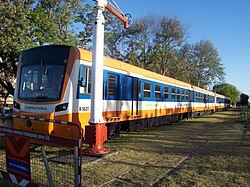
In recent years, Argentina has moved toward re-nationalization to restore sovereignty over its transport corridors. Efforts led by officials like Florencio Randazzo focused on renewing tracks, purchasing new rolling stock from international suppliers (such as China's CSR), and expanding electrification.
Commuter Rail and Urban Transit
The Buenos Aires Metropolitan Network
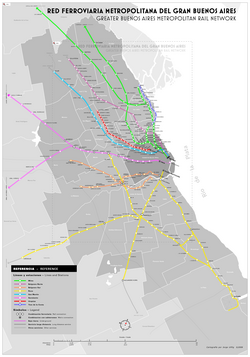
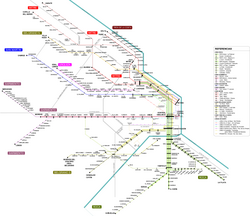
The heart of Argentina's passenger rail is the Buenos Aires commuter system. It consists of several major lines that connect the capital with the surrounding suburbs.
| Line | Operator | Length (km) | Stations | Annual Ridership |
|---|---|---|---|---|
| Roca | Trenes Argentinos | 237.2 | 70 | 115,032,946 |
| San Martín | Trenes Argentinos | 56.3 | 19 | 39,239,510 |
| Sarmiento | Trenes Argentinos | 184.1 | 40 | 39,663,847 |
| Belgrano Norte | Ferrovías | 54.3 | 22 | 28,876,619 |
| Mitre | Trenes Argentinos | 185.5 | 55 | 18,330,512 |
| Urquiza | Metrovías | 29.9 | 23 | 12,585,106 |
| Belgrano Sur | Trenes Argentinos | 66.3 | 30 | 10,974,454 |
Electrification and Light Rail
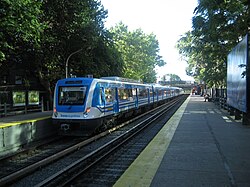
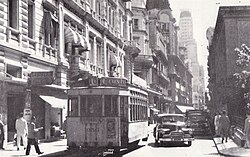
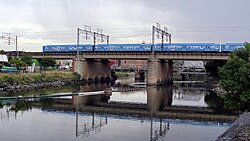
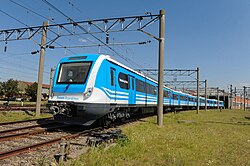
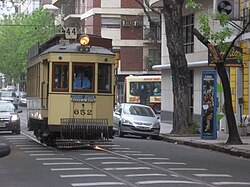
Modernization efforts have prioritized electrification—the process of powering trains via electricity rather than diesel. The Roca Line saw significant progress, with the route from Constitución to La Plata completed in 2017. Additionally, the city utilizes light rail and historic trams, such as the Tren de la Costa and the historic tramway in Caballito.
Regional and Tourist Services
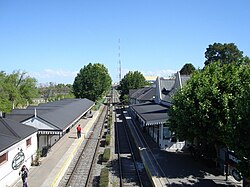
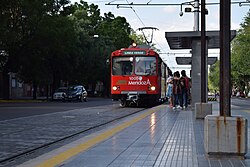
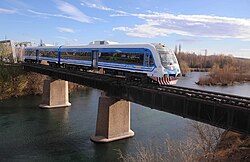
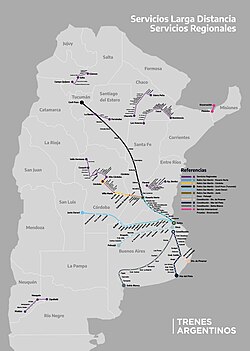
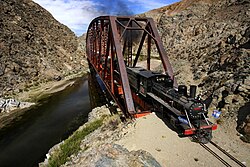
Beyond the capital, rail services extend to cities like Mendoza, Neuquén, and Santa Fe. While some regional lines serve as essential transit, others have become world-famous tourist attractions.
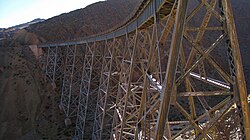
- Tren a las Nubes: Renowned for crossing the "Polvorilla" viaduct at high altitudes.
- Tren de las Sierras: A scenic 150 km route through the Sierras Chicas of Córdoba.
- Old Patagonian Express: A narrow-gauge line traversing the rugged landscapes of Patagonia.
Freight Transport
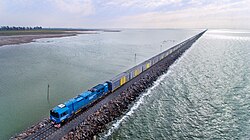
Freight remains a cornerstone of the Argentine economy. The network is shared between state-owned Trenes Argentinos Cargas and private operators like Nuevo Central Argentino and Ferrosur Roca. These lines are critical for moving agricultural products and industrial goods across the country.
Safety and Incidents
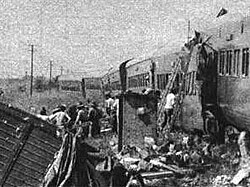
The history of Argentine rail has been marred by severe accidents. The 1970 accident in Benavídez remains the worst in the nation's history, while more recent events, such as the 2011 accident at Flores station, have highlighted the ongoing need for infrastructure investment and safety oversight.
Frequently Asked Questions
What are the different track gauges used in Argentina?
Argentina uses three main gauges: Broad gauge (1,676 mm), Standard gauge (1,435 mm), and Meter gauge (1,000 mm), along with some secondary narrow gauges.
Which is the busiest railway station in Argentina?
Constitución station is the busiest in the country, handling an estimated 180 million passengers every year.
Who operates the majority of the rail network today?
The majority of the network is operated by the state-owned company Trenes Argentinos, with some commuter lines managed by private operators like Ferrovías and Metrovías.
What is the Tren a las Nubes?
The Tren a las Nubes (Train to the Clouds) is a famous tourist railway known for its high-altitude route and the impressive Polvorilla viaduct.
How has the Roca Line been modernized?
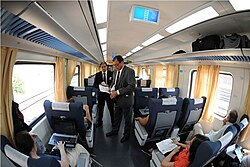
The Roca Line has undergone extensive electrification, including the completion of the route from Constitución to La Plata in 2017 and the introduction of new Electric Multiple Units (EMUs).