Radio Programming in the Golden Age
Before the rise of modern broadcast networks, radio stations faced a unique challenge: filling an entire broadcast day with engaging content. This necessity sparked a wave of creativity, leading to the birth of entertainment formats that remain staples of television and digital media today. During the early Golden Age of Radio, most network programs were broadcast live. National networks prohibited recorded content until the late 1940s due to the poor sound quality of phonograph discs, the only practical recording medium available. Consequently, prime-time shows were often performed twice—once for the East Coast and once for the West Coast.
Beyond scheduled shows, radio expanded its reach through the coverage of live events, ranging from musical concerts to play-by-play sports broadcasts.
Key Facts
- Live Performance: Most early network shows were live because recording quality was insufficient until the late 1940s.
- Soap Operas: The term originated from the soap and detergent companies that sponsored daytime serial dramas.
- News Innovation: Radio pioneered modern news formats, including headlines, remote reporting, and Vox Pop (sidewalk interviews).
- Sponsorship: Early advertising focused on naming rights (e.g., The A&P Gypsies) rather than separate commercials.
- Cross-Media Adaptation: Many shows were adapted from comic strips, Broadway plays, and Hollywood films.
The Evolution of Radio News and Music
Radio revolutionized the delivery of information, establishing the foundation for modern journalism. The medium introduced headlines, panel discussions, weather reports, and farm reports. However, this disruption caused tension with the newspaper industry. In the mid-1930s, newspapers attempted to discredit radio by exaggerating the public's reaction to Orson Welles's The War of the Worlds, a fictional story presented as a faux newscast.
Musical features were among the most popular formats. Early sponsorship typically involved selling naming rights to a program, such as the Champion Spark Plug Hour or The Clicquot Club Eskimos. Big band remotes brought the sounds of New York City jazz clubs to rural America, while local stations employed staff organists like Jesse Crawford.
Classical music also found a home on the air. The Metropolitan Opera broadcasts, sponsored by Texaco (and later Toll Brothers), continue to this day. Other highlights included the NBC Symphony Orchestra, created specifically for the renowned Italian conductor Arturo Toscanini, and weekly concerts by the New York Philharmonic. Popular songwriters, including George Gershwin, also made frequent appearances.
Country music saw significant growth through programs like the National Barn Dance (WLS) and the WSM Barn Dance, which was renamed the Grand Ole Opry in 1927. Other notable country programs included The Red Foley Show and Ozark Jubilee.
Comedy and the Rise of the Sitcom
Radio became a magnet for top talent from Hollywood and vaudeville, including legends such as Bob Hope, Groucho Marx, Jack Benny, and Lucille Ball's contemporaries. This era saw the rise of the situation comedy (sitcom), with hits like Fibber McGee and Molly and The Goldbergs.
Comedy styles varied wildly, from the small-town humor of Lum and Abner to the caustic sarcasm of Henry Morgan. Some programs, such as It Pays to Be Ignorant, parodied the growing trend of quiz shows. Many shows were adapted from other media; for example, The Aldrich Family began as a play, while others like Blondie and Dick Tracy were adapted from comic strips.
Drama, Soap Operas, and Children's Programming
The daytime serial drama began with Painted Dreams in 1930, followed by the first networked serial, Clara, Lu, 'n Em, in 1932. These programs became known as soap operas because they were primarily sponsored by soap and detergent brands. The era of the radio soap opera largely ended on November 25, 1960, when CBS cancelled its final four daytime dramas.
For younger audiences, late afternoon adventure serials like Captain Midnight and The Cisco Kid were immensely popular. These shows often used radio premiums—badges or decoding devices—that children could obtain by mailing in cereal boxtops or other proofs of purchase.
Radio plays offered high-art adaptations of literature and theater. Orson Welles's The Mercury Theatre on the Air is cited by critics as one of the finest drama anthologies, featuring works like A Tale of Two Cities. Other notable dramas included The New Adventures of Sherlock Holmes, starring Basil Rathbone and Nigel Bruce, and John Barrymore's Streamlined Shakespeare.
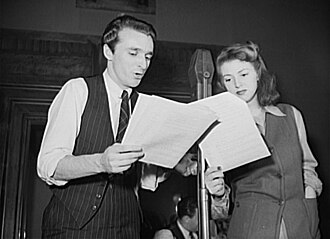
Thriller anthologies such as Suspense and Inner Sanctum Mystery kept audiences on edge, while Lux Radio Theatre brought Hollywood movie adaptations to a live audience.
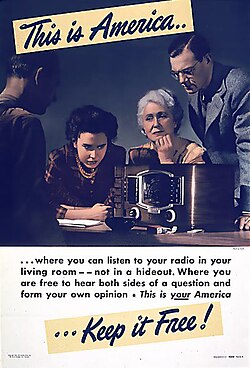
The Birth of Game and Giveaway Shows
The game show format originated on radio with early successes like Information Please (1938) and Dr. I.Q. (1939). Winner Take All (1946) introduced the lockout device and the concept of returning champions.
A variation known as the giveaway show, such as Stop the Music, awarded sponsored products to audience members or callers. These were often criticized as "buying an audience" because winners needed to be listening at that exact moment to win. The FCC even attempted to ban them as illegal lotteries in 1949.
| Format | Key Examples | Defining Characteristic |
|---|---|---|
| News | The War of the Worlds | Introduced remote reporting and Vox Pop. |
| Musical Features | Grand Ole Opry, NBC Symphony | Heavy reliance on corporate naming rights. |
| Comedy/Sitcom | The Aldrich Family, Bob Hope | Adapted from vaudeville, plays, and comics. |
| Soap Operas | Ma Perkins, Painted Dreams | Daytime serials sponsored by soap brands. |
| Radio Plays | Mercury Theatre on the Air | High-production adaptations of literature. |
| Game Shows | Information Please, Dr. I.Q. | Pioneered lockout devices and returning champions. |
Frequently Asked Questions
Why were early radio programs broadcast live?
National networks prohibited recorded programs until the late 1940s because the sound quality of phonograph discs, the only available recording medium, was considered inferior.
How did "soap operas" get their name?
They were called soap operas because these daytime serial dramas were frequently sponsored by companies selling soaps and detergents.
What was the conflict between radio and newspapers in the 1930s?
The two industries feuded over the radio's ability to deliver news quickly. Newspapers attempted to discredit the medium by exaggerating the mass hysteria caused by the fictional broadcast of The War of the Worlds.
What were radio premiums?
Radio premiums were promotional items like badges, rings, or decoding devices offered to children who mailed in a proof of purchase, such as a cereal boxtop, from a sponsor's product.
What was a "giveaway show"?
A giveaway show was a type of program that gave sponsored products to studio audience members or random telephone callers, often requiring the winner to be listening to the broadcast at that moment.