Raceme and Related Inflorescence Types in Botany
In the study of plant morphology, the way flowers are arranged on a stem is known as an inflorescence. Understanding these patterns is essential for identifying species and understanding how plants reproduce. One of the most common and recognizable patterns is the raceme, a structure that allows a plant to produce flowers sequentially over time.
The term "raceme" originates from the classical Latin word racemus, which translates to a cluster of grapes. This imagery helps visualize the way multiple individual flowers cluster along a central stem.
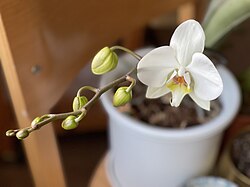
Key Facts
- A raceme is an unbranched, indeterminate inflorescence with flowers on short stalks.
- In a raceme, the oldest flowers are located at the base of the shoot.
- A spike is similar to a raceme but features sessile flowers (flowers without stalks).
- A spadix is a fleshy spike often enclosed by a large, colorful bract called a spathe.
- Catkins are specialized structures where flowers are concealed by prominent bracts.
Understanding the Raceme
A raceme (or racemoid) is defined as an unbranched, indeterminate type of inflorescence. In botanical terms, "indeterminate" means the growth has no predetermined limit; as the central axis (or shoot) grows upward, new flowers continue to be produced at the tip.
Each flower in a raceme is attached to the main axis by a short individual stalk known as a pedicel. Because the growth is indeterminate, the oldest flowers are found at the base of the plant, while the youngest are at the top. Common examples of plants that exhibit this structure include mustard (Brassica), radish (Raphanus), and various orchids (Phalaenopsis).
Variations of the Raceme
Not all racemes are simple. A compound raceme, also referred to as a panicle, occurs when the main axis itself begins to branch, creating a more complex, multi-layered flowering structure.
Comparing Different Inflorescence Types
While the raceme is a fundamental structure, botany recognizes several other ways flowers can cluster along an axis. These differences usually depend on whether the flowers have stalks and how they are protected.
Spikes and Spikelets
A spike is an unbranched, indeterminate inflorescence very similar to a raceme. However, the primary distinction is that spike flowers are sessile, meaning they are attached directly to the main axis without any pedicels. Examples include the Malabar nut (Justicia adhatoda) and chaff flowers (Achyranthes).
In grasses (Poaceae) and sedges (Cyperaceae), you may encounter a spikelet. While this can refer to a small spike, it specifically describes the ultimate flower cluster unit. A true spikelet consists of one or more florets enclosed by two sterile bracts called glumes, with the flowers arranged in two opposite rows. This is the structure seen in wheat (Triticum) and rice (Oryza sativa).
Catkins and Spadixes
A catkin (or ament) is similar to a spike or raceme but is characterized by prominent subtending bracts. These bracts are so conspicuous that they often conceal the flowers until pollination occurs. Plants with these structures, such as birch, alder, and pussy willow, are sometimes called amentaceous plants.
The spadix is a specialized form of spike where the florets are densely crowded along a fleshy axis. These are typically enclosed by one or more large, brightly colored bracts known as spathes. In many spadix structures, such as those in the Araceae family (e.g., jack-in-the-pulpit or wild calla), the female flowers are located at the base and the male flowers are positioned above them.
Summary of Inflorescence Types
| Type | Flower Attachment | Key Characteristics | Example Genus/Species |
|---|---|---|---|
| Raceme | Pedicellate (on stalks) | Unbranched, indeterminate growth | Brassica, Phalaenopsis |
| Spike | Sessile (no stalks) | Unbranched, indeterminate growth | Justicia adhatoda |
| Catkin | Varies | Flowers concealed by bracts | Birch, Alder |
| Spadix | Densely crowded | Fleshy axis, often with a spathe | Calla, Arisaema triphyllum |
Frequently Asked Questions
What is the main difference between a raceme and a spike?
The primary difference lies in the attachment of the flowers. In a raceme, each flower has a short stalk called a pedicel. In a spike, the flowers are sessile, meaning they attach directly to the main axis without a stalk.
What does it mean if an inflorescence is indeterminate?
An indeterminate inflorescence means the plant has no predetermined limit to its flowering growth. New flowers continue to be produced at the tip of the shoot as it grows, with the oldest flowers remaining at the base.
What is a spathe in botany?
A spathe is a large, often brightly colored bract that encloses a spadix. It is a characteristic feature of plants in the Araceae family.
How does a panicle differ from a standard raceme?
A standard raceme has a single, unbranched axis. A panicle (or compound raceme) is more complex because the main axis itself branches out.
What are glumes?
Glumes are sterile bracts that enclose the florets within a spikelet, commonly found in grasses like wheat and rice.