Quotation Marks: A Global Typographic Overview
In written communication, quotation marks serve as essential tools for indicating direct speech, highlighting specific terms, or nesting ideas within a larger text. While they may seem like simple punctuation, their forms, placement, and rules vary significantly across different languages and typographic traditions. From the curved "smart quotes" of English to the angular guillemets of French, understanding these symbols is key to professional writing and global literacy.
Commonly referred to by various names such as speech marks, talking marks, or inverted commas, these symbols are used to set apart text. In English, they are typically placed in pairs around a word or phrase to denote specific meanings or dialogue.
Key Facts
- English usage: Uses curved (smart) or straight quotation marks in pairs.
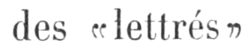
- Guillemets: Angular marks (« ») used in French, Greek, and other languages.
- CJK Brackets: Corner brackets (「 」) used in Chinese, Japanese, and Korean.
- Nesting: Different languages use specific hierarchies of marks for quotes within quotes.
- Unicode: Every variation of a quotation mark has a unique digital code point for precise rendering.
Typographic Forms and Classifications
Typographers generally classify quotation marks into two main shape categories. The first involves curved marks (often called "smart quotes"), which have distinct opening and closing shapes. The second involves straight marks, which are often used in programming and early typewriter technology where a single key represents both opening and closing functions.

In professional typesetting, the distinction between an apostrophe and a quotation mark is vital. Using the wrong symbol can lead to visual clutter or grammatical errors.

Some designers also note the impact of vertical spacing. For instance, elevated quotation marks can sometimes create excessive blank space in a line of text, a consideration for modern digital layout design.
![Blank space (in yellow) provoked by elevated quotation marks; some type designers consider this excessive.[8]](/images/9b/4b/9b4be6b61e378a1119759e9c87143fb29904464a543fc4f0cad44ec9ce028fbf.webp)
Language-Specific Variations
The way quotation marks are applied is one of the most striking differences between linguistic cultures. Below is a summary of how various languages handle these marks.
| Language | Primary Style | Secondary/Nested Style |
|---|---|---|
| English | “Double” or ‘Single’ | N/A |
| French | « Double Angle » | ‹ Single Angle › |
| German | „Double Low-High“ | ‚Single Low‘ |
| Japanese/Chinese | 「Corner Brackets」 | 『White Corner Brackets』 |
| Spanish (LatAm) | "Straight/Double" | N/A |
European Traditions
In French, the standard is the guillemet (« »). Notably, French typography often includes a non-breaking space between the guillemet and the quoted text to ensure proper spacing.
German uses a unique system where the opening double quotation mark is placed at the bottom of the line (‚), while the closing mark is at the top. In Switzerland, German text may instead adopt the French-style angle quotation marks.
Finnish and Swedish often utilize a quotation dash (–) as an alternative for beginning quoted speech, alongside standard primary and secondary level marks.

East Asian (CJK) Traditions
Chinese, Japanese, and Korean (CJK) languages utilize corner brackets. These marks are highly specialized: corner brackets (「 」) are often used for titles of short stories or articles, while white corner brackets (『 』) are frequently used for book titles.
In traditional vertical writing, these brackets are rotated to fit the flow of the text, appearing as ﹁ and ﹂.
Frequently Asked Questions
What is the difference between straight and curly quotes?
Straight quotes are ambidextrous symbols used primarily in coding and typewriters. Curly quotes (or smart quotes) are typographically correct for literature, featuring distinct left and right shapes.
What are guillemets?
Guillemets are angular quotation marks (« ») used in several languages, including French, Greek, and Norwegian.
How do I handle nested quotations?
Different languages have specific hierarchies. For example, English typically uses double quotes for the primary level and single quotes for the inner level, whereas Hungarian uses a complex three-level system involving different types of angle and single marks.
Why do some languages use low quotation marks?
Languages like German and Polish use low-9 quotation marks (bottom-aligned) to distinguish opening marks from closing marks, providing a clear visual cue for the start of a quote.
Are quotation marks used for anything other than speech?
Yes. In some languages, such as Hungarian, unpaired single quotes are used to signify the "meaning of the preceding term," acting more as a definition marker than a speech indicator.