Quotation Marks: A Global Guide to Typographic Styles and Usage
Quotation marks—also known as quotes, speech marks, inverted commas, or talking marks—are essential punctuation tools used to set off specific words or phrases. While most English speakers are familiar with the standard curved or straight marks, quotation styles vary dramatically across different languages, cultures, and digital platforms.
In English writing, these marks are typically placed in pairs around a word or phrase to indicate direct speech, a citation, or a specific term. Depending on the context, they can signify a literal quotation or be used for nested quotes within a larger statement.
Key Facts
- English primarily uses curved (smart) quotes or straight (typewriter) quotes.
- Guillemets (« ») are the standard in French and are also used in Greek, Norwegian, and Swiss German.
- CJK languages (Chinese, Japanese, and Korean) utilize unique corner brackets (「 」) and white corner brackets (『 』).
- German and Polish often use low-opening quotation marks („) paired with high-closing marks.
- Unicode provides standardized code points for every variation of quotation mark to ensure consistency across digital devices.
Typographic Forms in English
English-language texts generally employ two shape classifications. The first is the curved quote (also called smart quotes), which distinguishes between opening and closing marks. The second is the straight quote, a legacy of the typewriter era designed to save space on the keyboard by using a single, ambidextrous character for both sides.
When nesting quotations in English, a common practice is to use double quotes for the primary quotation and single quotes for the nested material. For example: "He answered: 'It's only a gizmo.'"

In some professional typography, designers must be careful of the "clash" between apostrophes and curved quotation marks, as they can look identical and confuse the reader.

International Quotation Styles
European Variations
Many European languages deviate from the English style. French uses guillemets (« »), typically accompanied by a non-breaking space. German and Polish frequently use a "low-high" system, where the opening mark is placed at the baseline of the text.
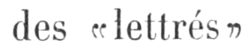
In Hungarian, a complex three-level system can be used: first-level double quotes („ ”), second-level angle quotes (» «), and third-level single quotes (’ ’). Greek utilizes both angled marks and a specific quotation dash (em-dash) for direct speech.
CJK (Chinese, Japanese, and Korean) Brackets
East Asian typography uses distinct brackets. Corner brackets (「 」) are common for primary quotes, while white corner brackets (『 』) are often used for titles of books or nested quotes. These marks are rotated when used in vertical text.

Digital Implementation and Keyboards
The transition from typewriters to computers initially popularized the straight quote (U+0022) because it was easier to map to a single key. Modern operating systems now use "smart quotes" that automatically convert straight marks into curved ones based on their position in a sentence.
Different keyboard layouts are optimized for regional marks. For instance, the French BÉPO and Greek keyboards provide direct access to guillemets, while Japanese keyboards include dedicated keys for corner brackets.
![Blank space (in yellow) provoked by elevated quotation marks; some type designers consider this excessive.[8]](/images/9b/4b/9b4be6b61e378a1119759e9c87143fb29904464a543fc4f0cad44ec9ce028fbf.webp)
Summary of Common Quotation Marks
| Style Name | Symbols | Primary Languages | Unicode (Left/Right) |
|---|---|---|---|
| Curved/Smart | “ ” | English, Korean, Chinese | U+201C / U+201D |
| Guillemets | « » | French, Greek, Norwegian | U+00AB / U+00BB |
| Low-High | „ “ | German, Polish | U+201E / U+201D |
| Corner Brackets | 「 」 | Japanese, Chinese, Korean | U+300C / U+300D |
| Angle Brackets | 《 》 | Chinese, Korean | U+300A / U+300B |
Frequently Asked Questions
What is the difference between straight and curly quotes?
Straight quotes are vertical marks used primarily in coding and on typewriters. Curly quotes (smart quotes) are curved and differ depending on whether they open or close a quotation, providing a more professional, polished look in print.
What are guillemets?
Guillemets are angled quotation marks (« ») used extensively in French and other European languages. They are distinct from the angle brackets used in mathematics or CJK languages.
How are nested quotations handled in English?
In English, the standard is to use double quotation marks for the outer quote and single quotation marks for any quote nested inside it.
Why do some languages use quotation marks at the bottom of the line?
Languages like German and Polish use a typographic tradition where the opening mark (e.g., „) is placed at the baseline of the text rather than at the top, creating a visual bracket with the closing mark.
What are CJK brackets?
CJK brackets refer to the corner brackets (「 」) and white corner brackets (『 』) used in Chinese, Japanese, and Korean writing to denote quotations or titles.