Hangul Jamo Extended-A: Preserving Archaic Korean Consonants in Unicode
The digital representation of language requires a precise system to ensure that every character, including those from ancient texts, can be displayed accurately across all devices. For the Korean script, this is achieved through the Unicode Standard. One specific segment of this system is the Hangul Jamo Extended-A block, a specialized set of characters designed to support the complexities of historical Korean writing.
Unlike modern Korean, which uses a streamlined set of characters, archaic Hangul utilized a wider array of consonant clusters. The Hangul Jamo Extended-A block provides the necessary tools to digitally reconstruct these ancient forms, ensuring that linguistic history is preserved in the digital age.
Key Facts
- Unicode Range: U+A960 to U+A97F.
- Total Capacity: 32 code points.
- Assigned Characters: 29 code points are currently in use.
- Primary Function: Contains choseong (initial consonant) forms of archaic Hangul consonant clusters.
- Plane: Located within the Basic Multilingual Plane (BMP).
- Introduction Date: Added in Unicode version 5.2 (2009).
The Role of Choseong in Archaic Hangul
In the Korean writing system, a syllable is composed of several parts. The choseong refers to the initial consonant that begins the syllable. While modern Korean has a standardized set of these initials, historical texts often employed complex consonant clusters that are no longer used in standard modern Korean.
The Hangul Jamo Extended-A block is essential because it allows for the dynamic composition of syllables. Because there are too many possible archaic combinations to create a precomposed character for every single one, Unicode provides these individual Jamo (alphabet letters) so they can be combined as needed to form syllables that do not exist as single precomposed units.
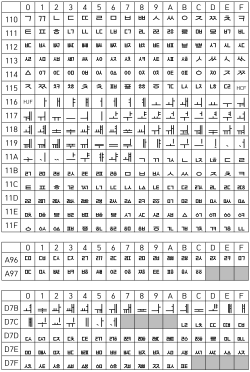
Technical Specifications
The block is situated in the Basic Multilingual Plane (BMP), which is the primary plane used for most modern languages and common symbols. Out of the 32 available code points in the U+A960..U+A97F range, 29 have been assigned to specific archaic characters, leaving 3 reserved code points for future use.
| Attribute | Details |
|---|---|
| Unicode Range | U+A960..U+A97F |
| Total Code Points | 32 |
| Assigned Characters | 29 |
| Reserved Characters | 3 |
| Unicode Version Added | 5.2 (2009) |
| Script/Alphabet | Hangul |
Frequently Asked Questions
What is the purpose of the Hangul Jamo Extended-A block?
It provides the initial consonant (choseong) forms for archaic Hangul consonant clusters, allowing users to digitally represent historical Korean syllables that are not part of the modern standard.
Why are these characters not available as precomposed syllables?
Because archaic Korean used a vast number of consonant combinations, it is more efficient to provide the individual components (Jamo) for dynamic composition rather than creating a precomposed character for every possible historical syllable.
When was this block added to the Unicode Standard?
The Hangul Jamo Extended-A block was introduced in Unicode version 5.2 in 2009.
How many characters are currently assigned in this block?
As of the current standard, 29 code points are assigned, with 3 remaining as reserved.
Where is this block located within the Unicode planes?
It is located in the Basic Multilingual Plane (BMP), which is the most commonly used plane for global scripts.