Quinoa: The Nutrient-Dense Andean Grain Powering Global Nutrition
Quinoa (Chenopodium quinoa) is a high-protein seed that has transitioned from a regional staple of the Andean highlands to a global nutritional phenomenon. Thriving at high elevations, this resilient plant is prized for its ability to grow in challenging climates and its exceptional nutritional profile, making it a critical resource for food security.
While traditionally cultivated by small farms and associations in the Andean region, quinoa's popularity has surged in North America, Europe, and Australasia. This increased demand led to a significant economic boom between 2006 and 2014, during which crop prices tripled, eventually leading to a boom-and-bust market cycle.
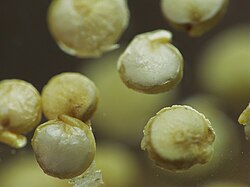
Key Facts
- Scientific Name: Chenopodium quinoa, belonging to the Amaranthaceae family.
- Primary Producers: Peru and Bolivia dominate global production.
- Global Reach: Now cultivated in over 70 countries, including India, Kenya, and the United States.
- Nutritional Powerhouse: Rich in protein, dietary fiber, and essential minerals like manganese and copper.
- UN Recognition: The United Nations recognized its importance by designating an International Year of Quinoa.
Taxonomy and Distribution
Quinoa is classified under the kingdom Plantae and the order Caryophyllales. It is a member of the genus Chenopodium. Historically, its natural distribution was centered in the Andean region of South America, where it evolved to withstand harsh, high-altitude environments.
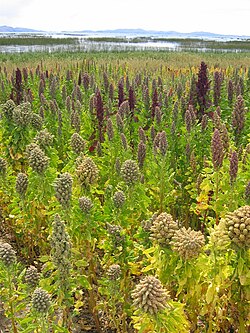
Today, the crop's footprint has expanded far beyond its origins. It is now grown in diverse climates across Europe and North America, though the heart of its production remains in the South American Altiplano.
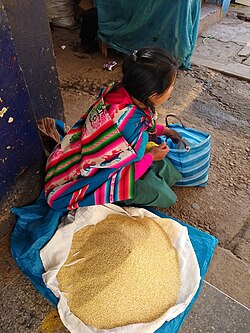
Global Production and Economics
The production of quinoa is heavily concentrated in two countries. According to 2023 data from FAOSTAT of the United Nations, total world production reached 112,251 tonnes.
| Country/Region | Production (Tonnes) | Percentage of Total |
|---|---|---|
| Peru | 70,479 | 62% |
| Bolivia | 41,380 | 37% |
| Ecuador | 378 | <1% |
| World Total | 112,251 | 100% |
The rapid rise in global demand has had complex effects on growers. While it brought wealth to many Andean farmers, it also encouraged monoculture—the practice of growing a single crop over a wide area—which can negatively impact biodiversity and soil health, making the land more vulnerable to climate change.
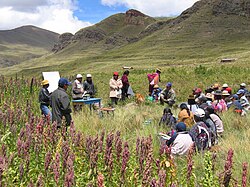
Cultivation and Processing
Quinoa is known for its hardiness. It requires specific soil conditions and is often managed through farmer field schools to improve crop husbandry. The plant is grown in various colors, including white, red, and black varieties.
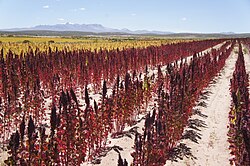
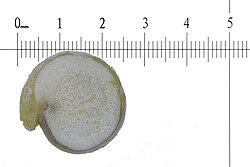
The process from sowing to harvest involves careful management of genetics and soil health. Once harvested, the seeds must be processed to remove bitter coatings before they are ready for consumption. The resulting seeds are small, typically measured in millimeters.
Nutritional Profile
Quinoa is highly valued for its chemistry, particularly its protein content and mineral density. It provides a significant amount of energy and essential vitamins, particularly from the B-complex group.
Dry Seed Nutrition (per 100g)
- Energy: 368 kcal (1,539 kJ)
- Protein: 14.1 g
- Carbohydrates: 64.2 g
- Dietary Fibre: 7.0 g
- Fat: 6.1 g
In terms of micronutrients, quinoa is an exceptional source of Manganese (87% DV) and Copper (66% DV), as well as significant amounts of Magnesium, Phosphorus, and Iron.
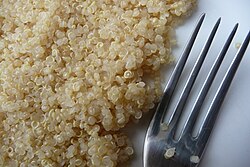
When cooked, the nutritional density per 100g changes due to water absorption. Cooked quinoa provides approximately 120 kcal, 4.4 g of protein, and 21.3 g of carbohydrates per 100g serving.
Frequently Asked Questions
Is quinoa a cereal grain?
While often grouped with cereals, quinoa is technically a pseudocereal because it comes from a broad-leaved plant (Chenopodium quinoa) rather than a grass.
Which countries produce the most quinoa?
Peru is the leading producer, accounting for 62% of global production, followed closely by Bolivia at 37%.
What are the primary health benefits of quinoa?
Quinoa is rich in protein, dietary fiber, and essential minerals. It is particularly high in manganese, copper, magnesium, and phosphorus.
Is quinoa considered kosher?
Yes, quinoa has received kosher certification, including rulings that it is permissible for use during Passover.
How has global demand affected Andean farmers?
Increased demand initially tripled prices and brought riches to the region, but it also led to a boom-and-bust cycle and environmental concerns related to monoculture.