The Complete Guide to Kale: From Ancient Roots to Modern Superfood
Whether it is blended into a vibrant green smoothie, baked into crispy chips, or used as a stunning centerpiece in a garden, kale is one of the most versatile plants in the botanical world. Known scientifically as Brassica oleracea (specifically the Acephala Group), kale is a member of the cabbage family primarily grown for its nutrient-dense edible leaves. Unlike traditional cabbage, kale does not form a compact head, allowing its foliage to grow in a variety of shapes and colors, from deep purples to bright greens.
What is Kale?
Kale, often referred to as leaf cabbage, is a hardy plant derived from wild mustard. It is considered more closely related to wild cabbage than many other domesticated varieties of Brassica oleracea. The term "kale" finds its roots in the Northern Middle English word cale, which is linked to the Scots kail and German Kohl, all ultimately originating from the Latin word caulis, meaning cabbage.
Physically, kale is characterized by its non-heading central leaves. Depending on the variety, these leaves can be bumpy, curly, or flat. The color palette is equally diverse, with foliage appearing in shades of green, purple, red, pink, lavender, yellow-green, or creamy white.
A Journey Through History and Cultivation
Kale's history dates back to at least 2000 BCE in Anatolia and the eastern Mediterranean. By the 4th century BC, both curly-leaved and flat-leaved varieties were cultivated in Greece. The Romans referred to these as Sabellian kale, and they are widely regarded as the ancestors of the modern varieties we eat today.
In Western Europe, records from 14th-century England began to distinguish loose-leaf kale from hard-heading cabbage. The plant eventually made its way to North America in the 19th century via Russian traders. USDA botanist David Fairchild is also credited with introducing kale to Americans after bringing it back from Croatia, where it was valued for being inexpensive, easy to grow, and capable of desalinating soil.
From a cultivation standpoint, kale is a biennial plant (a plant that takes two years to complete its biological lifecycle) grown from seed. It is exceptionally hardy, capable of surviving temperatures as low as −15 °C (5 °F). Interestingly, many gardeners find that kale becomes sweeter after a heavy frost.
Exploring the Diverse Cultivars of Kale
Kale varieties are generally classified by their stem length (low, intermediate, or high) and their leaf type. The most common classifications include:
- Curly-leaf: Includes Scots kale and blue curled kale.
- Bumpy-leaf: Known as Tuscan cabbage, lacinato, or dinosaur kale. In Italy, this is called cavolo nero, and in Portugal, it is known as couve galega.
- Sparkly-leaf: Characterized by shiny, glossy foliage.
- Plain-leaf: Flat-leaf types, such as white Russian and red Russian kale.
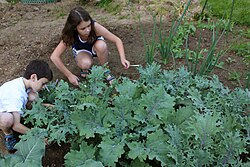
Other specialized varieties include Kai-lan (Chinese kale), Jersey kale (also called cow cabbage), and "hungry gap" rape kale, named after the winter period in traditional agriculture when other harvests were scarce.
The Beauty of Ornamental Kale
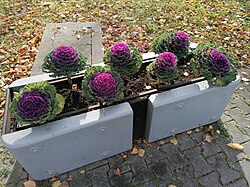
Beyond the kitchen, kale is frequently grown for its aesthetic appeal. Ornamental kale features brilliant colors—such as blue, violet, pink, and white—in the interior of the rosette. Popular ornamental varieties include peacock kale, coral prince, kamone coral queen, color up kale, and chidori kale.
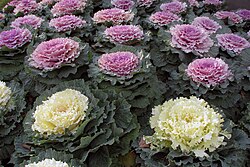
While ornamental kale is edible, it is generally tougher and less palatable than culinary varieties. Despite this, its visual appeal is highly valued; it has been used in wedding bouquets, vegetable arrangements, and even as a decorative element for salad bars in commercial settings.
Nutritional Powerhouse: Science and Health
Kale is celebrated for its dense nutritional profile. Raw kale is composed of approximately 84% water, 9% carbohydrates, 4% protein, and 1% fat. It is an exceptional source of Vitamin K, providing over 300% of the Daily Value (DV) per 100g serving, and is rich in Vitamin A, Vitamin C, folate, and manganese.
Phytochemicals and Cooking
Kale contains several important phytochemicals (biologically active compounds found in plants), including:
- Carotenoids: Specifically lutein and zeaxanthin.
- Glucosinolates: Compounds like glucoraphanin, which can form sulforaphane.
- Polyphenols: Such as ferulic acid.
The method of preparation significantly impacts these nutrients. Boiling kale reduces most nutrients and lowers the level of glucosinolate compounds. However, steaming, microwaving, or stir-frying preserves these compounds more effectively. Additionally, cooking helps reduce the levels of oxalic acid found in the leaves.
| Nutrient | Raw Kale | Boiled Kale |
|---|---|---|
| Energy | 49 kcal | 28 kcal |
| Protein | 4.3 g | 1.9 g |
| Carbohydrates | 8.8 g | 5.63 g |
| Dietary Fiber | 3.6 g | 2 g |
| Vitamin K (%DV) | 325% | 348% |
| Vitamin C (%DV) | 133% | 46% |
| Vitamin A equiv. (%DV) | 27% | 16% |
| Manganese (%DV) | 29% | 18% |
Global Culinary Traditions
Kale is a staple in many cultures, often serving as a comforting winter food:
- Europe: In the Netherlands, it is used in boerenkoolstamppot (mashed potatoes and kale). Northern Germany celebrates Kohlfahrt, a tradition of hiking followed by a kale feast. In Italy, cavolo nero is essential for ribollita soup, while Portugal enjoys caldo verde. In Ireland, kale is mixed with mashed potatoes for colcannon.
- Asia: In Sri Lanka, kale (known as kola gova or ela gova) is used to make kale mallung, which is served with rice.
- United States: Once primarily decorative, kale surged in popularity during the 1990s as a health food, becoming a staple in salads, smoothies, and as a potato chip alternative.
Key Facts
- Scientific Name: Brassica oleracea (Acephala Group).
- Hardiness: Can survive temperatures as low as −15 °C (5 °F).
- Key Nutrients: Extremely high in Vitamin K, A, and C.
- Origin: Eastern Mediterranean and Anatolia, cultivated by 2000 BCE.
- Variety Types: Classified as curly, bumpy, sparkly, or plain-leaf.
- Culinary Use: Used globally in dishes like caldo verde (Portugal) and colcannon (Ireland).
Frequently Asked Questions
Is ornamental kale edible?
Yes, ornamental kale is edible, but it is generally tougher and less palatable than the varieties specifically grown for food.
Does freezing weather affect the taste of kale?
Yes, kale can actually become sweeter after it has been exposed to a heavy frost.
What is the best way to cook kale to preserve nutrients?
Steaming, microwaving, or stir-frying are better than boiling, as boiling diminishes most nutrients and reduces the level of beneficial glucosinolate compounds.
What is "cavolo nero"?
Cavolo nero is the Italian name for bumpy-leaf kale, also known as Tuscan kale, lacinato, or dinosaur kale.
Why is kale considered a "superfood"?
Kale is considered a superfood due to its high concentration of vitamins A, C, and K, as well as minerals like manganese and various health-promoting phytochemicals.