Quentin D. Wheeler: A Legacy in Entomology and Biodiversity
Quentin Duane Wheeler is a distinguished American entomologist, taxonomist, and author who has dedicated his career to the study and classification of life on Earth. From his early academic pursuits to leading major educational institutions, Wheeler has played a pivotal role in advancing taxonomy—the science of naming, defining, and classifying organisms—and phylogenetics, the study of evolutionary relationships among biological entities.
Beyond the laboratory and the field, Wheeler has bridged the gap between complex science and public awareness, serving as a newspaper columnist and a leader in environmental education. His work emphasizes the critical importance of natural history collections in the global effort to conserve biodiversity.
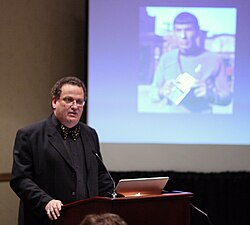
Key Facts
- Academic Background: Holds a B.S., M.S., and Ph.D. in entomology from Ohio State University.
- Leadership: Served as the fourth President of the State University of New York College of Environmental Science and Forestry (SUNY-ESF) from 2014 to 2018.
- Scientific Contribution: Has named more than 100 new species and authored approximately 150 scientific articles.
- Specialization: Expert in the evolution and classification of insects, with a particular focus on beetles (Coleoptera).
- Public Outreach: Writes a periodic column on new species for The Guardian newspaper.
Academic Foundation and Early Career
Wheeler's scientific journey began at Ohio State University, where he completed his undergraduate and graduate studies. He earned his Ph.D. in 1980 with a dissertation focused on the comparative morphology and revised classification of the genera Lymexylidae, a family of beetles. This early work established his expertise in cladistics, a method of classifying animals and plants according to the proportion of measurable characteristics that they have in common.
For 24 years, Wheeler was a faculty member at Cornell University, eventually achieving the rank of tenured full professor. During his tenure at Cornell, he served as the chair of entomology and the director of the Liberty Hyde Bailey Hortorium.
Leadership in Global Science and Education
Wheeler's career is marked by high-level administrative roles across prestigious institutions. He served as the Director of the Division of Environmental Biology at the National Science Foundation (2001–2004) and as the Keeper and Head of Entomology at the Natural History Museum in London (2004–2006).
In 2006, he joined Arizona State University (ASU), where he became the Virginia M. Ullman Professor of Natural History and the Environment. At ASU, he founded the International Institute for Species Exploration and served as the vice president and dean of the College of Liberal Arts and Sciences from 2007 to 2011.
His administrative career culminated in his presidency at the State University of New York College of Environmental Science and Forestry (SUNY-ESF), where he led the institution from January 2014 until his retirement on June 30, 2018.
Research and Scientific Contributions
Wheeler's research focuses on the intersection of species exploration and conservation. He is a proponent of cybertaxonomy, which utilizes digital tools and the internet to accelerate the description and classification of species. His work argues that natural history collections are indispensable tools for understanding and protecting biodiversity.
His contributions to the field are recognized by several honors, including fellowships from the Royal Entomological Society, the Linnean Society of London, and the American Association for the Advancement of Science. His impact is further immortalized in the naming of three beetle species in his honor: Tonerus wheeleri, Eleodes wheeleri, and Agathisium wheeleri.
Summary of Professional Milestones
| Period | Role | Institution |
|---|---|---|
| 2001–2004 | Director, Division of Environmental Biology | National Science Foundation |
| 2004–2006 | Keeper and Head of Entomology | Natural History Museum, London |
| 2007–2011 | Vice-President and Dean | ASU College of Liberal Arts and Sciences |
| 2014–2018 | President | SUNY College of Environmental Science and Forestry |
Published Works
Wheeler has authored six books and roughly 150 scientific articles. His writing ranges from highly technical phylogenetic studies to accessible popular science. One of his most notable books for a general audience is What on Earth? 100 of Our Planet's Most Amazing New Species (2013), co-authored with Sara Pennak.
His academic papers often address the "taxonomic impediment"—the shortage of taxonomists available to describe the world's biodiversity—and the necessity of evolving phylogenetic species concepts to better reflect evolutionary history.
Frequently Asked Questions
What is Quentin Wheeler's primary area of scientific expertise?
Quentin Wheeler is an expert in entomology, specifically focusing on the taxonomy, phylogenetics, and evolution of insects, with a particular emphasis on beetles.
Which educational institutions has he led?
He served as the President of the State University of New York College of Environmental Science and Forestry (SUNY-ESF) and as the Vice-President and Dean of the College of Liberal Arts and Sciences at Arizona State University.
What is cybertaxonomy?
Cybertaxonomy is the use of digital technology and online platforms to facilitate the identification, description, and classification of biological species.
How has he contributed to public science education?
Wheeler writes a periodic column for The Guardian newspaper in London, where he informs the public about newly discovered species, and has authored books designed for a general audience.
How many species has he named?
Quentin Wheeler has named more than 100 new species throughout his research career.