Quality of Life: Measuring Human Well-being and Global Development
Quality of Life (QOL) is a multifaceted concept that extends far beyond simple financial wealth. The World Health Organization defines it as an individual's perception of their position in life, viewed through the lens of the culture and value systems in which they live, and measured against their own goals, expectations, standards, and concerns.
While often discussed in general terms, QOL is a critical metric in fields such as healthcare, politics, international development, and employment. It encompasses a broad spectrum of indicators, including physical and mental health, education, safety, freedom, social belonging, and the environment. When specifically focusing on the intersection of health and well-being, experts refer to this as Health Related QOL (HRQOL).
Key Facts
- QOL is subjective and depends on an individual's personal values and cultural context.
- The Human Development Index (HDI) is a primary global tool for measuring potential human development.
- Income increases life evaluations, but emotional well-being tends to level off after a certain threshold (approximately $75,000 per year as of 2010).
- The Happy Planet Index incorporates ecological footprints, shifting the focus away from purely Western dominance.
- Digital Quality of Life is now measured via pillars like internet affordability and electronic security.
Theoretical Frameworks for Assessing QOL
Measuring something as personal as "life satisfaction" requires structured theories. One such approach is the engaged theory, published in the Journal of Applied Research in the Quality of Life. This theory suggests that QOL should be assessed across four primary domains: ecology, economics, politics, and culture.
Within the cultural domain, the theory breaks down quality of life into several specific subdomains:
- Beliefs and ideas
- Creativity and recreation
- Enquiry and learning
- Gender and generations
- Identity and engagement
- Memory and projection
- Well-being and health
Quantitative Measurement and Challenges
Quantifying QOL is challenging because while materialistic goods and healthcare access are easy to count, the fulfillment of personal ideals is subjective. Ecological economist Robert Costanza has noted that while QOL is a frequent policy goal, an adequate definition and measurement have remained elusive.
One of the most prominent tools is the WHOQOL-BREF, a 26-item questionnaire from the World Health Organization. It evaluates four domains: physical, psychological, social, and environmental. However, the tool is not without flaws; a 2026 study of 21 country versions revealed significant discrepancies, including translation errors and inconsistent timeframes that hindered meaningful cross-country comparisons.
Global Indices and Benchmarks
To compare nations, several international indices have been developed, each prioritizing different aspects of human existence.
Human Development Index (HDI)
The United Nations Development Programme uses the HDI to quantify the options available to individuals by combining life expectancy, education, and standard of living. In 2010, the Inequality-adjusted Human Development Index (IHDI) was introduced. While the original HDI represents "potential" development, the IHDI reflects the actual level of development after accounting for inequality.
World Happiness Report
This landmark survey ranks 156 countries based on happiness levels. It utilizes the science of happiness to explain national variations, providing data that governments and organizations use to shape policies for better living conditions.
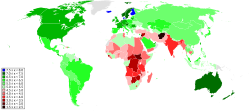
Alternative Measures
- Physical Quality of Life Index (PQLI): Developed by M. D. Morris in the 1970s, it focused on basic literacy, infant mortality, and life expectancy to provide a more optimistic view of global progress.
- Happy Planet Index: Introduced in 2006, this index is unique because it includes a country's ecological footprint. This approach often places nations like Costa Rica, Vietnam, and Colombia at the top, rather than North American or European countries.
- Digital Quality of Life Index: Created by Surfshark, this yearly study examines 121 countries across five pillars: internet affordability, quality, electronic infrastructure, security, and e-government.
The Relationship Between Income and Happiness
A significant study by Princeton University professors involving 1,000 U.S. residents found a nuanced link between money and well-being. They discovered that while overall life evaluations (rating life on a scale of 1 to 10) rise steadily with income, emotional daily experiences (joy, stress, sadness) level off at approximately $75,000 per year (2010 figures). Beyond this point, additional income does not significantly increase happiness or reduce stress. Conversely, below this threshold, poverty exacerbates the pain of misfortunes such as divorce or disease.
QOL in International Development
In the realm of international development, QOL is viewed as a more comprehensive measure than the standard of living. However, different organizations define the path to improvement differently.
The World Bank defines poverty as a lack of basic human needs—such as food, water, shelter, and healthcare—and views the reduction of poverty as the primary means of improving QOL. In contrast, many NGOs focus on individual or community-level improvements through sponsorship and material aid, rather than national poverty statistics.
![The Economist Intelligence Unit awarded Vienna the most livable city in 2019 Global Liveability Ranking.[29]](/images/5b/59/5b599fa3504ce7cb40a8614a2cc2fe92c2e4be3b7b972c5b27c324b90969b568.jpg)
| Index | Primary Focus | Key Metrics |
|---|---|---|
| HDI | Potential Human Development | Life expectancy, Education, Standard of living |
| World Happiness Report | Subjective Well-being | Happiness levels, National variations |
| Happy Planet Index | Sustainable Well-being | Well-being determinants, Ecological footprint |
| PQLI | Basic Physical Welfare | Literacy, Infant mortality, Life expectancy |
| Digital QOL Index | Digital Well-being | Internet quality, Affordability, E-security |
Frequently Asked Questions
What is the difference between HDI and IHDI?
The Human Development Index (HDI) measures the potential level of human development a society could achieve. The Inequality-adjusted Human Development Index (IHDI) adjusts the HDI to reflect the actual level of development by accounting for inequality within the population.
Does more money always lead to a better quality of life?
According to research, income increases a person's overall evaluation of their life. However, daily emotional experiences of happiness and stress tend to plateau after a certain income level (approximately $75,000 in 2010), meaning further wealth does not necessarily increase daily joy.
How does the Happy Planet Index differ from other measures?
Unlike many indices that focus on wealth or health alone, the Happy Planet Index incorporates the ecological footprint of a country, measuring how efficiently a nation produces well-being relative to its environmental impact.
What are the four domains of the WHOQOL-BREF?
The WHOQOL-BREF assesses quality of life across four specific domains: physical health, psychological state, social relationships, and environmental factors.
How does the World Bank define poverty in relation to QOL?
The World Bank defines poverty as a lack of basic human needs, including food, water, shelter, freedom, and access to healthcare and education. In this framework, poverty is essentially viewed as a low quality of life.