Qajar Dynasty: The History and Legacy of Iran's Imperial Lineage
The Qajar dynasty was a prominent aristocratic lineage that ruled Iran from 1789 until 1925. Emerging from the Turkoman Qajar tribe of the Qizilbash confederacy—a powerful alliance of Turkoman warriors who served as the primary military force for the Safavid Empire—the Qajars rose to prominence in the early 16th century under Shahverdi Sultan.
The dynasty's ascent to imperial power began with the Unification of Iran (1779–1796), led by Agha Mohammad Khan Qajar, who established the dynasty's rule in 1789. For over 130 years, the Qajars navigated the complexities of Persian governance, blending nomadic traditions with Islamic-Shi’i and pre-Islamic elements of statecraft.
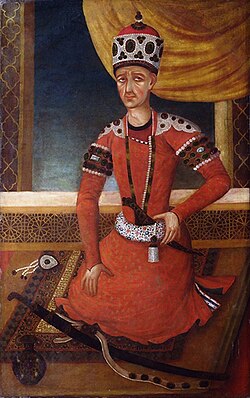
Key Facts
- Founded: 1789 by Agha Mohammad Khan Qajar.
- Duration: Ruled Iran for 136 years until 1925.
- Origin: Astarabad, Iran.
- Religion: Twelver Shia Islam.
- Deposition: Replaced by the Pahlavi dynasty in December 1925.
- Current Head: Prince Mohammad Hassan Mirza II (Heir Presumptive).
The Rise to Power
Long before they became monarchs, the Qajars were influential tribal heads. Their military prowess was evident as early as 1500/01, when a contingent of Qajars supported Ismail during the establishment of the Safavid Empire. Despite being smaller than other tribes within the Qizilbash confederacy, they remained pivotal players in 16th-century Iranian politics.
The lineage of the monarchs traces back to Shah Qoli Khan of the Quvanlu of Ganja, who married into the Quvanlu Qajars of Astarabad. His grandson, Mohammad Hasan Khan, was the father of the dynasty's founder, Agha Mohammad Khan. This period of tribal consolidation provided the necessary foundation for the Qajars to unify the country following the chaos of the post-Safavid era.
The Qajar Monarchs and Their Reign
The Qajar era was characterized by a series of shahs who sought to legitimize their authority through grandiose titles. The rulers were styled as Imperial Majesty, while their children were addressed as Imperial Highness. To emphasize their divine authority, they adopted titles such as Shahanshah of Iran (King of Kings), Zell'ollah (Shadow of God on earth), and Qebleh-ye 'ālam (Pivot of the Universe).
![Naser al-Din Shah, the fourth Qajar shah, notably used the title "Pivot of the Universe" (Qebleh-ye Alam)[18]](/images/97/c2/97c26388b6f513c7d87f49db7672a816a35318aeff8d8fd9fa93677f4c5fd4f5.jpg)
The reign of Naser al-Din Shah was particularly notable for its length and the cultural shifts it oversaw. Later, Mozaffar ad-Din Shah is remembered for signing the Persian Constitution of 1906, an event commemorated by the slogan Adl-e Moẓaffar inscribed on the Baharestan Palace.
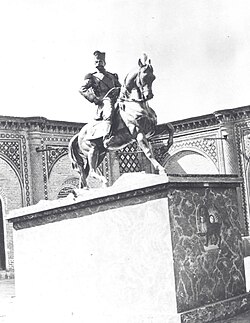
The dynasty's rule ended on December 12, 1925, when the Majlis (the Iranian parliament) declared Reza Shah, a former brigadier-general of the Persian Cossack Brigade, as the new shah, marking the start of the Pahlavi dynasty.
Summary of Qajar Monarchs
| No. | Shah | Reign Start | Reign End | Duration |
|---|---|---|---|---|
| 1 | Mohammad Khan Qajar | 1789 | 1797 | 8 years |
| 2 | Fat′h-Ali Shah Qajar | 1797 | 1834 | 37 years |
| 3 | Mohammad Shah Qajar | 1834 | 1848 | 13 years |
| 4 | Naser al-Din Shah Qajar | 1848 | 1896 | 47 years |
| 5 | Mozaffar ad-Din Shah Qajar | 1896 | 1907 | 10 years |
| 6 | Mohammad Ali Shah Qajar | 1907 | 1909 | 2 years |
| 7 | Ahmad Shah Qajar | 1909 | 1925 | 16 years |
Notable Members and Contributions
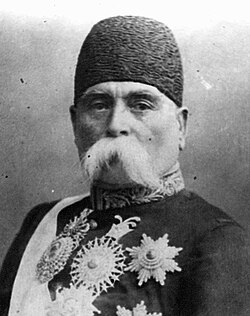
The Qajar family produced numerous figures who influenced politics, military affairs, and the arts. In politics, figures like Prince Abdol-Hossein Farman Farma and Mohammad Mosaddegh (the nephew of Farmanfarma) played critical roles in Iranian governance.
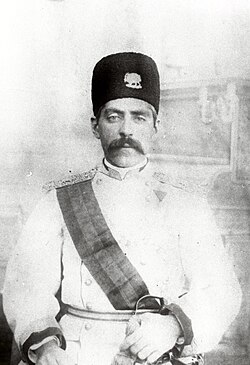
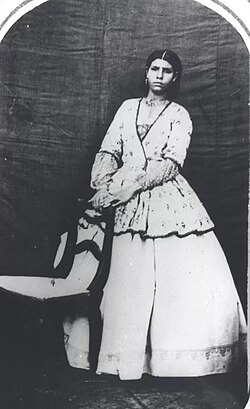
The dynasty also saw the emergence of pioneering women. Princess Tadj al-Saltaneh, daughter of Naser-din-Shah, was a painter and co-founder of Anjoman Naswan, the first Iranian women's rights movement. Similarly, Gowhar Qajar contributed to the intellectual landscape as a poet and astronomer.
Beyond Iran, the dynasty had a Russian branch recognized as nobility by the Tsar, and the Aga Khans—descendants of Shah Fath Ali Shah—maintained their titles, which were officially recognized by the British government in 1938.
![Aga Khan IV, The titles of Prince and Princess are used by the Aga Khans and their children by virtue of their descent from Shah Fath Ali Shah of the Qajar dynasty. The title was officially recognised by the British government in 1938.[24]](/images/ed/24/ed24ba74071e374a44b86302a735de2a0154fa8c0387c792780532f3fc49c610.jpg)
Imperial Legacy and Architecture
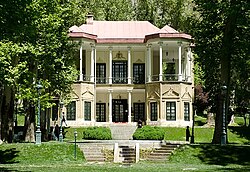
The Qajars are renowned for their architectural contributions, constructing lavish royal residences that served as centers of power and diplomacy. The most prominent of these are the Golestan and Niavaran Palace Complexes in Tehran. Other notable sites include the Ruby Palace, Naseri Palace, and the Negarestan Palace.
In addition to palaces, the dynasty left a mark through rock reliefs, such as the Fath Ali Shah Inscription in Cheshmeh-Ali, and various equestrian statues.
The Dynasty After 1925
Following their deposition, the Qajar Imperial Family continued in exile. The headship is inherited by the eldest male descendant of Mohammad Ali Shah. Today, descendants maintain social ties through the Kadjar (Qajar) Family Association, which often collaborates with the International Qajar Studies Association (IQSA).
![Hamid Mirza, heir presumptive and head of the Qajar dynasty from 1975 till 1988[13]](/images/5b/35/5b35c2ae0248a8504769e515aa6c88f9554fd6c2e739ff99944d10e62a82febc.jpg)
Frequently Asked Questions
Who founded the Qajar dynasty?
The dynasty was founded by Agha Mohammad Khan Qajar, who unified Iran between 1779 and 1796 and officially became shah in 1789.
How did the Qajar dynasty come to an end?
The dynasty ended in 1925 when the Iranian Majlis declared Reza Shah, a former brigadier-general, as the new shah, establishing the Pahlavi dynasty.
What were some of the unique titles used by Qajar shahs?
The shahs used grandiose titles to signify their authority, including "Shahanshah of Iran," "Zell'ollah" (Shadow of God), and "Qebleh-ye 'ālam" (Pivot of the Universe).
Who were some of the influential women of the Qajar era?
Princess Tadj al-Saltaneh was a co-founder of the first women's rights movement in Iran, and Gowhar Qajar was a noted poet and astronomer.
What is the current status of the Qajar family?
The family exists today in exile, with the headship passing to the eldest male descendant of Mohammad Ali Shah. They maintain their heritage through the Kadjar Family Association.