Psychedelic Rock: The Sound and Culture of the Acid Era
Emerging in the mid-1960s across the United States and the United Kingdom, psychedelic rock—often referred to as acid rock—represented a seismic shift in the musical landscape. More than just a genre, it was a sonic manifestation of the era's counterculture, blending traditional rock with experimental sounds to evoke the experience of hallucinogenic drugs and expanded consciousness.
The movement drew from a diverse array of stylistic origins, including folk, garage rock, jazz, blues, and electronic music. It also looked eastward, incorporating raga (traditional Indian music) and Middle Eastern modalities to create an otherworldly atmosphere.
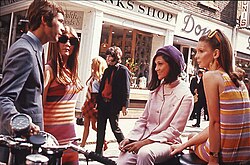
Key Facts
- Peak Era: Generally recognized as occurring between 1966 and 1969.
- Core Origins: Developed simultaneously in the US and UK during the mid-1960s.
- Defining Sound: Characterized by heavy use of feedback, wah-wah pedals, and fuzzbox effects.
- Cultural Hubs: Key scenes included Haight-Ashbury in San Francisco and the British underground.
- Legacy: Paved the way for progressive rock, heavy metal, and dream pop.
Musical Characteristics
Psychedelic rock is defined by its attempt to replicate the surreal and disorienting nature of a psychedelic trip. This was achieved through several distinct musical techniques:
Instrumentation and Effects
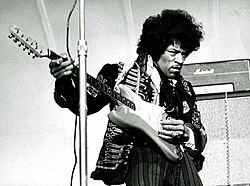
The electric guitar is the centerpiece of the genre, frequently modified with feedback, wah-wah, and fuzzbox units to create distorted, swirling textures. Musicians also integrated electronic instruments, such as synthesizers and the theremin, to add futuristic or eerie tones.
Composition and Structure
Unlike the standard pop songs of the time, psychedelic rock often featured disjunctive song structures. This included occasional changes in key and time signatures, as well as the use of modal melodies and drones (sustained notes or chords). Extended instrumental segments, particularly long guitar solos or collective "jams," became a hallmark of the style.
Global and Vocal Influences
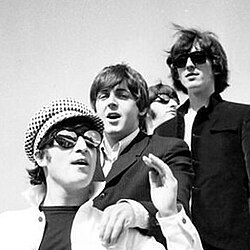
The genre heavily integrated elements of Indian and Middle Eastern music. Vocals often adopted a droning quality, and lyrics frequently made direct or indirect references to hallucinogenic experiences.
The Evolution of the Psychedelic Era
1960–1965: Precursors
The early 1960s saw the groundwork being laid through rock experiments and the influence of the avant-garde. These precursors set the stage for the more explicit psychedelic sounds that would follow.
1966: The Breakthrough
By 1966, the psychedelic implications of rock music became fully explicit and widely distributed. Music journalists and historians often cite 1966 as the official start of acid rock, as the music began to be reevaluated as a legitimate form of art in tandem with the growing psychedelic community.
1967–1969: The Peak Years
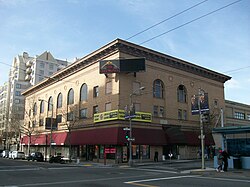
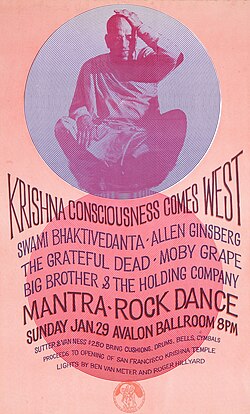
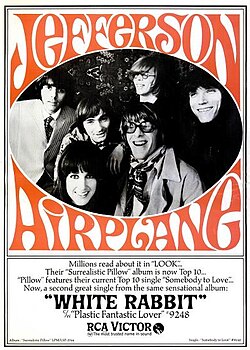
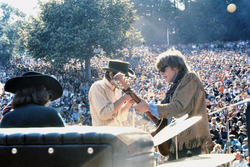
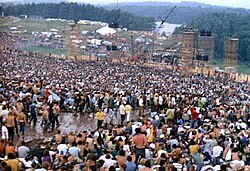
This period marked the height of the movement, characterized by the rise of regional scenes. The San Francisco Sound, centered in the Haight-Ashbury district, became iconic, while the Bosstown Sound emerged as a counterpart. This era saw the rise of legendary acts and massive gatherings, culminating in events like the Woodstock Festival in 1969.

Regional Variants and Subgenres
While centered in the West, psychedelic rock evolved into various forms and spread globally to regions including Turkey, Australia, Latin America, New Zealand, and Zambia.
| Category | Examples / Variants |
|---|---|
| Subgenres | Acid rock, raga rock, space rock, synthedelia, garage psych, heavy psych, freakbeat |
| Fusion Genres | Psychedelic soul, psychedelic funk, psychedelic pop, psychedelic folk, psychedelic rap, stoner rock |
| Derivative Forms | Art rock, hard rock, heavy metal, jam band, progressive rock, krautrock, shoegaze, dream pop |
Decline and Revivals
The original psychedelic era began to decline between 1969 and 1971. However, certain branches persisted. Psychedelic soul, championed by songwriters like Norman Whitfield for artists such as The Temptations and Marvin Gaye, remained popular into the early 1970s.
Neo-Psychedelia
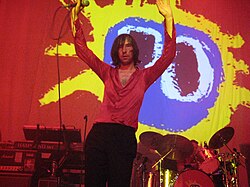
In the late 1970s, post-punk circles gave rise to neo-psychedelia. This style updated the 1960s approach, blending it with alternative and indie rock. In the early 1980s, the Los Angeles-based Paisley Underground movement—featuring acts like The Bangles and Dream Syndicate—further revitalized the sound through jangly guitar rock and recording experiments.
Frequently Asked Questions
What is the difference between psychedelic rock and acid rock?
The terms are generally used interchangeably. Both refer to the rock music of the mid-to-late 1960s that was influenced by psychedelic experiences and aimed to replicate those sensations through sound.
Which city was most influential to the psychedelic rock scene?
San Francisco was a primary hub, particularly the Haight-Ashbury district, which gave birth to the "San Francisco Sound." London was also a critical center for the British underground scene.
What are some common instruments used in psychedelic rock?
Beyond the standard rock setup, the genre frequently uses electric guitars with fuzzboxes and wah-wah pedals, synthesizers, the theremin, and instruments from Indian classical music to create drones.
How did psychedelic rock influence later music genres?
It served as a foundation for several major genres, including progressive rock (prog), heavy metal, and art rock, and later influenced the dream pop and shoegaze movements of the 1980s and 90s.
What is neo-psychedelia?
Neo-psychedelia is a revival style that emerged from late 1970s post-punk. It incorporates 1960s psychedelic elements into indie and alternative rock, often featuring distorted jams or psychedelic pop sensibilities.