Prussia's Democratic Elections in the Weimar Republic
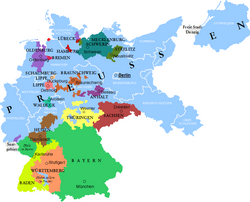
Between 1919 and 1933, the Free State of Prussia—the largest German state by both population and territory—operated as a democratic parliamentary system. Because of its sheer size and influence, Prussia served as a pivotal force in shaping the national political landscape of the Weimar era.
The legislative body responsible for governing the state was the Landtag, a state parliament elected through a series of democratic contests. While the broader German national government often faced volatility, the political structure within Prussia remained remarkably resilient for over a decade.
The Era of Stability: The Weimar Coalition
Throughout the 1920s, Prussia experienced a level of political stability that surpassed many other regions of Germany. This consistency was driven by the Weimar Coalition, a political alliance consisting of the Social Democratic Party (SPD), the Centre Party, and the German Democratic Party (DDP).
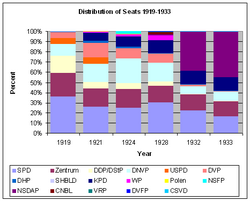
From 1919 until 1928, the SPD consistently emerged as the largest party, securing a plurality in every election. This allowed the coalition to maintain a steady grip on governance, providing a democratic counterweight during a period of national uncertainty.
The Rise of the NSDAP and the End of Democracy
The political tide shifted dramatically in the early 1930s. Mirroring the national trend toward extremism, the NSDAP (Nazi Party) gained significant momentum. In the elections of 1932 and 1933, the NSDAP won pluralities in the Prussian Landtag, signaling the collapse of the previous democratic consensus.
The democratic experiment in Prussia came to an abrupt end shortly after the Nazi seizure of power. On January 30, 1934, the "Law on the Reconstruction of the Reich" was enacted. This legislation formally abolished the Landtag and dismantled the German federal system, replacing it with a unitary state where power was centralized under a single national authority.
Key Facts
- Dominant Party: The SPD held the plurality in all Prussian elections from 1919 to 1928.
- Governing Alliance: The Weimar Coalition (SPD, Centre Party, and DDP) provided stability throughout the 1920s.
- Shift in Power: The NSDAP won the pluralities in the final elections of 1932 and 1933.
- Abolition: The Landtag was dissolved on January 30, 1934, via the Law on the Reconstruction of the Reich.
| Period | Dominant Political Force | System Status |
|---|---|---|
| 1919–1928 | SPD / Weimar Coalition | Stable Democratic Parliamentary |
| 1932–1933 | NSDAP | Democratic Transition to Authoritarianism |
| 1934 Onward | Centralized Reich Government | Unitary State (Landtag Abolished) |
Frequently Asked Questions
What was the Landtag?
The Landtag was the democratically elected state parliament of the Free State of Prussia.
Which parties formed the Weimar Coalition in Prussia?
The coalition consisted of the Social Democratic Party (SPD), the Centre Party, and the German Democratic Party (DDP).
Why was Prussia's political system considered more stable than other German regions?
Prussia benefited from consistent parliamentary majorities held by the Weimar Coalition throughout the 1920s.
When did the NSDAP take the lead in Prussian elections?
The NSDAP won pluralities in the elections held in 1932 and 1933.
How was the Prussian Landtag officially abolished?
It was abolished by the "Law on the Reconstruction of the Reich" on January 30, 1934, which transitioned Germany from a federal system to a unitary state.