Protestantism and LGBTQ+ Ordination Across Global Denominations
The landscape of Protestantism—the branch of Christianity that separated from the Roman Catholic Church during the Reformation—is diverse, with varying views on the role of LGBTQ+ individuals in leadership. While some conservative branches maintain traditional restrictions, many progressive denominations have evolved their policies to allow the ordination of openly gay, lesbian, bisexual, and transgender clergy.
This shift reflects a broader theological movement toward inclusion, though the process varies significantly depending on the church's polity (the formal system of church governance). From centralized episcopal structures to decentralized congregational models, the path to ordination for LGBTQ+ clergy differs by region and denomination.
Key Facts
- The Universal Fellowship of Metropolitan Community Churches was the first to officially allow non-celibate LGBTQ+ ordination in 1968.
- The United Church of Canada became the first mainline denomination globally to elect an openly gay leader (Moderator Gary Paterson) in 2012.
- Episcopal polities (governed by bishops) in Scandinavia and the US are among the most inclusive, with several openly LGBTQ+ bishops.
- Conservative Protestants typically distinguish between homosexual inclination and activity, viewing the latter as a sin based on their biblical interpretation.
- The United Church of Christ was the first US mainline denomination to endorse marriage equality in 2005.
Episcopal Polities and Global Anglicanism
In an episcopal system, authority is vested in bishops. Many such churches have moved toward full inclusion of LGBTQ+ clergy.
North America
In the United States, the Episcopal Church (ECUSA) and the Evangelical Lutheran Church in America (ELCA) permit the ordination of openly LGBTQ+ clergy. The Episcopal Church updated its nondiscrimination canons in 2012 to include gender identity and expression. The ELCA began accepting clergy in sexually active monogamous relationships in 2009. A landmark moment occurred in 2021 when Megan Rohrer, the first openly transgender leader of an ELCA congregation, was elected bishop of the Sierra Pacific Synod.
Similarly, the Evangelical Lutheran Church in Canada adopted inclusive policies in 2011, and the Anglican Church of Canada elected its first openly gay bishop in 2016.
Europe and Scandinavia
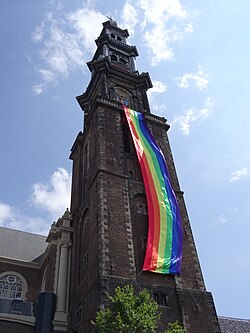
Scandinavian churches are notably progressive. The Church of Sweden, the Danish National Church, the Church of Norway, the Evangelical Lutheran Church of Finland, and the Church of Iceland all permit LGBTQ+ ordination. In 2009, the Diocese of Stockholm elected Eva Brunne, who is in a same-sex marriage, as its Bishop-Elect. In Norway, Bishop Rosemarie Köhn was ordained in 1993 while married to Susanne Sønderbo.
In Germany, the Lutheran, United, and Reformed churches within the Evangelical Church ordain LGBTQ+ clergy. In the United Kingdom, the Church of England has permitted transgender priests since 2000 and gay/lesbian priests in civil partnerships since 2005. Bishop Nicholas Chamberlain became the first to announce a same-sex partnership in 2016.
Global Perspectives
The Anglican Episcopal Church of Brazil and the Anglican Church in Aotearoa, New Zealand and Polynesia (which ordained a gay deacon in 2006) both support LGBTQ+ ordination. In South Africa, the Anglican Church of Southern Africa has legally ordained gay priests, including Bishop Mervyn Castle. In India, a bishop within the Anglican Communion has expressed willingness to ordain a transgender priest.
Presbyterian and Reformed Polities
Presbyterian governance is typically representative, with elders and assemblies making decisions.
United States and Scotland
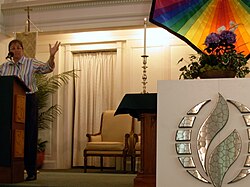
The Presbyterian Church (U.S.A.) allows LGBTQ+ ordination, highlighted by the 2012 ordination of Katie Ricks, the first open lesbian in the church. Conversely, the Presbyterian Church in America (PCA) maintains that homosexual activity is a sin and prohibits practicing homosexuals from ordination or membership.
The Church of Scotland evolved its stance between 2009 and 2016. After initial debates surrounding the induction of Rev. Scott Rennie, the General Assembly eventually voted to allow LGBTQ+ ministers in civil unions (2011), then all LGBTQ+ ministers (2013), and finally allowed ministers to enter same-sex marriages in 2016, though individual parishes may opt out.
Connexional and Congregationalist Polities
Connexional polities, like Methodism, often balance regional autonomy with a central connection, while congregationalist polities grant the most power to individual local churches.
The Methodist Tradition
The United Methodist Church (UMC) has faced significant internal division. While it officially denied ordination to "Self-Avowed Practicing Homosexuals" until 2018, some regions have bypassed this. In 2016, the New York Annual Conference ordained the UMC's first openly gay and lesbian clergy, and Bishop Karen Oliveto was consecrated as the first openly gay and married bishop in the Western Jurisdiction in 2016.
Other Methodist bodies, such as the Methodist Church of Great Britain and the Methodist Church of New Zealand (since 2004), are more affirming. In South Africa, the Methodist Church is described as "tolerating" homosexuals and same-sex relationships, provided they are not solemnized by marriage.
Congregationalist and Independent Models
Because congregationalist churches are decentralized, policies vary by local body. The United Church of Christ (UCC) began ordaining LGBTQ+ clergy in the 1970s and endorsed marriage equality in 2005. The Christian Church (Disciples of Christ) passed a resolution in 2013 to allow ordination regardless of sexual orientation or gender identity, though it does not force individual congregations to comply.
Other inclusive groups include the Association of Welcoming and Affirming Baptists (founded 1993) and the Mennonite Church USA, which voted in favor of the LGBTQ+ community in May 2022.
Summary of LGBTQ+ Ordination by Denomination
| Denomination/Group | Status of LGBTQ+ Ordination | Key Milestone |
|---|---|---|
| Episcopal Church (USA) | Permitted | 2012 nondiscrimination canons updated |
| ELCA (USA) | Permitted | 2021: First transgender bishop elected |
| Presbyterian Church (USA) | Permitted | 2012: First open lesbian ordained |
| Presbyterian Church in America | Prohibited | Views homosexual activity as sin |
| United Church of Canada | Permitted | 2012: First openly gay Moderator |
| United Methodist Church | Mixed/Regional | 2016: First openly gay bishop (Western Jurisdiction) |
| Church of England | Permitted (Limited) | Transgender priests permitted since 2000 |
Frequently Asked Questions
Which Protestant denomination was the first to allow non-celibate LGBTQ+ ordination?
The Universal Fellowship of Metropolitan Community Churches was the first to establish an official stance allowing the ordination of non-celibate gays, lesbians, and bisexuals in 1968.
How do conservative Protestant views on homosexuality differ from progressive ones?
Conservative Protestants typically distinguish between homosexual inclination (attraction) and homosexual activity (behavior), interpreting the Bible as condemning the activity. Progressive denominations generally view sexual orientation and gender identity as non-barriers to ministry.
What is the role of "polity" in LGBTQ+ ordination?
Polity refers to the church's governance structure. In episcopal polities, decisions may be driven by bishops or canons; in congregationalist polities, the local church usually decides who to hire and ordain, leading to a more fragmented landscape of inclusion.
Are there any openly transgender bishops in Protestantism?
Yes, Megan Rohrer was elected as the bishop of the Sierra Pacific Synod of the Evangelical Lutheran Church in America (ELCA) on May 8, 2021.
Does the Church of England allow same-sex marriage for its clergy?
The Church of England has allowed gay and lesbian priests in civil partnerships since 2005, and bishops have been permitted to enter civil partnerships since 2013.