Promiscuity: Evolutionary, Psychological, and Sociocultural Perspectives
While many societies place a high value on committed, long-term relationships, the concept of promiscuity—sexual activity outside of committed partnerships—has long been a subject of intense study. Driven by a complex interplay of biological drives, psychological orientations, and shifting cultural norms, sexual behavior varies significantly across individuals and history.
To understand this phenomenon, one must look beyond simple social labels and examine the underlying drivers, ranging from genetic predispositions to the massive societal shifts brought about by industrialization and modern movements.
Key Facts
- Sociosexuality is influenced almost equally by heredity and unshared environmental factors.
- The Kinsey Reports in the mid-20th century fundamentally challenged public expectations regarding human sexual behavior.
- Research suggests that New Zealand is a global outlier, with women reporting more sexual partners than men.
- The "New Woman" ideal of the late 19th century linked female economic and sexual autonomy to the rise of feminism.
The Drivers of Sexual Behavior
Psychology and Sociosexuality
A central concept in understanding these behaviors is sociosexual orientation, which refers to an individual's preference for sexual activity outside of a committed relationship. Studies have identified a correlation between high sex drive (libido) and less restricted sociosexual orientation, particularly in women. Research involving twins suggests that this orientation is shaped by a combination of genetics and environmental factors experienced uniquely by individuals, rather than shared family environments.
Biological and Evolutionary Roots
From an evolutionary standpoint, sexual strategies can be viewed through the lens of survival and reproduction. In the animal kingdom, such as with bonobos, sexual activity serves diverse social functions, including stress reduction and conflict resolution. In these species, females often form alliances to maintain social dominance.

In humans, evolutionary biology explores how different mating strategies may have emerged. Some theories suggest that behaviors like polyandry (one female with multiple male partners) can influence offspring survival in certain species.
Societal and Cultural Evolution
Pre-Modern and Victorian Constraints
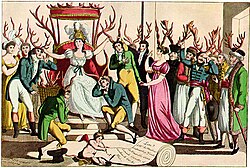
Historically, views on sexual behavior have fluctuated wildly. During the Victorian era (1837–1901), hypersexuality was often pathologized, frequently treated as an exclusively female disorder. This period saw strict social controls, including the use of Magdalene asylums to incarcerate women deemed to be behaving promiscuously—a practice that persisted in some regions into the late 20th century.
The Rise of Autonomy and the Sexual Revolution
The Industrial Revolution triggered a shift toward urbanization and increased employment opportunities for women. This era birthed the "New Woman," a symbol of economic and sexual autonomy. This movement was closely linked to the free love movement, which advocated for a woman's sovereignty over her own body.
The mid-20th century saw further transformation. While the 1950s are often stereotyped as repressed, the sexual revolution of the 1960s brought significant changes to Western culture. This shift was reflected in mass media, from the music of Madonna—who championed gender neutrality in sexuality—to television shows like Sex and the City.
Modern Awareness and Slut Shaming
In recent decades, there has been an increased awareness of slut shaming—the discrimination directed at individuals based on perceived or actual promiscuity. Movements like SlutWalk, which began in Toronto in 2011, have emerged to protest the use of sexual reputation to excuse violence and to advocate for general sexual freedom.
Global and Statistical Perspectives
Sexual behavior is not uniform across the globe. While some regions experienced the sexual revolution later than others, such as Japan, others maintain different cultural or religious frameworks. For instance, in 2010, a controversial statement by an Iranian cleric regarding the link between promiscuity and natural disasters sparked international debate and a massive online response known as the "Boobquake."
The Kinsey Legacy and Modern Data
The foundation of modern sexological research was laid by Alfred Kinsey. His 1948 and 1953 reports provided the first large-scale demographic look at human sexual behavior, defying the era's social expectations.
Modern studies provide a more nuanced picture than earlier research. While a 1994 study suggested high levels of monogamy among married women, a 2002 study estimated that between 45% and 55% of married heterosexual women engage in sexual relationships outside of marriage, though rates for men were slightly higher (50–60%).
| Metric/Region | Observation/Finding |
|---|---|
| New Zealand | Women reported more partners than men (20.4 vs 16.8). |
| United States | Ranked 22nd in unisex sociosexuality scores. |
| Finland | Ranked 1st in unisex sociosexuality scores. |
| UK (Durex Study) | Women reported fewer partners than men. |
Frequently Asked Questions
What is sociosexuality?
Sociosexuality refers to an individual's inclination or interest in engaging in sexual activity outside of a committed, long-term relationship.
How did the Kinsey Reports affect society?
The Kinsey Reports used demographic methods to reveal that human sexual behavior was much more diverse than the public believed, helping to pave the way for the sexual revolution of the 1960s.
What was the "New Woman" movement?
Emerging in the late 19th century, the "New Woman" represented a shift toward female economic, sexual, and social autonomy following the Industrial Revolution.
What is slut shaming?
Slut shaming is a term used since at least 2010 to describe the practice of discriminating against or shaming individuals based on their perceived sexual behavior.
Are there biological reasons for different sexual strategies?
Yes, evolutionary biology suggests that different mating strategies, including variations in partner number, can be influenced by evolutionary pressures and social structures.