Private Property: Legal Foundations, History, and Economic Theory
Private property is a legal designation where ownership of an asset is held by non-governmental legal entities. Unlike public property, which is owned by the state, or collective property, which is shared by multiple non-governmental entities, private property grants specific rights to an individual or organization. This concept serves as the bedrock of capitalism, an economic system centered on the private ownership of the means of production—the facilities and resources used to produce goods—and their operation for profit.
Because private property is a legal construct, it is defined and enforced by the political system of the country in which it exists.
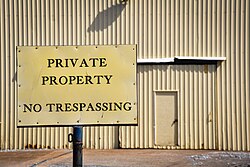
Key Facts
- Definition: Ownership by non-governmental entities, distinct from public or collective ownership.
- Economic Role: Foundational to capitalism and the private operation of the means of production.
- Legal Nature: Defined and enforced by a nation's political and legal systems.
- Bundle of Rights: Includes the right to control use, claim value, exclude others, and transfer ownership.
- Distinction: Marxian theory distinguishes between private property (means of production) and personal property (consumer goods).
The Evolution of Property Ownership
Ancient and Early Western Thought
In ancient Mesopotamia, there was no specific term for "property," yet legal documents focused heavily on the fair disposition of claims and the prevention of land alienation (the buying and selling of land). Mesopotamians generally sought to keep land within families to ensure plots remained agriculturally viable.
In the Western tradition, discussions on private property date back to Plato. By the 17th century in England, "property" primarily referred to land ownership. The modern concept of private property owned by commercial entities emerged alongside the great European trading companies of the 1600s.
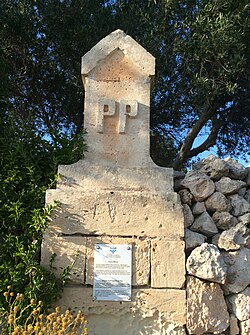
Philosophical Shifts in the 17th and 18th Centuries
The enclosure of agricultural land in England sparked significant intellectual debate. Philosophers such as Thomas Hobbes, James Harrington, and John Locke sought to address the nature of ownership. Later, during the Industrial Revolution, Adam Smith distinguished between the "right to property" as an acquired right and "natural rights," which he limited to liberty and life.
Smith argued that civil government and property are interdependent; he believed the primary function of government was to define and safeguard property ownership, asserting that government could not exist without it.
19th and 20th Century Perspectives
Karl Marx provided a critical analysis of property, linking it to the technical productive forces of the era. He associated private ownership of the means of production with capitalism, a view that heavily influenced socialist, communist, and anarchist movements.
In the 20th century, classical and economic liberals like Ludwig von Mises and Friedrich Hayek emphasized private property as essential for individual liberty and market coordination. Some libertarian theorists, such as Murray Rothbard, argued that property rights originate from first use and voluntary exchange, independent of state authority.
Legal and Practical Applications
In practice, private property is often identified via a title or certificate of ownership. These rights can be transferred between owners, often triggering a transfer tax. Property can also be passed to heirs through inheritance.
However, ownership is not absolute. In the interest of the public, states may confiscate private real estate for public purposes, such as the construction of roads.
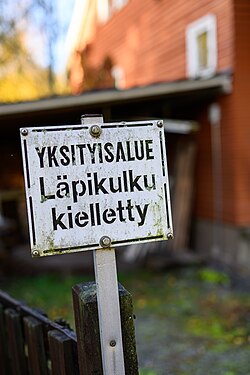
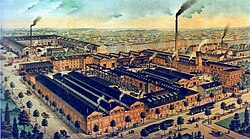
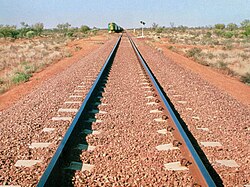
Certain assets, such as factories, corporations, and railway tracks, are classified as private property. Consequently, unauthorized access to these areas—such as walking on railway tracks—is illegal.
Theoretical Debates
The "Bundle of Rights"
In capitalist theory, ownership is viewed as a "bundle of rights." This allows the holder to:
- Control the asset and decide its use.
- Claim the value generated by the asset.
- Exclude others from using the asset.
- Transfer ownership to another party.
Socialist vs. Austrian School Critiques
Socialist economists argue that private ownership of the means of production limits productive forces and creates class distinctions between owners and workers. They advocate for social or public ownership to eliminate these disparities.
Conversely, Ludwig von Mises of the Austrian School argued that private property is a prerequisite for rational economic calculation. He contended that without private property, there are no accurate price signals for factors of production, making a rational socialist economy impossible.
| Ownership Type | Primary Owner | Key Characteristic |
|---|---|---|
| Private Property | Non-governmental entities | Owned for profit or personal use; transferable. |
| Public Property | State entity | Owned and managed by the government. |
| Collective Property | Multiple non-governmental entities | Shared ownership among a group or cooperative. |
Frequently Asked Questions
What is the difference between private and public property?
Private property is owned by individuals or non-governmental legal entities, whereas public property is owned by a state or government entity.
How does Marx distinguish between private and personal property?
In Marxian economics, private property refers to the means of production (like factories) used for socialized production and wage labor. Personal property refers to consumer goods or items produced by an individual for their own use.
Why is private property important to capitalism?
Private property allows for the private ownership of the means of production, enabling individuals and corporations to operate these resources for profit, which is the central mechanism of a capitalist economy.
Can the government take away private property?
Yes, in certain cases, ownership may be lost in the public interest. For example, private real estate can be confiscated or used for public purposes, such as building infrastructure like roads.
What is the "rational economic calculation" argument?
Proposed by Ludwig von Mises, this argument states that without private property rights, there are no market prices for the factors of production, making it impossible to calculate costs and allocate resources efficiently in a socialist system.