Division of Labour: Evolution, Theory, and Global Impact
The division of labour is the strategic separation of tasks within an economic system or organization. By breaking down a complex process into smaller, specialized roles, participants can focus on specialization—the act of becoming an expert in a specific task. This system allows individuals, organizations, and nations to leverage their unique capabilities, whether those are based on natural resources, specialized equipment, or acquired skills.
At its core, the division of labour creates a cycle of economic interdependence. Because no single entity produces everything they need, they must trade their specialized output for the goods and services of others. This interdependence is a primary driver of trade and is closely linked to the rise of capitalism and the increasing complexity of modern industrial processes.
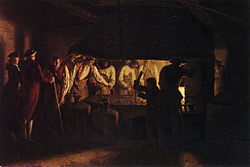
Historically, this practice is not a modern invention. Evidence of job assignment and economic interdependence has been observed as far back as ancient Sumerian culture in Mesopotamia.
Key Facts
- Productivity Boost: Division of labour generally increases both overall producer productivity and individual worker efficiency.
- Drivers: Specialization is fueled by the acquisition of specific tools, training, and natural resource endowments.
- Economic Result: It leads to increased total output, expanded trade, and higher systemic complexity.
- Global Shift: For the first time in history, the service sector surpassed agriculture in global employment share as of 2006.
The Evolution of Economic Theory
Pre-Modern Perspectives
Early thinkers recognized the utility of specialization long before the Industrial Revolution. Plato, in his Republic, is credited as an early proponent of the division of labour for its economic and political benefits. However, he also offered a critique, suggesting that an over-reliance on acquisitive motives could hinder an individual's ability to cultivate reason and prudence.
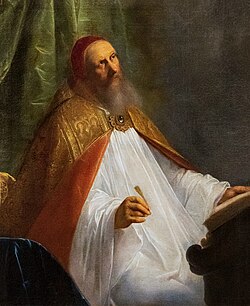
Other early contributions came from Xenophon, Augustine of Hippo, and various medieval Muslim scholars, who laid the groundwork for how society organizes work to maximize efficiency.
The Rise of Modern Economic Thought
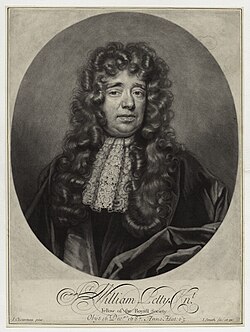
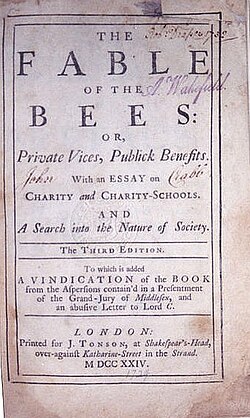
As the world moved toward industrialization, theorists began to quantify the benefits of specialization. Sir William Petty and Bernard de Mandeville explored the relationship between individual actions and collective economic outcomes.
In 1761, Henri-Louis Duhamel du Monceau detailed the "division of work" in his study of pin-making, Art de l'Épinglier. This specific example of manufacturing became a cornerstone for later economic theory.

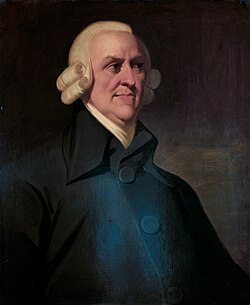
Adam Smith, in his seminal 1776 work An Inquiry into the Nature and Causes of the Wealth of Nations, used the pin-making example to demonstrate how the division of labour represents a substantial increase in productivity. Smith argued that by confining workers to a few simple operations, the total output of the factory increases exponentially.
Philosophical and Sociological Critiques
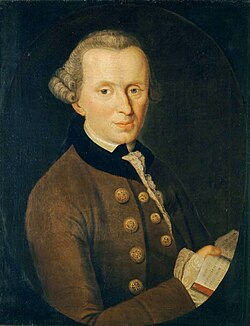
Not all theorists viewed specialization as an absolute positive. Immanuel Kant recognized its value, but others worried about the human cost. Karl Marx analyzed the division of labour through the lens of class and capital, while Henry David Thoreau, in Walden (1854), argued that extreme specialization removes people from their connection to society and nature, advocating for self-sufficiency instead.
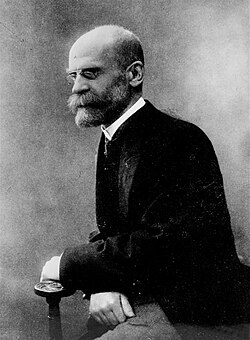
From a sociological perspective, Émile Durkheim explored how the division of labour functions as a social glue, creating a form of organic solidarity in complex societies.
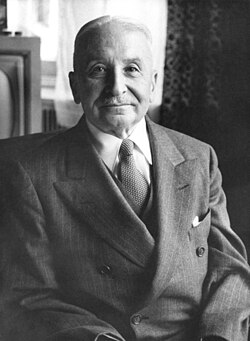
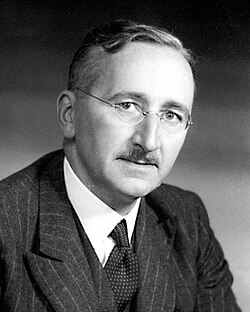
In the 20th century, economists like Ludwig von Mises and Friedrich A. Hayek emphasized the role of knowledge. Hayek, in "The Use of Knowledge in Society," highlighted how the division of labour allows for the utilization of fragmented, specialized knowledge that no single person could possess.
Global Division of Labour and Modern Trends
In the modern era, the division of labour has expanded from the factory floor to the global stage. This globalized system allows nations to specialize in industries where they have a comparative advantage.
Data from the mid-1990s estimated that approximately 2.474 billion people participated in the global non-domestic labour force. The distribution of this workforce has shifted significantly over time:
| Sector | Mid-1990s Share (Approx.) | 2006 Share (ILO) |
|---|---|---|
| Agriculture | Over 40% (1,074 million) | 38.7% |
| Services | ~33% (800 million) | 40% |
| Industry | ~15% (379 million) | 21.3% |
The Gendered Division of Labour
Sociologists have also studied the gendered division of labour. Research by White, Brudner, and Burton (1977) suggests that tasks more frequently chosen by women are often those more convenient for child-rearing. These are described as "least-effort" or "role-consistent" tendencies rather than absolute restrictions on ability, suggesting that such constraints could potentially be mitigated by systemic changes like provided child care.
Frequently Asked Questions
What is the primary benefit of the division of labour?
The primary benefit is a substantial increase in productivity. By allowing workers to specialize in a single task, they become more efficient, reduce time lost switching between activities, and can utilize specialized tools more effectively.
How does the division of labour lead to trade?
Because specialization means an individual or nation produces only a specific set of goods, they become dependent on others for everything else. This mutual need creates the motive for trade and economic interdependence.
Who is the most famous proponent of the division of labour?
Adam Smith is the most prominent figure, particularly for his analysis in The Wealth of Nations, where he used the example of a pin factory to illustrate how breaking down production increases total output.
What are the downsides of extreme specialization?
Critics like Henry David Thoreau and Adam Smith himself noted potential downsides. Smith observed that performing a few simple operations repeatedly could lead to mental stagnation, while Thoreau argued it alienates individuals from nature and their community.
How has the global workforce changed recently?
According to the 2007 ILO Global Employment Trends Report, the service sector overtook agriculture as the largest employer in human history for the first time in 2006.