EconTalk: Analyzing Free Markets and Economic Philosophy
EconTalk is a podcast series hosted by Roberts, a self-described "hardcore free marketer." The program serves as a deep dive into the mechanisms of wealth, society, and governance, primarily through the lens of laissez-faire—an economic philosophy that advocates for minimal government intervention in the economy. By hosting authors and experts, the series transforms complex economic theories into accessible conversations about how the world functions.
Key Facts
- Core Philosophies: Heavily influenced by Austrian and Classical economics.
- Key Figures: Frequent focus on the works of F.A. Hayek and Adam Smith.
- Central Themes: Spontaneous order, the division of labor, and the role of decentralized knowledge.
- Diverse Scope: Covers specialized fields including health, law, education, sports, and public choice economics.
- Critical Reception: While some center-left organizations are wary of its free-market bias, others, like The Guardian, have praised it as a useful tool for addressing societal questions.
The Influence of Austrian Economics and F.A. Hayek
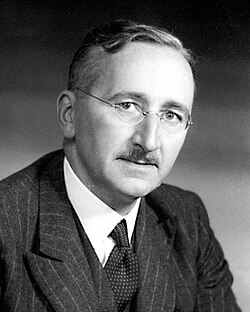
A cornerstone of the podcast is the exploration of spontaneous order (also known as emergence or emergent order). This concept describes how complex social and economic systems organize themselves without a central planner. Roberts frequently references Friedrich August von Hayek, particularly his 1945 essay, "The Use of Knowledge in Society."
Hayek's central argument is that a free market utilizing an uninhibited price mechanism is far more efficient than a centrally planned economy. This is because knowledge is broadly dispersed among many individuals rather than concentrated in a single authority. This principle of decentralized knowledge has had real-world applications; for instance, Wikipedia co-founder Jimmy Wales noted that Hayek's theories influenced his decision to allow a collaborative, open-editing structure for the encyclopedia rather than relying on a small group of experts.
Classical Economics and the Legacy of Adam Smith
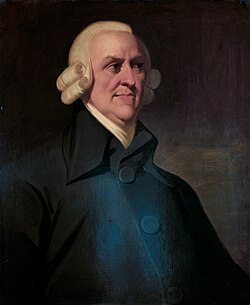
The series frequently returns to the foundations of Classical economics, specifically the work of Adam Smith. Much of the discussion centers on The Wealth of Nations (1776), with a particular emphasis on the division of labor—the separation of a work process into a number of tasks, with each task performed by a separate person or group. This concept is analyzed as a primary driver of productivity, trade, and overall economic growth.
Beyond wealth creation, Roberts explores the human element of economics through Smith's 1759 work, The Theory of Moral Sentiments. This focus is further highlighted by Roberts' own book, How Adam Smith Can Change Your Life: An Unexpected Guide to Human Nature and Happiness, which examines the intersection of economic thought and personal well-being.
Economic Implications of the Future
Rather than focusing solely on the novelty of new gadgets, EconTalk examines the economic consequences of technological shifts. A prime example is the analysis of autonomous vehicles. Instead of just discussing the technology of driverless cars, the podcast explores how they might:
- Reduce employment for professional truck drivers.
- Increase labor productivity by allowing workers to work during their commute.
- Shift car ownership toward a sharing economy model.
- Decrease the demand for residential and commercial parking real estate.
| Economic School | Key Figure | Primary Concept | Core Application |
|---|---|---|---|
| Austrian Economics | F.A. Hayek | Spontaneous Order | Decentralized knowledge and price mechanisms |
| Classical Economics | Adam Smith | Division of Labor | Productivity, wealth creation, and trade |
| Laissez-faire | Various | Free Market | Minimal government regulation |
Frequently Asked Questions
What is the primary ideological leaning of EconTalk?
The podcast unabashedly favors a laissez-faire approach, meaning it supports free markets and minimal government regulation of the economy.
How does the concept of "spontaneous order" apply to Wikipedia?
As noted by Jimmy Wales, the idea that decentralized knowledge is superior to centralized information led to Wikipedia's structure, where decision-making is pushed to the "endpoints" (the users) rather than a central group of experts.
Which books by Adam Smith are most frequently discussed?
The two primary works discussed are The Wealth of Nations, focusing on the division of labor and wealth, and The Theory of Moral Sentiments, focusing on human nature and happiness.
Does the podcast only cover theoretical economics?
No. While it covers theory, it also applies economic analysis to practical fields such as health, law, education, sports, and the impact of emerging technologies like driverless cars.
How has the mainstream media reacted to the podcast?
Reactions are mixed; some center-left organizations view it with wariness due to its free-market stance, while others, such as The Guardian, have described it as a fun and useful tool for approaching society's biggest questions.