Princeton Branch: The History and Legacy of the Dinky
In the heart of Mercer County, New Jersey, exists a rail service that is as much a cultural icon as it is a piece of transportation infrastructure. Known affectionately as the Dinky, or formally as the Princeton Branch (and sometimes the "Princeton Junction and Back" or PJ&B), this unique commuter line serves as the vital link between the Northeast Corridor and the campus of Princeton University.
Spanning just 2.7 miles (4.3 km), the Dinky holds the distinction of being the shortest scheduled commuter rail line in the United States. With a travel time of approximately five minutes each way, it provides a seamless transition for students, faculty, and visitors moving between the main rail arteries of the East Coast and the university town.
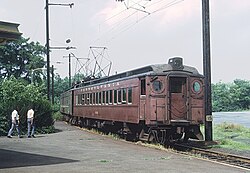
Key Facts
- Shortest Line: The shortest scheduled commuter rail line in the U.S. at 2.7 miles.
- Operator: Owned and operated by New Jersey Transit (NJT) since 1984.
- Rolling Stock: Utilizes GE Arrow III self-propelled electric coach cars.
- Frequency: As of 2016, the schedule includes 41 round trips per weekday.
- Electrification: Powered by a 12 kV 25 Hz overhead line system.
Operational Overview
The Princeton Branch operates as a single-track shuttle. It connects Princeton Junction—a major hub where New Jersey Transit and Amtrak provide service to New York City, Boston, Philadelphia, and Washington, D.C.—to the Princeton station terminus.
The service typically employs special one- or two-car train sets. While the line is highly efficient, it has faced occasional disruptions. Notably, from October 14, 2018, to May 11, 2019, service was replaced by shuttle buses. This suspension was part of a systemwide effort by New Jersey Transit to install and test Positive Train Control (PTC), an automatic braking system designed to prevent collisions, although the PTC system itself was not installed on the Dinky's specific tracks.
A Journey Through History
The roots of the line date back to the mid-19th century. The Camden and Amboy Rail Road and Transportation Company (C&A) first established a connection in 1839, though the specific Princeton Branch opened on May 29, 1865. In its earliest days, the service used a Grice & Long wood-burning steam dummy, and the trip took roughly 20 minutes—four times longer than today's commute.
Over the decades, the line evolved through several technological eras:
- 1905: Re-aligned and double-tracked to accommodate crowds during college football weekends.
- 1933: Upgraded from coal to gasoline-electric trains.
- 1936: Fully electrified.
- 1956: Returned to a single-track configuration.
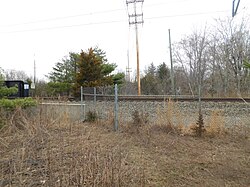
Ownership shifted over time, moving from the Pennsylvania Railroad in 1871 to Penn Central in 1968, and briefly to Conrail in 1976, before finally being transferred to the New Jersey Department of Transportation in 1984.
Cultural Significance and University Lore
The Dinky is more than a train; it is a symbol of Princeton University. Its presence is woven into the university's identity, appearing in F. Scott Fitzgerald's This Side of Paradise, the television show Family Ties, and the 1934 film She Loves Me Not. It is even immortalized in the homecoming song "Going Back to Nassau Hall."
The line is also the site of the infamous "Great Dinky Robbery" on May 3, 1963. In a prank during the university's non-coeducational era, four students dressed in Western attire used a convertible to block the tracks and "abducted" four female passengers. Despite the use of a pistol loaded with blanks, the event was treated as a prank, and university administrators took no official action.
Modernization and Controversy
The Dinky's physical footprint changed significantly in the 21st century. In 2006, Princeton University proposed moving the station to make room for a new arts center. This led to a heated dispute with rail advocates and the formation of the "Save the Dinky" organization, who feared the relocation would decrease ridership.
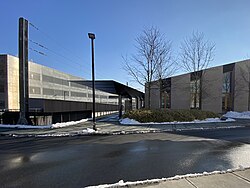
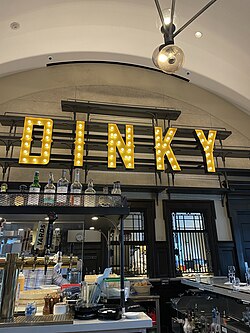
The new station eventually opened on November 17, 2014, shortening the line by 460 feet (140 m). While the station is now modern, ridership saw a 20% decline between 2012 and 2017. The original station house was later converted into a restaurant called The Dinky Bar & Kitchen, which opened in 2016.
Technical Summary
| Feature | Detail |
|---|---|
| Line Length | 2.7 mi (4.3 km) |
| Track Gauge | 4 ft 8 ½ in (1,435 mm) Standard Gauge |
| Electrification | Overhead line, 12 kV 25 Hz |
| Daily Ridership (FY 2017) | 814 |
| Termini | Princeton Junction & Princeton |
Frequently Asked Questions
What is the "Dinky"?
The Dinky is the colloquial name for the Princeton Branch, a short commuter rail line operated by New Jersey Transit that connects Princeton Junction to Princeton.
Why is the Dinky significant in the U.S. rail system?
It is the shortest scheduled commuter rail line in the United States, spanning only 2.7 miles.
How long does the trip take?
The journey between Princeton Junction and the Princeton terminus takes approximately 5 minutes in each direction.
What happened to the Penns Neck station?
Penns Neck was an intermediate stop on the line that was discontinued by Penn Central Transportation in 1971 and subsequently demolished.
What is the current rolling stock used on the line?
The line is served by GE Arrow III self-propelled electric coach cars, typically in one- or two-car sets.