Princeton Battle Monument: A Tribute to Revolutionary Valor
Standing as a sentinel of American history in Princeton, New Jersey, the Princeton Battle Monument is more than just a landmark; it is a visual narrative of courage and strategic brilliance. Dedicated to the victory achieved on January 3, 1777, this 50-foot limestone structure commemorates the Battle of Princeton, a pivotal moment in the American Revolutionary War where General George Washington turned the tide of conflict through a daring night march and a dawn assault.
The monument is strategically positioned to anchor the western end of Nassau Street, reflecting the principles of the City Beautiful movement—an architectural philosophy that emphasized harmony, grandeur, and the integration of art into urban planning to inspire civic virtue.
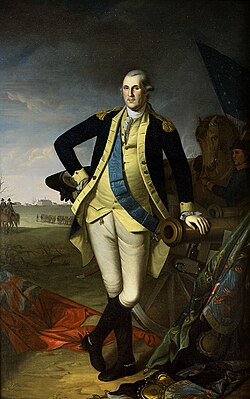
Key Facts
- Purpose: Commemorates the Battle of Princeton (January 3, 1777).
- Height: 50 feet (15 meters).
- Material: Indiana Limestone.
- Designers: Sculptor Frederick MacMonnies and architect Thomas Hastings.
- Dedication: Unveiled in 1922 by President Warren G. Harding.
- Status: Contributing property of the Princeton Historic District and listed on the National Register of Historic Places (NRHP).
History and Development
The journey to create the monument began long before its completion. The Princeton Battle Monument Association was formed in 1887, but it wasn't until June 8, 1906, that an act of Congress appropriated $30,000 for the project. The association was required to match this federal funding with an equal amount raised privately. By February 24, 1908, the funds were secured, leading to the commission of Frederick MacMonnies, a renowned Beaux Arts sculptor (a style characterized by classical forms and ornate detail), and architect Thomas Hastings of the firm Carrère and Hastings.
Finding the perfect location proved challenging. While a site at the corner of Mercer and Nassau Streets was initially cleared in 1913, it was eventually designated for the Princeton War Memorial. In 1914, the Princeton Inn Company donated a 500-foot stretch of land between Bayard Lane and Morven. This location provided the necessary space for a park and created a long, visible vista from Nassau Street.
Artistic Design and Symbolism
Inspired by the carvings on the Arc de Triomphe in Paris, the monument features a light-grey bas-relief (a sculpture technique where figures are carved slightly above the background). The central figure is George Washington on horseback, depicted as a stern leader inspiring his exhausted troops to victory.
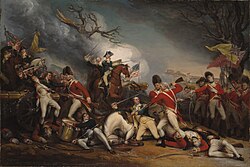
Below Washington, the sculpture includes a personification of Liberty wearing a Phrygian cap—a symbol of freedom—holding a banner to urge the Continental Army forward. The scene also depicts the death of General Hugh Mercer, the namesake of the local county.
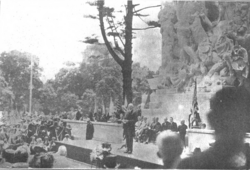
The monument was carved on-site by the Piccirilli Brothers. Although originally planned for bronze and granite, the design was changed to Indiana Limestone by 1918. The dedication ceremony in 1922 was a grand event featuring a 21-gun salute by the Princeton University Field Artillery ROTC and an invocation by the Right Reverend Paul Matthews.
Restoration and Modern Enhancements
Over the decades, the monument has undergone several efforts to preserve its legacy. Between 2006 and 2007, the State of New Jersey's historic preservation initiative funded professional conservation by Aegis Restauro, LLC and Farewell, Mills and Gatsch Architects. This period also saw the installation of a modern lighting scheme designed by Charles Stone of Fischer Marantz Stone, which was ceremoniously activated in September 2007.
In 2023, the nonprofit Sustainable Princeton raised $36,000 to revitalize the surrounding gardens. By replacing invasive species with native flowers, shrubs, and grasses, the area has become a Certified Wildlife Habitat and a Monarch Waystation, blending historical commemoration with ecological education.
Monument Summary
| Feature | Details |
|---|---|
| Architectural Style | Beaux Arts / City Beautiful |
| Primary Material | Indiana Limestone |
| Key Figures Depicted | George Washington, General Hugh Mercer, Liberty |
| NRHP Listing Date | June 27, 1975 |
| Associated Park Art | Bust of Albert Einstein, USS Princeton Bell, The Newspaper Reader |
Frequently Asked Questions
What event does the Princeton Battle Monument commemorate?
The monument commemorates the Battle of Princeton, which took place on January 3, 1777, during the American Revolutionary War.
Who designed the monument?
The monument was designed by sculptor Frederick MacMonnies and architect Thomas Hastings of the firm Carrère and Hastings.
What is the significance of the figures on the monument?
The monument features George Washington leading his troops, a personification of Liberty urging soldiers forward, and the depiction of the death of General Hugh Mercer.
Who dedicated the monument in 1922?
The monument was dedicated by President Warren G. Harding, who also received an honorary Doctor of Laws degree from Princeton University on the same day.
What other artworks are located in the monument's park?
The park includes a bust of Albert Einstein, the bell from the first USS Princeton, a replica of "The Little Vintner of Colmar," and J. Seward Johnson Jr.'s "The Newspaper Reader."