Prince of Wales's Feathers: History, Heraldry, and Symbolism
The Prince of Wales's feathers serve as the official heraldic badge of the heir apparent to the British throne. This iconic emblem, consisting of three white ostrich feathers encircled by a gold coronet, is one of the most recognizable symbols of the British monarchy. Accompanied by the German motto Ich dien ("I serve"), the badge transcends simple royal identification, appearing in military insignia, sports logos, and national symbols across the Commonwealth.
Key Facts
- Composition: Three white (argent) ostrich feathers enfiled by a gold (or) royal coronet.
- Motto: Ich dien, which is German for "I serve."
- Primary Bearer: The heir apparent to the British throne, regardless of whether they hold the title of Prince of Wales.
- Origins: Generally traced back to Edward the Black Prince in the 14th century.
- Modern Use: Widely used by the Welsh Rugby Union and various British military regiments.
Heraldic Origins and the House of Plantagenet
The use of ostrich feathers in English royal heraldry is primarily attributed to Edward the Black Prince (1330–1376), the eldest son of King Edward III. The Black Prince utilized a "shield for peace"—likely a shield used for jousting—which featured three white ostrich feathers on a black background. This motif is prominently displayed on his chest tomb in Canterbury Cathedral.
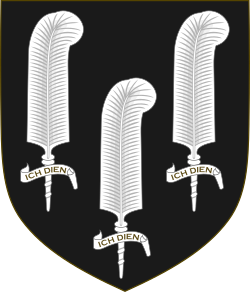
Following the Black Prince, his son King Richard II continued the use of ostrich feather badges and even granted them as augmented arms to others, such as Thomas de Mowbray, the 1st Duke of Norfolk.
![Ostrich feather supporters for Thomas de Mowbray, 1st Duke of Norfolk[9]](/images/0b/19/0b1925f66f3bc6e31431f5cee41ad38778a17b25f4be11d1c1f9634d3bd226bb.png)
The Legend of King John of Bohemia
A popular legend suggests that the Black Prince acquired the badge during the Battle of Crécy in 1346. It is said that he took the helmet and ostrich feather crest from the fallen King John of Bohemia, adopting both the feathers and the motto Ich dien to honor the king's courage. While this story first appeared in writing in 1376, historians note a lack of evidence that King John used this specific motto or crest. However, King John was the Count of Luxembourg, whose own badge was an ostrich feather, lending some plausibility to the connection.
Evolution Through the Royal Houses
The motif evolved as it passed through different dynasties of the British monarchy:
- House of Lancaster: John of Gaunt used ermine ostrich feathers. King Henry IV adopted a single ostrich feather with the motto "Ma Sovereygne," while his sons used various iterations, including feathers decorated with fleurs-de-lis.
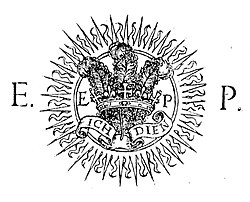
- House of Tudor: The modern configuration—three white feathers encircled by a coronet with the motto Ich dien—was first used by Prince Arthur (1486–1502), the eldest son of Henry VII. It was later used by Prince Edward (later Edward VI).
- House of Stuart and Successors: By the 17th century, the badge became exclusively associated with the Prince of Wales. Since at least 1901, it has been formally blazoned as a plume of three ostrich feathers argent enfiled by a coronet of fleurs-de-lys and crosses patée or.
Contemporary Applications and Symbolism
Beyond the royal family, the feathers have become a broader symbol for Wales and various institutions.
Military and Government Use
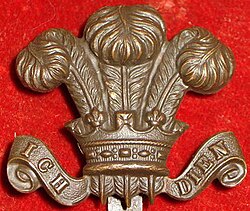
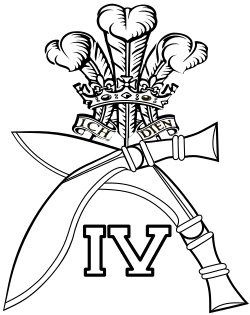
Numerous British military units incorporate the feathers into their cap badges, including the Royal Welsh and the Princess of Wales' Royal Regiment. This tradition extends to Commonwealth nations, appearing in the insignia of the Australian Army's 4th/19th Prince of Wales's Light Horse and the Canadian Army's Royal Regiment of Canada.
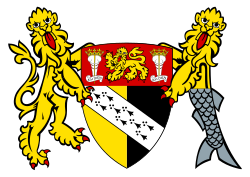
In Wales, the badge is used on the uniform of lord-lieutenants to distinguish them from those in other UK counties. It also appears in regional heraldry, such as the coat of arms for Norfolk County Council.
Sports and Culture
The feathers are most prominently seen in Welsh rugby union. Traditionally worn on jerseys before a formal union existed, the feathers are now the official logo of the Welsh Rugby Union (WRU), though a stylized version is used for copyright purposes. This has occasionally sparked debate, with some calling for a more uniquely Welsh symbol, such as the dragon or leek.
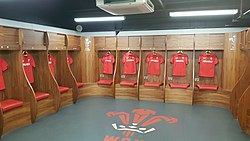
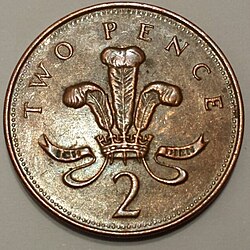
Other notable uses include the British two pence coin (minted 1971–2008), the badge of Wrexham AFC, and the emblems of Surrey County Cricket Club and Lingfield Park Racecourse.
International and Miscellaneous Uses
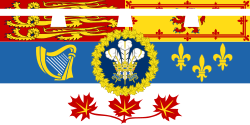
The badge is integrated into the Canadian royal standard for the Prince of Wales, placed within a wreath of golden maple leaves. It has also appeared on the coat of arms of Penang (until 1985) and is used by the Prince's Trust charity.
| Feature | Detail |
|---|---|
| Heraldic Colors | Argent (White) feathers, Or (Gold) coronet |
| Motto | Ich dien (German for "I serve") |
| First Modern User | Prince Arthur (House of Tudor) |
| Key Associations | Heir Apparent, Welsh Rugby, British Army |
| Legendary Origin | Battle of Crécy (King John of Bohemia) |
Frequently Asked Questions
What does the motto "Ich dien" mean?
The motto is German for "I serve." While some 19th-century theories suggested it was a homophone for the Welsh phrase "Eich Dyn" ("Your Man"), there is no contemporary evidence to support this.
Who is allowed to use the Prince of Wales's feathers?
The badge is primarily the personal emblem of the heir apparent to the British throne. However, permission to use the feathers has been granted to various military regiments, sports clubs (like Surrey County Cricket Club), and local government bodies.
Why are the feathers used by the Welsh rugby team?
The feathers were traditionally worn by players representing Welsh clubs before the formation of a national union. They were eventually adopted as the official logo of the Welsh Rugby Union (WRU).
Is the badge only used in the United Kingdom?
No. The badge appears in the heraldry of Commonwealth nations, including Canada (on the Prince's royal standard) and Australia, as well as in former colonies like Malaysia (Penang) and Malta.
What is the difference between the royal badge and the WRU logo?
The official royal badge features the motto Ich dien. The Welsh Rugby Union uses a stylized version of the feathers, replacing the motto with the letters "WRU" for copyright and branding purposes.