Primera Junta: The Dawn of Argentine Self-Governance
The Primera Junta, formally known as the Junta Provisional Gubernativa de las Provincias del Río de la Plata a nombre del Señor Don Fernando VII, represents a pivotal turning point in South American history. Established on May 25, 1810, it served as the first local government of the territory that would eventually evolve into the modern nation of Argentina.
Born from the turmoil of the May Revolution, the Junta emerged during a period of global instability. As Napoleon Bonaparte dismantled the Spanish monarchy, the inhabitants of Buenos Aires seized a unique political opening to challenge colonial constraints and move toward self-determination.
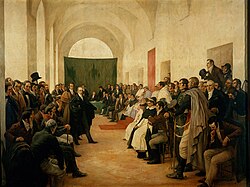
Key Facts
- Established: May 25, 1810, following the May Revolution.
- Disbanded: December 18, 1810, when it transitioned into the Junta Grande.
- Headquarters: El Fuerte (the fort) in Buenos Aires, the site of the current Casa Rosada.
- Primary Goal: To govern the Provinces of the River Plate in the name of the imprisoned King Ferdinand VII.
- Core Principles: Popular sovereignty, representation, federalization, and the division of powers.
The Path to Revolution
The Napoleonic Catalyst
The creation of the Primera Junta was deeply tied to the Peninsular War in Europe. When Napoleon imprisoned King Ferdinand VII, various Spanish cities formed juntas—transitional emergency governments designed to maintain Spanish sovereignty. While the Junta of Seville and the Supreme Central Junta of Spain attempted to maintain control over overseas colonies, Spanish Americans increasingly rejected this authority.
The Drive for Autonomy
By 1810, the political elite in Buenos Aires were influenced by democratic and republican philosophies. They were also frustrated by the Spanish crown's commercial monopoly, which stifled the local economy and forced many into contraband trade. Legal advisors like Juan José Castelli argued that with the King imprisoned, sovereignty had returned to the people.
The tension culminated in a cabildo abierto (an extraordinary meeting of the municipal council) on May 22, 1810. Under intense pressure from militias and crowds gathered at the Plaza Mayor, the council eventually replaced the viceroy, leading to the official formation of the Primera Junta on May 25.
Leadership and Internal Conflict
The Junta was composed of a president, two secretaries, and several voting members. However, the government was immediately split between two ideological factions: a conservative wing and a radical wing.
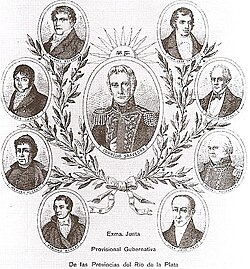
The Conservative vs. Radical Divide
The conservative faction was led by President Cornelio Saavedra, who favored a more cautious approach to change. In contrast, the radical wing was spearheaded by Secretary Mariano Moreno, who pushed for rapid, systemic changes to the absolutist system.
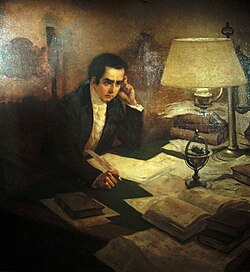
This rivalry grew intense, with Morenists accusing Saavedra of plotting to restore viceregal tyranny, while Saavedrists accused Moreno of usurping power. This internal friction eventually led to Moreno's forced resignation on December 18, 1810.
Governance and Challenges
Domestic Resistance
The Junta faced immediate opposition from the Royal Audience and the Cabildo. After a series of disputes regarding allegiance to the Spanish Council of Regency, the Junta banished the opposing authorities, including the former viceroy Baltasar Hidalgo de Cisneros, sending them to the Canary Islands.
Regional Reactions
Support for the Junta was inconsistent across the viceroyalty. While cities like Santa Fe, Mendoza, and Corrientes supported the change, others resisted. In Upper Peru, the mining interests of Potosi favored the old system, and royalists prevailed in Paraguay. A significant threat emerged in Cordoba, where Santiago de Liniers attempted a counter-revolution, which was eventually suppressed by the Junta's forces.
Foreign Relations
The Junta's foreign policy focused on preventing Portuguese expansion into the La Plata region. While Britain remained officially neutral due to its alliance with Spain against Napoleon, it sought to ensure that the conflict did not disrupt British trade interests.
Summary of the Primera Junta
| Category | Details |
|---|---|
| Official Name | Junta Provisional Gubernativa de las Provincias del Río de la Plata a nombre del Señor Don Fernando VII |
| President | Cornelio Saavedra |
| Key Secretaries | Mariano Moreno, Juan José Paso |
| Key Members | Manuel Belgrano, Juan José Castelli, Manuel Alberti, Miguel de Azcuénaga, Juan Larrea, Domingo Matheu |
| Successor | Junta Grande |
| Primary Location | Fort of Buenos Aires |
Frequently Asked Questions
Why was the Primera Junta created?
It was created during the May Revolution of 1810 to establish local government in the Río de la Plata region after the Spanish King Ferdinand VII was imprisoned by Napoleon, leaving a power vacuum in the colonies.
Who were the main leaders of the Primera Junta?
The primary leaders were Cornelio Saavedra, who served as President, and Mariano Moreno, who served as Secretary and led the radical faction of the government.
What was the difference between the Primera Junta and the Junta Grande?
The Primera Junta initially consisted only of representatives from Buenos Aires. When it was expanded to include representatives from other cities within the viceroyalty, it became known as the Junta Grande.
Did the Primera Junta immediately declare independence from Spain?
No. Officially, the Junta claimed to govern in the name of King Ferdinand VII, although its actions and the influence of leaders like Mariano Moreno moved the region steadily toward actual independence.
How did the Junta handle internal opposition?
The Junta took decisive action against opponents, banishing members of the Royal Audience and the former viceroy to the Canary Islands and executing counter-revolutionaries in Cordoba.