Preaspiration in Phonetics: Distribution and Linguistic Characteristics
In the study of phonetics, preaspiration refers to a specific period of voicelessness or aspiration that occurs immediately before the closure of a voiceless obstruent (a consonant produced by obstructing airflow). Essentially, it manifests as an [h]-like sound preceding the consonant. During preaspiration, the vocal folds stop vibrating and the glottis—the opening between the vocal folds—remains open for a short duration before the actual consonant closure occurs.
To represent this sound using the International Phonetic Alphabet (IPA), linguists may place the aspiration diacritic ⟨ ʰ ⟩ before the consonant. However, some experts, such as Ladefoged and Maddieson, prefer cluster notation (e.g., ⟨ hk ⟩) to more accurately reflect the phonetic reality of the sound.
Key Facts
- Definition: A period of voicelessness (similar to [h]) occurring before a voiceless obstruent.
- Rarity: It is relatively uncommon globally and is rarely considered a phonemically contrastive feature.
- Regional Hubs: Most prominent in North Germanic languages, Scottish Gaelic, and various Sami languages.
- Variability: It can manifest as glottal friction [h], or as [ç], [x], [f], or even voiceless vowels depending on the surrounding sounds.
- Stability: It is synchronically and diachronically unstable, often evolving into fricatives or vowel lengthening.
Typology and Phonetic Nature
Preaspiration is a rare linguistic feature. Some researchers argue that it is not phonemically contrastive—meaning it doesn't typically change the meaning of a word on its own—in any language. In Icelandic, for example, preaspirated stops have a longer duration of aspiration than standard post-aspirated stops, making them phonetically similar to [h] + consonant clusters.
Normative vs. Non-Normative Preaspiration
Linguists distinguish between two types of preaspiration:
- Normative: The preaspiration is obligatory for certain voiceless obstruents, even if it doesn't distinguish one word from another.
- Non-Normative: The sound is non-obligatory and may only be used by some speakers within a language community.
These sounds often exist in free variation with spirant-stop clusters and may be related to long vowels or [s]-stop clusters over time.
Global Distribution
Preaspiration is most frequently associated with Northwestern Europe. It is a hallmark of Icelandic and Faroese, as well as specific dialects of Swedish and Norwegian. It is also a defining characteristic of Scottish Gaelic, a trait some attribute to North Germanic influence.
Most Sami languages also exhibit preaspiration, with the exception of Inari Sami, where it has evolved into postaspiration. While a connection between Sami and North Germanic preaspiration is generally accepted, scholars debate whether the influence flowed from Sami to Germanic, Germanic to Sami, or resulted from a shared regional sprachbund (a group of languages that share features due to geographical proximity).
Beyond Europe, preaspiration is found in Halh Mongolian, Western Yugur, and several indigenous American languages, including Purepecha, dialects of Hopi, and various Algonquian languages such as Cree, Ojibwe, Cheyenne, Fox, and Miami–Illinois.
Language Examples
North Germanic Languages
In Icelandic, words like kappi ("hero") are transcribed as [ ˈkʰahpɪ ]. In Faroese, preaspirated plosives and affricates typically follow stressed vowels, such as in hattur ("hat") [ ˈhaʰtːʊɹ ]. Some Faroese dialects (Vágar, northern Streymoy, and Eysturoy) also feature ungeminated preaspirated plosives, though these typically do not occur after close vowels or diphthongs.
Scottish Gaelic
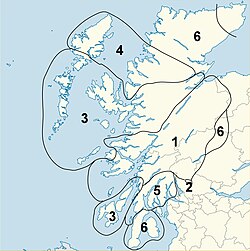
In Scottish Gaelic, preaspiration is phonemic in medial and final positions following stressed vowels. Its strength varies by region, following a hierarchy of c > t > p. This means if a dialect preaspirates [p], it will also preaspirate [t] and [k].
This creates distinct minimal pairs where the preaspiration changes the meaning, such as ad [ at̪ ] ("hat") versus at [ aʰt̪ ] ("boil").
Other Notable Occurrences
- Huautla Mazatec: Uniquely, preaspirates can occur word-initially (e.g., [ ʰti ] for "fish").
- Sami Languages: Preaspiration occurs on word-medial voiceless stops and affricates. In Western Sami and Skolt Sami, it affects both long and half-long consonants, whereas in Eastern Sami, it is limited to fully long consonants.
- English: Certain accents, including Geordie (specifically among younger women) and some Dublin English speakers, may preaspirate word-final /p, t, k/.
Language/Group Occurrence Type Key Characteristic Icelandic Distributional Longer duration than post-aspiration Scottish Gaelic Phonemic Medial/final positions; follows c > t > p hierarchy Huautla Mazatec Word-Initial Rare ability to start words with preaspiration Sami Languages Word-Medial Varies between long and half-long consonants Faroese Post-Stressed Occurs after stressed vowels Frequently Asked Questions
What is the difference between preaspiration and regular aspiration?
Regular aspiration (postaspiration) occurs after the release of a consonant closure, while preaspiration occurs before the closure begins.
Is preaspiration common in world languages?
No, it is comparatively uncommon and is rarely used as a primary way to distinguish between different words (phonemic contrast) across most global languages.
How is preaspiration written in the IPA?
It can be written using the aspiration diacritic ⟨ ʰ ⟩ placed before the consonant, or more simply as a cluster, such as ⟨ hk ⟩.
Which English dialects use preaspiration?
It has been observed in some speakers of Dublin English and among younger women in the Geordie accent, typically affecting word-final /p, t, k/.
Why does preaspiration vary in Scottish Gaelic?
The strength and presence of preaspiration vary by geographical area, manifesting as different sounds (like [h], [x], or [ç]) and following a specific hierarchy of articulation points.