Power Trio: The Evolution of the Three-Piece Rock Band
In the world of rock music, the power trio is a lean, high-impact band format consisting of an electric guitar, a bass guitar, and a drum kit. Unlike quartets or quintets, this arrangement removes the need for a dedicated vocalist, additional rhythm guitarists, or keyboard players. By stripping away the extra layers, the power trio focuses on raw energy and instrumental prowess.
In hard rock and heavy metal, the guitarist typically balances two critical roles. For most of a song, they provide the rhythm guitar—handling the chord progressions and essential riffs—before switching to a lead guitar role for the solo. While members often provide vocals while playing, the power trio format generally prioritizes sonic impact and instrumental performance over lyrical complexity.
Key Facts
- Standard Lineup: Electric guitar, bass guitar, and drums.
- Core Philosophy: Emphasis on instrumental virtuosity and sonic power over complex vocal arrangements.
- Technological Driver: The rise of high-volume amplifiers and the electric bass allowed three musicians to sound as large as a full orchestra.
- Versatility: The format allows for greater improvisation and creativity due to fewer restrictive arrangements.
The History and Rise of the Power Trio
The emergence of the power trio in the 1960s was driven by significant leaps in amplifier technology. As electric guitars and basses became louder, the "bottom end" of the sound was more defined, filling the sonic gaps that would otherwise require more musicians. This allowed a three-person group to fill large clubs and bars with a massive sound at a lower cost than larger ensembles.
Historically, the format is believed to have evolved from Chicago-style blues bands, such as the trio led by Muddy Waters. It also shares similarities with the organ trio—a 1960s soul jazz group centered on the amplified Hammond organ.
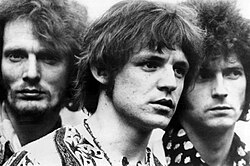
The rise of the format was further propelled by the virtuosity of guitarists like Eric Clapton, Jimi Hendrix, and Rory Gallagher, who possessed the skill to cover both rhythm and lead duties simultaneously. In 1964, Frank Zappa performed in a power trio called the Muthers. By 1966, the prototypical blues-rock power trio, Cream, was formed with Eric Clapton, Jack Bruce, and Ginger Baker.

Other influential 1960s acts included The Jimi Hendrix Experience, Blue Cheer, Grand Funk Railroad, James Gang, and Taste.
Evolution Through the Decades
The 1970s and Progressive Shifts
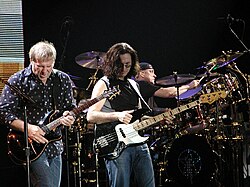
The 1970s saw the expansion of the format into progressive rock and heavy metal. Notable groups included the Canadian bands Rush and Triumph, the American group ZZ Top, and the English metal band Motörhead. Interestingly, Emerson, Lake & Palmer adapted the power trio concept by using keyboards for both rhythm and lead roles, with Greg Lake handling vocals.
During this era, the Welsh band Budgie became a seminal influence on the New Wave of British Heavy Metal and later acts like Metallica. In Argentina, the band Manal pioneered the format by composing blues music in Spanish starting in 1968.
Modern Interpretations and Genre Expansion
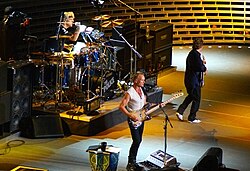
Beyond the 1970s, the "power trio" label was applied to a diverse array of genres. This included new wave (The Police), grunge (Nirvana), and alternative rock (Hüsker Dü, Muse, and the Goo Goo Dolls). Pop-punk bands like Green Day and Blink-182 also adopted the three-piece structure.
By the 1990s, some bands began experimenting with the instrumentation of the trio. For example, Morphine replaced the electric guitar with a baritone saxophone, while Ben Folds Five utilized keyboards and piano as the primary melodic instrument.
Power Trio Summary
| Era | Key Characteristics | Notable Examples |
|---|---|---|
| 1960s | Blues-rock roots, amp technology growth | Cream, The Jimi Hendrix Experience |
| 1970s | Prog-rock, Heavy Metal, Virtuosity | Rush, ZZ Top, Budgie |
| 1980s-Present | Grunge, Pop-Punk, Alternative, Experimental | Nirvana, Green Day, Muse, The Police |
Frequently Asked Questions
What defines a power trio?
A power trio is a rock band consisting of three members: an electric guitarist, a bass guitarist, and a drummer, without a dedicated full-time vocalist or additional harmony instruments.
How does the guitarist handle both rhythm and lead roles?
The guitarist typically plays the chord progressions and riffs (rhythm) for the majority of the song and then switches to playing melodic solos (lead) during specific sections.
Why did power trios become popular in the 1960s?
Improvements in amplifier technology allowed the guitar and bass to be louder and fuller, enabling three people to create a sound as powerful as a larger band while allowing more room for improvisation.
Are there power trios that don't use a guitar?
Yes. Some bands have adapted the format, such as Ben Folds Five, which used keyboards/piano, or Morphine, which featured a baritone saxophone instead of a guitar.
Which bands were influenced by the early power trio Budgie?
Budgie was a seminal influence on the New Wave of British Heavy Metal and later bands such as Metallica, who covered their songs "Breadfan" and "Crash Course in Brain Surgery."