Port of Rosario: Argentina's Strategic Inland Shipping Hub
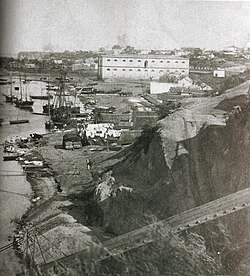
The Port of Rosario serves as a critical inland shipping center for Argentina. Located in the city of Rosario within the province of Santa Fe, this port sits on the western shore of the Paraná River, approximately 550 km upstream from the Atlantic Ocean. As a primary gateway for trade, it facilitates the movement of goods from the heart of the country to global markets.
The port is the largest among a series of facilities in the Greater Rosario area. The northernmost port capable of handling overseas traffic in this cluster is Puerto General San Martín, located 23 km upstream from Rosario. Together, these facilities form a vital node in the Bi-Oceanic Corridor—a logistics network connecting the Atlantic and Pacific Oceans via Buenos Aires, Rosario, Córdoba, the Cuyo region, and Valparaíso, Chile. Additionally, it serves as a central axis for the Paraguay-Paraná waterway, supporting the trade of the Mercosur bloc.
Key Facts
- Location: Rosario, Santa Fe, Argentina, on the Paraná River.
- Strategic Role: Primary hub for Argentine grain exports.
- Connectivity: Part of the Bi-Oceanic Corridor and the Paraguay-Paraná waterway.
- Capacity: Supports downstream navigation for Panamax-class vessels.
- Management: Administered by the public company ENAPRO.
- Traffic: Recorded 2.9 million tonnes of traffic in 2003.
Infrastructure and Logistics
The Port of Rosario is situated at Kilometer 420 of the Paraná River, a critical point where the depth transitions between river and overseas navigation. The river's natural configuration allows the port to maintain a depth of 34 feet with only minor periodic dredging. This depth is essential for the downstream movement of Panamax vessels (large container ships designed to fit the dimensions of the Panama Canal).
The river's width varies significantly, measuring about 600 m at Kilometer 418 and expanding to 2,000 m further downstream. To ensure a steady flow of cargo, the port is integrated with a robust transport network:
- Rail: The Nuevo Central Argentino railway connects the port to Córdoba in the west and Zárate in the Buenos Aires Province to the south.
- Road: Multiple national and provincial highways converge in Rosario.
- Bridges: The 2003 opening of the Rosario-Victoria Bridge improved connectivity with the province of Entre Ríos to the northeast.
- Air: The Rosario International Airport, located 15 km east, has been refurbished to handle cargo traffic.
Historical Development
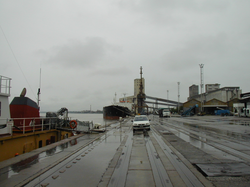
The port facilities first opened in 1852, partly as a strategic hedge against the political and armed conflicts that eventually led to the Federalization of Buenos Aires. Following 1875, a surge in Argentine agriculture propelled the port's growth, establishing it as a cornerstone of the nation's grain export sector.
The government nationalized the Port of Rosario in 1942. By 1960, its efficiency and location allowed it to overtake the Port of Buenos Aires as the leading hub for grain exports in Argentina.
Administration and Management
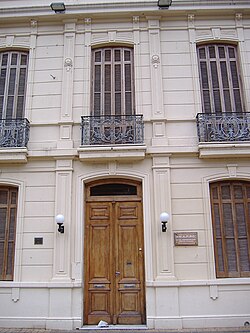
Since 1994, the port has been managed by ENAPRO (Ente Administrador del Puerto Rosario), a public company overseen by the provincial government. ENAPRO manages the facility by granting concessions to private operators.
The management history has seen several shifts. In 1998, International Container Terminal Services (ICTSI) won the first bid through its subsidiary, Puerto Rosario S.A. (PROSA). However, this concession was revoked in 2000 following labor conflicts, strikes, and failures to meet investment and royalty obligations. In 2002, Terminal Puerto Rosario S.A., the manager of the Port of Tarragona in Spain, was awarded a 30-year concession for Terminals 1 and 2.
To increase capacity, the National Secretariat of Ports and Navigable Ways initiated dredging projects in October 2005. The goal was to increase the depth of the Paraná to 34 feet, and eventually 36 feet, downstream from Puerto General San Martín. The 34-foot stage was completed in August 2006, enabling the port to accommodate cargo vessels of up to 46,600 tonnes, with a long-term goal of supporting ships up to 50,000 tonnes.
| Feature | Detail |
|---|---|
| Managing Entity | ENAPRO (Public Company) |
| River Depth | 34 feet (completed 2006) |
| Vessel Capacity | Up to 46,600 tonnes (at 34 ft) |
| Primary Export | Grains |
| Key Connection | Bi-Oceanic Corridor |
Frequently Asked Questions
Where is the Port of Rosario located?
It is an inland port located in the city of Rosario, Santa Fe province, Argentina, on the western shore of the Paraná River, roughly 550 km from the Atlantic Ocean.
What is the significance of the Bi-Oceanic Corridor?
The Bi-Oceanic Corridor is a strategic transport route that links the Atlantic and Pacific Oceans, connecting cities and regions including Buenos Aires, Rosario, Córdoba, the Cuyo region, and Valparaíso, Chile.
Who currently manages the port?
The port is managed by ENAPRO (Ente Administrador del Puerto Rosario), a public company under the oversight of the provincial government.
What types of ships can use the port?
Due to a maintained depth of 34 feet, the port allows for the downstream navigation of vessels up to the Panamax class.
How does the port connect to the rest of Argentina?
The port is connected via the Nuevo Central Argentino railway, various national and provincial highways, the Rosario-Victoria Bridge, and the nearby Rosario International Airport.