Port of Poole: A History of Maritime Trade and Transit
The Port of Poole has long served as a critical gateway for trade and travel, evolving from a strategic military asset during World War II to a modern commercial hub. Its development has been defined by a constant effort to balance the needs of commercial shipping with the area's popularity as a tourist destination.
During World War II, the port played a vital role in the Normandy landings, establishing its importance as a logistical center for cross-channel operations.
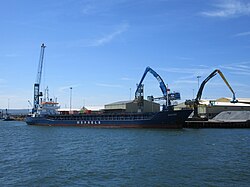
The Rise of Freight and RORO Services
In the late 1960s, the Poole Harbour Commissioners identified an opportunity to establish a freight ferry service to Cherbourg, leveraging the shortest distance between England and France west of Dover, which is 64 nautical miles. Land reclamation began in 1971 to create a dedicated terminal.
On June 29, 1973, Truckline Ferries launched its service using the Poole Antelope, a French-built vessel. This marked the introduction of the first RORO (Roll-on/Roll-off) ferry—a ship designed to allow vehicles to be driven directly on and off—at the new terminal. This move successfully separated commercial shipping from the tourist-heavy Poole Quay.
Rapid Expansion and Infrastructure Growth
Freight volumes grew exponentially over the following decade. In 1973, Truckline transported 2,324 lorries; by 1982, this number surged to over 62,000 lorries, alongside 20,000 Italian car imports. This growth, combined with a September 1980 accident where the vessel Countances collided with and damaged the linkspan (the ramp connecting the ship to the shore), necessitated expansion.
By October 1984, the ferry port was expanded to 44 acres and equipped with an additional 10-meter wide linkspan to ensure operational reliability.
Corporate Shifts and Passenger Services
In July 1985, Brittany Ferries acquired Truckline Ferries, investing £3.5 million into the service. This led to the "jumboizing" (enlarging) of the ships Coutances and Purbeck. Furthermore, in June 1986, the company introduced the first cross-channel passenger ferry service from Poole under the Truckline brand.
The port's appeal grew further in January 1989 when British Channel Island Ferries shifted its primary focus to Poole, reducing crossing times to the islands by up to two hours. To accommodate this, the port underwent further land reclamation in 1989, increasing the total terminal area to 60 acres and adding a third linkspan, which was officially opened in April 1990 by Sir Norman Fowler.
The Era of the Giant Ferries
The arrival of the Barfleur in April 1992 marked a new milestone. As the largest ferry to dock at the port at the time, it required substantial dredging of the main access channel and the construction of an upper deck on one of the linkspans. This record for ship size was later surpassed by the Bretagne in 2007 and the Armorique in 2010.
Legal Challenges and Modern Developments
The 1990s brought volatility. In January 1994, British Channel Island Ferries was purchased by Commodore Shipping due to heavy losses. Passenger operations moved to Condor Ferries in Weymouth, and freight moved to Portsmouth. This departure led to a legal dispute with the Poole Harbour Commissioners over a breached ten-year contract worth £300,000 annually. The commissioners sought £4 million in damages, though a settlement was reached in June 1996.
In recent years, the port has adapted to global crises and political shifts:
- 2017: Discovery of LCT 728, the last known Mark 4 landing craft tank from WWII, and a possible Mark 3 (LCT(4) 510), both used as barges in the 1950s.
- 2020: Implementation of a flu vaccination service and receipt of £86,000 for Brexit transition support.
- 2020 (December): A bid for "Free Port" status (a special economic zone) was prepared by the Bournemouth, Christchurch and Poole Council, including Bournemouth Airport.
- 2021: Installation of COVID-19 pandemic response equipment at the cruise terminal.
- 2023: Completion of a £2.2 million border control post.
Looking ahead, Brittany Ferries announced in June 2026 that the Barfleur and Cotentin would be sold, with the Poole-Cherbourg route scheduled to close in November 2026.
Key Facts
- Shortest Route: The distance from Poole to Cherbourg is 64 nautical miles.
- Growth: Freight grew from 2,324 lorries in 1973 to over 62,000 by 1982.
- Capacity: The terminal expanded from 44 acres in 1984 to 60 acres by 1990.
- Largest Vessels: The Armorique (2010) is among the largest ferries to have docked at the port.
- Recent Investment: A £2.2 million border control post was completed in November 2023.
| Period/Year | Key Event | Impact/Detail |
|---|---|---|
| WWII | Normandy Landings | Strategic military use |
| 1973 | Truckline Ferries Launch | First RORO service to Cherbourg |
| 1985 | Brittany Ferries Acquisition | £3.5 million investment and passenger services |
| 1992 | Arrival of Barfleur | Required channel dredging and new linkspan deck |
| 1994 | BCIF Exit | Loss of 35 port jobs and legal battle with Condor |
| 2026 | Route Closure | Poole-Cherbourg route to end in November |
Frequently Asked Questions
What is a RORO ferry?
RORO stands for Roll-on/Roll-off. It refers to vessels designed to carry wheeled cargo, such as cars and lorries, which are driven on and off the ship via ramps (linkspans) rather than being lifted by cranes.
Why was the port expanded in the 1980s?
The expansion was driven by a massive increase in freight volumes—growing from roughly 2,300 lorries in 1973 to over 62,000 by 1982—and the need to replace a linkspan damaged in a collision in 1980.
Which ship held the record for the largest ferry at the port?
The Barfleur held the record upon its arrival in 1992, but it was later surpassed by the Bretagne in 2007 and the Armorique in 2010.
What happened to the British Channel Island Ferries (BCIF) service?
Due to substantial losses, BCIF was bought by Commodore Shipping in 1994. Freight moved to Portsmouth and passenger services moved to Weymouth, leading to a legal dispute over a broken contract with the Poole Harbour Commissioners.
What is the current status of the Poole-Cherbourg route?
Brittany Ferries announced in June 2026 that the route will close in November 2026, following the sale of the ships Barfleur and Cotentin.