Port of Entry: Functions, Regulations, and Global Variations
A port of entry (POE) is a designated location where an individual may lawfully enter a country. These sites serve as the primary interface between a nation's internal security and the outside world, ensuring that all arrivals comply with national laws and immigration policies.
Typically, a port of entry is equipped with border security staff and specialized facilities. These resources are used to verify passports and visas, as well as to inspect luggage to prevent the importation of contraband. While most commonly associated with land borders, ports of entry can take several forms, including international airports, rail crossings, and seaports—provided the seaport has a dedicated customs presence. The designation of a location as a port of entry is determined by the civil authority controlling that port.
In some specific contexts, such as near state borders, the term may also refer to a weigh station.
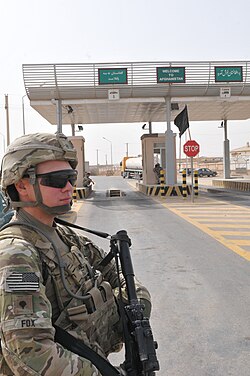
Key Facts
- Primary Purpose: To provide a legal point of entry for people and goods while preventing contraband from entering a country.
- Common Types: Includes international airports, land border crossings (road and rail), and designated seaports.
- Airport of Entry (AOE): A specific type of airport providing customs and immigration services for incoming foreign flights.
- Schengen Area: A zone of 29 European countries where flights and travel between member states are treated as domestic.
- US Definition: In the United States, a port of entry is defined as the geographical area under the jurisdiction of a port director.
Airports of Entry and Terminology
An airport of entry (AOE) is an airport equipped to provide customs and immigration services, allowing it to serve as the initial point of arrival for foreign visitors. These facilities vary wildly in scale, ranging from massive hubs like John F. Kennedy International Airport to small rural airports that exclusively serve general aviation.
The "International" Label
While the word "international" in an airport's name usually indicates it is an airport of entry, this is not always the case. Some airports retain the "international" title for historical reasons even after they cease serving international flights. Examples include Osaka International Airport, which became a domestic airport after the opening of Kansai International Airport in 1994, and Taipei Songshan Airport, which kept its international name after the opening of Taiwan Taoyuan International Airport. Similar transitions have occurred in cities such as Seoul, Tokyo, Nagoya, Shanghai, Hong Kong, Bangkok, and Tehran.
Legal and Humanitarian Challenges
Because ports of entry are the only legal way to enter a country, individuals who are denied entry but have no country of origin to return to can become trapped in a state of statelessness. This often forces them to live within the airport for extended periods.
One notable case was Mehran Karimi Nasseri, an Iranian national who lived in France's Charles de Gaulle Airport for approximately eighteen years. His story served as the loose inspiration for the films Tombés du ciel (1993) and The Terminal (2004). Another instance involved Zahra Kamalfar, who lived in Russia's Sheremetyevo International Airport for eleven months before Canada granted her refugee status.
Port of Entry Regulations in the United States
In the United States, the definition of a port of entry differs from the general global understanding. According to the Code of Federal Regulations, a port of entry incorporates the entire geographical area under the jurisdiction of a port director. This means a single port of entry may encompass several different border crossings, as well as air and sea ports.
Consequently, not every border crossing is a port of entry. Some smaller crossings are designated as "stations" because they do not require their own Port Director. For example, the outposts of Chateaugay, Fort Covington, and Churubusco in New York are stations within the Trout River Port of Entry.
Historically, U.S. border entry was more flexible. Before September 11, 2001, individuals could enter the U.S. at almost any point, provided they traveled directly to an open inspection station to make their declarations. The government even rented storefronts and post offices far from the physical border for this purpose. Today, most roads not leading to a staffed inspection station have been barricaded.
Global Variations and Automated Systems
Immigration procedures vary by nation. In some countries, the armed forces handle immigration, though customs officers typically still manage the levying of duties on imports. To increase efficiency, many ports of entry have implemented automated clearance systems for citizens and residents, such as Global Entry in the United States or the e-Channel in Hong Kong and Macau.
In certain regions, the concept of a port of entry is bypassed entirely through free-crossing pacts. The most prominent example is the Schengen Area, where citizens of the 29 member countries can travel freely across borders. However, these pacts may still be restricted to specific nationalities or those not carrying goods that exceed customs limits.
| Type/Concept | Primary Function | Key Characteristic |
|---|---|---|
| Airport of Entry (AOE) | Customs and Immigration for flights | Can range from rural strips to major urban hubs |
| US Port of Entry | Jurisdictional area of a Port Director | May include multiple border stations |
| Schengen Area | Free movement between member states | Treats international travel as domestic |
| Automated Clearance | Expedited entry for residents/citizens | Examples include Global Entry and e-Channel |
Frequently Asked Questions
What is the difference between a border crossing and a port of entry in the US?
In the US, a port of entry is a broader geographical area under the jurisdiction of a Port Director. A border crossing may simply be a "station" within that larger port of entry if it does not have its own director.
Does an airport have to be called "International" to be a port of entry?
No. While the name often suggests it, many airports of entry do not use the word "international." Conversely, some airports keep the name for historical reasons even after they stop serving international flights.
How does the Schengen Area affect ports of entry?
In the Schengen Area, which consists of 29 European countries, flights and travel between member states are generally considered domestic, meaning passport and immigration checks are not required at those borders.
What happens if someone is denied entry at a port of entry but cannot return home?
In rare cases of statelessness, individuals may be forced to live within the airport for long periods if they are denied entry to the destination country and have no country of origin to be returned to.
Can any seaport serve as a port of entry?
A seaport can only function as a port of entry if the civil authority has posted a dedicated customs presence there to inspect arrivals and goods.