Polychlorinated Biphenyls (PCBs): Chemical Properties, Environmental Impact, and Legacy
Polychlorinated Biphenyls, commonly known as PCBs, are a group of synthetic organic chemicals that were widely used in industrial applications for decades. Characterized by their stability and resistance to heat and electricity, these compounds became staples in electrical equipment and various industrial fluids. However, their persistence in the environment and potential for bioaccumulation have made them a significant focus of environmental regulation and public health studies.
Key Facts
- Chemical Nature: PCBs are derived from biphenyl, where hydrogen atoms are replaced by chlorine.
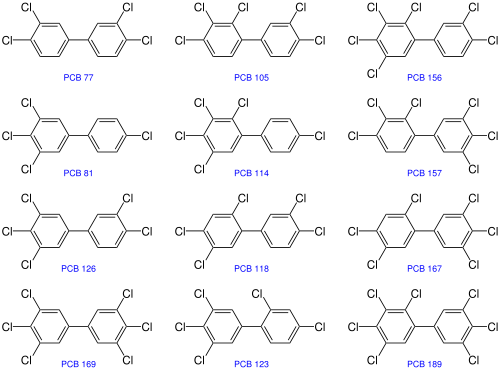
- Variety: There are 209 possible chemical compounds (congeners) based on the number and position of chlorine atoms.
- Physical State: They typically appear as colorless or light yellow, thick, oily liquids.
- Persistence: PCBs are highly stable and do not break down easily in the environment.
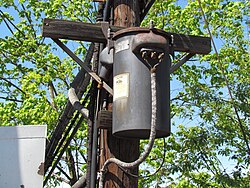
- Major Source: Old power transformers and capacitors are primary sources of PCB contamination.
- Regulatory Status: Production was halted in the United States in 1977.
Chemical Structure and Properties
PCBs are based on the biphenyl molecule (C12H10). In these compounds, one to ten hydrogen atoms are replaced by chlorine atoms, resulting in the general formula C12H10−xClx. Because of the different possible positions of these chlorine atoms on the benzene rings, 209 distinct chemical compounds, known as congeners, can exist.
In commercial use, PCBs were rarely used as pure substances but rather as complex mixtures of these congeners. Approximately 130 different individual PCBs are typically found in commercial products.

Physical and Identification Data
PCBs are identified by the CAS number 1336-36-3. They are characterized by their oily consistency and are often colorless or light yellow. In terms of safety classification, the NFPA 704 "fire diamond" assigns them a health hazard rating of 1, a flammability rating of 2, and an instability rating of 0.

Commercial Use and Trade Names
Due to their chemical stability, PCBs were marketed globally under various trade names. In the United States and United Kingdom, the Monsanto Company marketed them as Aroclor. Other notable trade names included Kanechlor and Santotherm in Japan, Clophen in Germany, and Pyralène in France.
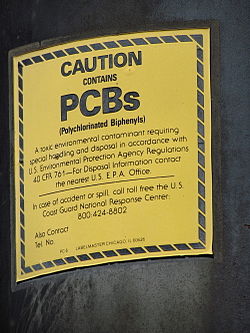
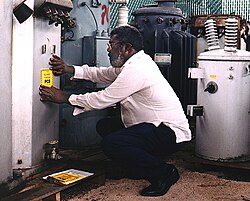
Their primary application was in electrical equipment, such as transformers and capacitors, where they served as insulating fluids. Because PCB and oil mix freely, even equipment not originally filled with PCBs can become contaminated if refilled using shared hoses or tanks.
Environmental Transport and Bioaccumulation
Once released into the environment, PCBs move through water and air, eventually settling in sediments. A critical concern is biomagnification—the process where the concentration of a toxic chemical increases in the tissues of organisms at successively higher levels of the food chain.

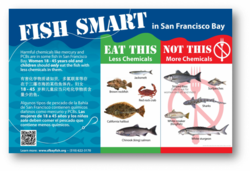
This process means that top predators, including humans who consume contaminated fish, can accumulate high levels of PCBs in their bodies. This has led to various fish consumption advisories in contaminated areas, such as the San Francisco Bay.
Pollution and Legal Legacy
The history of PCB pollution is marked by significant industrial contamination. In the United States, Monsanto was the sole manufacturer until production ceased in 1977. However, internal documents released in 2002 suggested the company was aware of the harmful effects of PCBs as early as the 1960s.
One of the most severe examples of pollution occurred at Waukegan Harbor on Lake Michigan. In 1976, environmentalists discovered PCB-contaminated sludge. Subsequent data revealed that the Outboard Marine Corporation had released approximately 100,000 tons of PCBs into the environment since 1954, with some sludge concentrations reaching 50%.
Legal battles continue to this day. While some juries have found that PCB production was not a substantial cause of specific cancer cases, other lawsuits have resulted in multi-million dollar settlements. In 2020, a U.S. District Judge rejected a $650 million settlement from Bayer (which acquired Monsanto in 2018), allowing further lawsuits to proceed.
PCB Homologs Summary
The following table outlines the different PCB homologs based on the number of chlorine substituents.
| PCB Homolog | CASRN | Cl Substituents | Number of Congeners |
|---|---|---|---|
| Biphenyl (not a PCB) | 92-52-4 | 0 | 1 |
| Monochlorobiphenyl | 27323-18-8 | 1 | 3 |
| Dichlorobiphenyl | 25512-42-9 | 2 | 12 |
| Trichlorobiphenyl | 25323-68-6 | 3 | 24 |
| Tetrachlorobiphenyl | 26914-33-0 | 4 | 42 |
| Pentachlorobiphenyl | 25429-29-2 | 5 | 46 |
| Hexachlorobiphenyl | 26601-64-9 | 6 | 42 |
| Heptachlorobiphenyl | 28655-71-2 | 7 | 24 |
| Octachlorobiphenyl | 55722-26-4 | 8 | 12 |
| Nonachlorobiphenyl | 53742-07-7 | 9 | 3 |
| Decachlorobiphenyl | 2051-24-3 | 10 | 1 |
Frequently Asked Questions
What are PCBs?
Polychlorinated Biphenyls (PCBs) are synthetic organic chemicals consisting of biphenyl rings where some hydrogen atoms are replaced by chlorine. They were used primarily as industrial insulators and coolants.
Why are PCBs dangerous to the environment?
PCBs are persistent organic pollutants, meaning they do not break down easily. They undergo biomagnification, increasing in concentration as they move up the food chain, which poses risks to wildlife and humans.
Where are PCBs commonly found today?
While production has ceased, PCBs remain in old electrical equipment like power transformers and capacitors, as well as in contaminated soil and river sediments.
Who manufactured PCBs in the United States?
The Monsanto Company was the only manufacturer of PCBs in the United States until production was completely halted in 1977.
How are PCBs destroyed?
Methods for the destruction of PCBs include physical, chemical, microbial, and fungal degradation processes.