Understanding Herbicides: History, Application, and the Challenge of Resistance
For over a century, the battle against unwanted vegetation has been central to global food security. Herbicides, commonly known as weed killers, are specialized substances designed to control undesired plants, referred to as weeds. By managing these competing species, farmers can ensure that crops receive the maximum amount of nutrients, water, and sunlight.
The impact of these chemicals has been profound. Between 1900 and 2000, the combined use of herbicides, nitrogen fertilizers, and improved crop cultivars increased the yields of major crops by three to six times per acre. Today, they are indispensable tools not only in agriculture but also in forestry—where they help conifers thrive after clearcutting—and in pasture management.
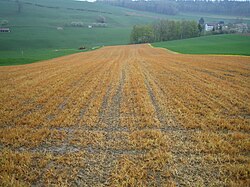
Key Facts
- Selective herbicides target specific weed species, while non-selective herbicides kill plants indiscriminately.
- In 2012, herbicides accounted for approximately 44% of the world's US$24.7 billion expenditure on pesticides.
- The first successful selective herbicide, 2,4-D, was released commercially in 1946.
- Weeds have evolved resistance to 21 of the 31 known herbicide modes of action.
- Integrated Weed Management (IWM) is the recommended strategy to slow the evolution of herbicide-resistant "superweeds."
The Evolution of Weed Control
The Breakthrough of the Second World War
The modern era of herbicides began during World War II through independent research in the United Kingdom and the United States. Scientists sought chemicals that could kill broad-leaved weeds without harming cereal crops. W. G. Templeman of Imperial Chemical Industries (ICI) and R. Pokorny in the US both contributed to these discoveries. Simultaneously, Juda Hirsch Quastel at the Rothamsted Experimental Station used perfusion—a technique of passing fluid through a system—to analyze soil as a dynamic system and quantify how chemicals impacted plant growth.
These efforts culminated in the synthesis of 2,4-D. Released in 1946, 2,4-D became the first successful selective herbicide. It revolutionized agriculture by killing dicots (broadleaf plants) while leaving monocots (grasses, such as wheat, maize, and rice) unharmed.

The Rise of Glyphosate
While 2,4-D set the stage, the 1960s saw the recognition of the herbicidal activity of glyphosate, which was first prepared in the 1950s. Marketed as Roundup in 1971, glyphosate became one of the most widely used herbicides in history. Its utility expanded significantly with the development of glyphosate-resistant crop plants, leading to a consolidation of the seed and chemistry industries in the late 1990s.
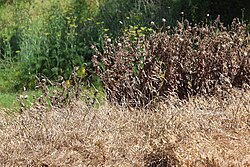
How Herbicides Work and Are Applied
Mechanisms of Action
Herbicides function through various biological pathways. One prominent group is auxin-like herbicides. These chemicals mimic auxin, a natural plant growth regulator (hormone). By mimicking this hormone, they disrupt the cell membranes of dicot plants, leading to their death. Examples include 2,4-D, 2,4,5-T, and Aminopyralid.
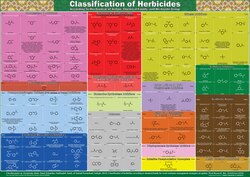
Application Methods
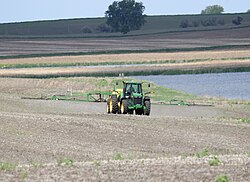
Most herbicides are delivered as water-based sprays. The equipment used varies based on the scale of the operation:
- Ground Equipment: This includes handheld sprayers, towed units, and large self-propelled sprayers with booms ranging from 60 to 120 feet.
- Aerial Application: Helicopters and airplanes are used for very large areas.
- Chemigation: This is the process of applying herbicides directly through irrigation systems.
Health and Environmental Considerations
Human Health Impacts
The health effects of herbicides are a subject of ongoing scientific debate. Some phenoxy herbicides have been associated with an increased risk of non-Hodgkin lymphoma and soft tissue sarcoma. Additionally, exposure to paraquat has been strongly linked to Parkinson's disease.
Toxicity varies widely. Some substances exhibit acute toxicity (harmful after short-term exposure), while others are evaluated for chronic toxicity (harmful after long-term exposure). For example, while some glyphosate formulations are acutely toxic, a 23-year US Department of Health study of 90,000 farmer family members found no correlation between its use and chronic health issues like cancer.
Controversies have also arisen regarding manufacturer claims. Monsanto faced pressure over claims that glyphosate-based products were "practically non-toxic," while Dow AgroSciences' Tordon 101 contained picloram, which showed carcinogenic activity in rat studies.

Ecological Effects
A primary environmental concern is bioaccumulation, where chemicals accumulate in the tissues of living organisms over time. A 1977 study demonstrated this in aquatic environments, finding that fish in dark aquariums bioaccumulated 14 times more trifluralin than those in well-lit environments.
The Challenge of Herbicide Resistance
The most significant complication in modern weed control is the evolution of herbicide resistance. Since first observed in 1957, 268 plant species have evolved resistance to at least one herbicide. This evolutionary process has led to the emergence of "superweeds" that can withstand multiple chemical attacks.
For instance, Palmer amaranth has shown resistance to six different modes of action, and certain species of annual bluegrass and rigid ryegrass have demonstrated resistance to as many as 12 different modes of action over time. In some regions of Iowa and Missouri, a high percentage of waterhemp samples are resistant to glyphosate and other herbicides.
Managing Resistance
To combat this, experts recommend Integrated Weed Management (IWM). This approach reduces the "selection pressure" on weeds by diversifying control methods rather than relying solely on chemicals. The USEPA has provided guidance (PRN 2017-1) to ensure pesticide labels help end-users manage this resistance.
| Factor | Low Risk | High Risk |
|---|---|---|
| Cropping system | Good rotation | Crop monoculture |
| Cultivation system | Annual ploughing | Continuous minimum tillage |
| Weed control | Cultural only | Herbicide only |
| Herbicide use | Many modes of action | Single modes of action |
| Control in previous years | Excellent | Poor |
| Weed infestation | Low | High |
| Resistance in vicinity | Unknown | Common |
Frequently Asked Questions
What is the difference between selective and non-selective herbicides?
Selective herbicides are designed to kill specific types of weeds while leaving the desired crop unharmed (e.g., killing broadleaf weeds in a grass crop). Non-selective herbicides, often called "total weed killers," kill almost all plant material they contact regardless of the species.
How did 2,4-D change agriculture?
Released in 1946, 2,4-D was the first successful selective herbicide. It allowed farmers to eliminate broadleaf weeds in cereal crops like wheat and corn without damaging the crops themselves, leading to a massive increase in global agricultural output.
What is "chemigation"?
Chemigation is the application of herbicides or other chemicals through an existing irrigation system, allowing for efficient distribution across large fields.
Why are some weeds becoming resistant to herbicides?
Through natural selection, some plants possess genetic mutations that allow them to survive herbicide application. These surviving plants reproduce, passing the resistance to their offspring. Over time, this leads to populations of weeds that the chemicals can no longer control.
What is Integrated Weed Management (IWM)?
IWM is a holistic strategy that combines various weed control tactics—such as crop rotation, mechanical cultivation, and the use of multiple herbicide modes of action—to reduce the reliance on a single chemical and slow the evolution of resistance.