Pollinator-Mediated Selection: How Insects and Birds Shape Flower Evolution
In the natural world, the vibrant colors and intricate shapes of flowers are rarely accidental. They are the result of pollinator-mediated selection, an evolutionary process where the foraging behaviors of animals—such as bees, birds, and moths—influence which plant traits are passed down to future generations. As flowering plants (angiosperms) seek to reproduce, they rely on these biological vectors to move pollen, creating a complex dance of survival and adaptation.
Unlike gymnosperms, which have "naked" seeds, flowering plants produce seeds enclosed within a fruit. This diverse group of plants has developed a vast array of phenotypic characteristics—the observable physical traits of an organism—to attract specific pollinators. Because pollinators are often searching for high-energy rewards like nectar and pollen, the plants that offer the most efficient or attractive displays are more likely to succeed.
The Mechanics of Floral Adaptation
When pollinators visit a flower, they act as selective agents. They don't just visit any plant; they favor certain features that make their foraging more efficient. This preference drives the evolution of various floral traits, including:
- Morphology: The size, shape, and structure of the flower, such as the length and width of the corolla tube (the ring-shaped part of the flower).
- Sensory Cues: Flower color, odor, and the presence of nectar guides (patterns that direct pollinators toward the nectar).
- Display and Timing: The size of the inflorescence (a cluster of flowers on a single stem) and the plant's phenology, or the timing of its flowering cycle.
- Rewards: The specific amount and quality of nectar and pollen provided.
Pollination Syndromes and the Most Effective Pollinator Principle
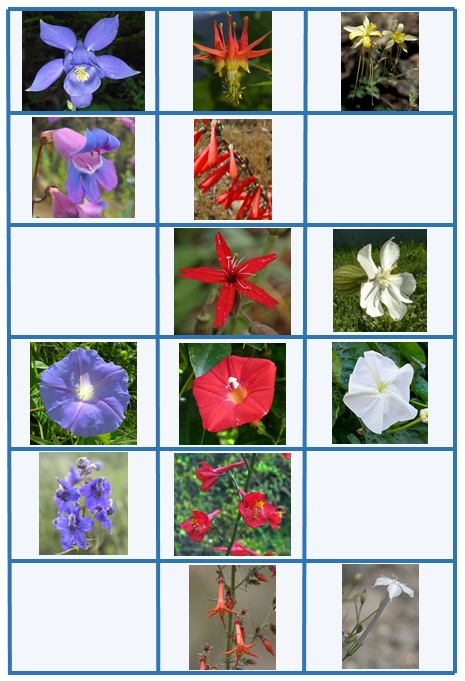
Over time, these selective pressures can lead to pollination syndromes. These are suites of floral traits that have co-evolved with specific groups of pollinators. For example, a plant might evolve a long, tubular shape specifically to accommodate the beak of a hummingbird.
However, evolution is not always about extreme specialization. Many plants maintain a level of generalization to ensure reproductive success. This is explained by the most effective pollinator principle, which suggests that floral traits are primarily shaped by the pollinator that is most efficient at transferring pollen. While a flower might attract several visitors, its physical structure will ultimately reflect an adaptation to the visitor that provides the most reliable service.
Driving Speciation Through Isolation
Pollinator-mediated selection is a powerful engine for speciation—the formation of new and distinct species. For this process to work, there must be a degree of isolation. When pollinators develop specific preferences, they create floral isolation, a phenomenon where different groups of plants are visited by different pollinators.
This behavior reduces the transfer of pollen between different lineages, effectively cutting off gene flow (the transfer of genetic material between populations). As these populations become genetically isolated, they can diverge into entirely new species, driven by the specific needs and behaviors of their unique pollen vectors.
Key Facts
- Pollinator-mediated selection occurs when animal foraging behavior influences the evolution of plant traits.
- Floral traits include color, shape, scent, nectar amount, and corolla tube dimensions.
- Pollination syndromes are groups of traits that have co-evolved with specific pollinators.
- The most effective pollinator principle states that flowers adapt most strongly to the pollinator that transfers the most pollen.
- Speciation can be driven by pollinator behavior that creates reproductive isolation between plant populations.
Summary of Evolutionary Drivers
| Concept | Primary Mechanism | Impact on Plant Diversity |
|---|---|---|
| Pollination Syndrome | Co-evolution with specific vectors | Leads to specialized floral morphologies |
| Most Effective Pollinator Principle | Adaptation to the most efficient pollen transferrer | Balances specialization with efficiency |
| Floral Isolation | Reduced inter-lineage pollen transfer | Promotes speciation and genetic divergence |
Frequently Asked Questions
What is the difference between gymnosperms and flowering plants?
The primary difference is that flowering plants (angiosperms) produce seeds that are enclosed within a fruit, whereas gymnosperms have seeds that are not enclosed.
How do pollinators influence the shape of a flower?
Pollinators select for traits that make foraging easier or more rewarding. For instance, if a specific insect has a long proboscis, plants with longer corolla tubes may be more successfully pollinated, leading to the evolution of that shape.
Can a single plant species have multiple pollination syndromes?
Yes. Some genera exhibit high diversity in pollination syndromes among their species, suggesting that pollinators are a primary force driving both diversity and the evolution of new species.
What is floral isolation?
Floral isolation is a consequence of pollinator behavior where certain pollinators prefer specific flowers, thereby reducing the movement of pollen between different plant lineages.
Why is gene flow important in this process?
Gene flow is the transfer of genetic material between populations. When pollinator behavior reduces this flow, it allows populations to become genetically distinct, which is a necessary step for speciation.