Podiata: The Evolutionary Clade of Pseudopodial Eukaryotes
In the complex study of eukaryotic evolution, scientists continuously refine how they group organisms based on shared ancestry and physical traits. One such proposed grouping is the Podiata, a clade defined by Thomas Cavalier-Smith in 2012. This group brings together diverse lineages of single-celled organisms that share a fundamental biological characteristic: the use of specialized cellular extensions for movement and feeding.
The defining feature of Podiates is the possession of pseudopodia—temporary, arm-like projections of the cell membrane. In the ancestral state of this clade, these were filose (thread-like) and were primarily utilized for benthic feeding, which is the process of consuming organic matter from the bottom of a body of water.
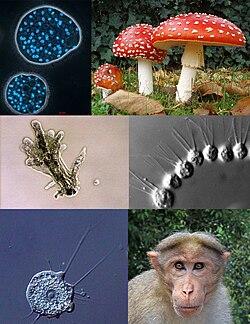
Key Facts
- Proposed by: Thomas Cavalier-Smith in 2012.
- Defining Trait: Possession of pseudopodia used for benthic feeding.
- Major Subgroups: Includes Amorphea and CRuMs.
- Exclusions: Ancyromonadida is specifically excluded from this grouping.
- Distinction: Unlike Podiates, closely related ancyromonads and malawimonads lack pseudopodia.
Taxonomic Structure and Composition
The Podiata clade is designed to encompass several significant subgroups of eukaryotes. By grouping these organisms, researchers can better understand the transition between different modes of cellular structure and feeding.
The Amorphea Lineage
A primary component of the Podiata is the Amorphea. This broad group is highly diverse and includes several well-known biological entities:
- Amoebozoa: Organisms characterized by their amoeboid movement.
- Obazoa: A clade that further branches into various lineages.
- Opisthokonta: A major group that includes animals and fungi.
- Apusomonads and Breviates: Specialized flagellated protists.
The CRuMs Group
In addition to Amorphea, the Podiata clade includes organisms assigned to CRuMs. The inclusion of both Amorphea and CRuMs under the Podiata umbrella suggests a shared evolutionary origin linked to their structural capabilities.
Comparative Analysis of Eukaryotic Lineages
To understand where Podiata fits in the tree of life, it is helpful to compare them with their closest relatives. While they share some similarities with other protists, the presence of pseudopodia serves as a critical dividing line in their classification.
| Group | Possess Pseudopodia? | Feeding/Movement Style |
|---|---|---|
| Podiata | Yes | Benthic feeding via filose pseudopodia |
| Ancyromonadida | No | Non-pseudopodial |
| Malawimonads | No | Non-pseudopodial |
Frequently Asked Questions
What are Podiata?
Podiata is a proposed clade of eukaryotes, first described by Thomas Cavalier-Smith in 2012, that groups together organisms such as Amorphea and CRuMs based on their shared use of pseudopodia.
What is the primary characteristic of Podiates?
The primary characteristic is the possession of pseudopodia, which were ancestrally filose (thread-like) and used for feeding on the bottom of aquatic environments (benthic feeding).
Which organisms are included in the Amorphea subgroup?
Amorphea includes the Amoebozoa, Obazoa, Opisthokonta (which encompasses animals and fungi), as well as apusomonads and breviates.
Why are Ancyromonadida excluded from Podiata?
Ancyromonadida are excluded because they do not possess the pseudopodia that define the Podiata clade, distinguishing them from the other members of the group.
How do Podiates differ from malawimonads?
While they are closely related, Podiates possess pseudopodia for feeding and movement, whereas malawimonads do not.