Plaza Sarmiento: A Historic Urban Hub in Rosario, Argentina
Located in the heart of Rosario, Santa Fe, Plaza Sarmiento is more than just an urban square; it is a vital intersection of history, culture, and modern city life. Named in honor of Domingo Faustino Sarmiento, a former Argentine president and a champion of public education, the plaza serves as a central landmark for residents and visitors alike.
Today, the plaza is a bustling center of activity, functioning as a strategic transport node for numerous urban and short-distance interurban bus lines. It is also the sole route for the Rosario trolleybus system's Line K, making it one of the most accessible points in the downtown area.
Key Facts
- Location: Downtown Rosario, Santa Fe, Argentina.
- Honoree: Domingo Faustino Sarmiento, pioneer of Argentine public education.
- Former Site: Originally the location of Laguna Sánchez.
- Key Monument: Statue of Sarmiento sculpted by Victor de Pol (1911).
- Transport: Hub for interurban buses and the Line K trolleybus.
Geography and Layout
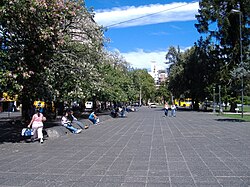
Plaza Sarmiento occupies nearly two city blocks, bounded by San Luis, Entre Ríos, Mendoza, and Corrientes streets. The square is bisected from east to west by San Juan Street, creating a balanced urban layout that integrates seamlessly with the surrounding city grid.
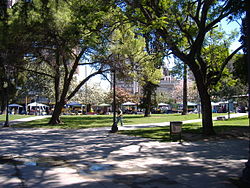
Beyond its role as a transit hub, the plaza maintains a vibrant community atmosphere, hosting an outdoors artisans' fair several days a week, where local craftspeople showcase their work.
The History of Plaza Sarmiento
From Lagoon to Public Square
The transformation of the site began in the mid-19th century. The area was originally occupied by a small lagoon known as Laguna Sánchez. In 1867, following a request from the municipal government, the governor of Santa Fe, Nicasio Oroño, ordered the expropriation of the land to establish a public square.
By 1874, the Deliberative Council of Rosario commissioned terrain plans for the site, which was then referred to as Plaza Urquiza. To prepare the land for public use, the lagoon was emptied and refilled with earth.
Official Establishment and Development
The site was officially declared a public plaza on March 16, 1875. During its early development, a portion of the southern edge was granted to the national state for the construction of Normal School No. 1. While the remaining southern block was formally named Plaza Iriondo, it became known to the general public as Plaza Santa Rosa.
The Sarmiento Monument
The plaza's identity was solidified on December 20, 1911, with the inauguration of the monument dedicated to Domingo Faustino Sarmiento. The centerpiece is a statue created by the sculptor Victor de Pol, commemorating Sarmiento's legacy as a promoter of education in Argentina.
Plaza Sarmiento Summary
| Feature | Details |
|---|---|
| Coordinates | 32°56′58″S 60°38′33″W |
| Boundaries | San Luis, Entre Ríos, Mendoza, and Corrientes St. |
| Primary Monument | Statue of Domingo Faustino Sarmiento by Victor de Pol |
| Historical Predecessor | Laguna Sánchez |
| Public Transit | Interurban buses and Trolleybus Line K |
Frequently Asked Questions
Who was Domingo Faustino Sarmiento?
Domingo Faustino Sarmiento was a former president of Argentina and is widely recognized as a pioneer and promoter of public education within the country.
What was the site of the plaza before it became a square?
Before its development into a public plaza, the area was occupied by a small lagoon called Laguna Sánchez.
Which public transport options serve Plaza Sarmiento?
The plaza is a major transport node for various urban and short-distance interurban bus lines, and it is the only route served by the Rosario trolleybus system's Line K.
When was the monument in the plaza inaugurated?
The monument and statue of Domingo Faustino Sarmiento, sculpted by Victor de Pol, were inaugurated on December 20, 1911.
What activities take place at the plaza today?
In addition to being a transit hub, the plaza hosts an outdoors artisans' fair on several days each week.