Plant Litter: The Vital Foundation of Ecosystem Nutrient Cycling
Beneath the towering canopies of forests and the expansive reaches of grasslands lies a critical, often overlooked component of the natural world: plant litter. Also known as leaf litter, tree litter, or duff, this layer of dead organic material—comprising leaves, bark, needles, twigs, and other plant debris—serves as the biological engine for much of our planet's terrestrial ecosystems.
Falling onto the top layer of soil, known as the O-horizon (the "organic" horizon), plant litter plays a multifaceted role. It acts as a protective blanket that preserves soil moisture, mitigates erosion, and provides essential concealment for various small animals. Beyond these physical benefits, litter is a primary driver of ecosystem dynamics, serving as a key indicator of ecological productivity and a predictor of regional nutrient cycling and soil fertility.
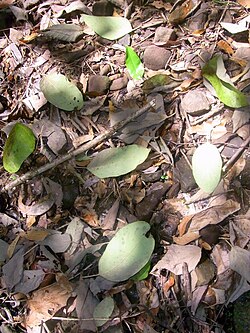
Characteristics and Variability of Litterfall
Litterfall refers to fresh, undecomposed plant debris that is easily identifiable by species and type. This material can range from delicate leaves and reproductive organs like stamens to larger items such as cones, seeds, nuts, and logs. Scientists categorize this material based on size:
- Coarse litter: Items with a diameter greater than 2 cm.
- Fine litter: Material smaller than 2 cm.
The composition of litter is heavily influenced by the ecosystem type. In forests, leaf tissues typically account for approximately 70% of litterfall, though the proportion of woody litter tends to increase as a forest matures. In contrast, grasslands produce very little annual litterfall because they lack significant aboveground perennial tissue, making their litterfall levels nearly equal to their net primary production.
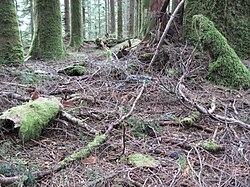
The Layers of the O-Horizon
In soil science, the organic horizon is classified into three distinct layers based on the stage of decomposition:
- L layer: Fresh litter.
- F layer: Partially decomposed organic matter.
- H layer: The organic horizon below the F layer, characterized by fully decomposed organic matter that is often indiscernible.
![Litter fall in the North American Baldcypress Swamp Network, Illinois to Louisiana, 2003[6]](/images/37/72/37721e2c9f3c22a3093d430352ba6a4c7fa1ca7206462e4ca010aa114c8ec483.gif)
Geography also plays a decisive role in litter accumulation. Latitude significantly affects both the rate of decomposition and the resulting thickness of the litter layer. In tropical rainforests, rapid decomposition leads to a relatively thin litter layer. Conversely, in boreal forests, slower decomposition rates result in the accumulation of a thick layer known as a mor.
The Role of Litter in Habitat and Food Webs
Plant litter provides a complex microhabitat for a diverse array of organisms. For many species, the damp, protected environment beneath fallen leaves is essential for survival.
Detritivores and Decomposers
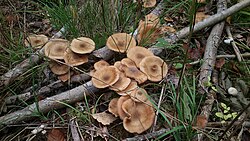
Decomposers, including microfauna, bacteria, and fungi, are the primary architects of the nutrient cycle. By consuming litterfall, these organisms break down simple carbon compounds into water (H₂O) and carbon dioxide (CO₂). Crucially, they release inorganic ions, such as nitrogen and phosphorus, back into the soil. This process allows surrounding plants to reabsorb the nutrients, sustaining the continuous cycle of life.
Shelter and Forage for Animals
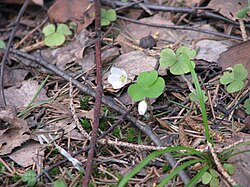
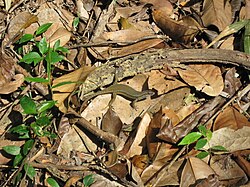
Larger animals also rely heavily on the litter layer. Amphibians, such as salamanders and caecilians, often inhabit the moist microclimate under leaves for much of their life cycles. Birds, such as the ovenbird of eastern North America, utilize litter for both foraging and nesting material.
In certain environments, litterfall provides a critical energy source during harsh seasons. In boreal forests, lichen litterfall is a primary winter food source for deer and elk. In the inland rainforests of British Columbia, the shedding of "hair" lichens (such as Bryoria and Alectoria) from the canopy onto the snow creates what researchers call the "manna effect." This process provides a continual replenishment of edible fragments that sustain mountain caribou when other food sources are buried under deep snow.
Nutrient Cycling and Senescence
The movement of nutrients through an ecosystem is a highly regulated process. During leaf senescence (the aging and shedding of leaves), plants reabsorb a portion of their nutrients. This means the nutrient concentration in litterfall often differs from that of mature foliage. Plants in nutrient-poor environments tend to produce litter with lower nutrient concentrations because they are more efficient at reabsorbing constituents before the leaves fall.
As decomposition progresses, it produces humus—a decomposition-resistant organic substance that forms the bulk of organic matter in lower soil profiles. The total amount of nutrient uptake in an ecosystem can be defined by the following relationship:
Annual storage of nutrients in plant tissues + replacement of losses from litterfall and leaching = total ecosystem uptake.
Non-Terrestrial Litterfall: Coastal Dynamics
Litter does not stay exclusively on land. Through fluvial (river) processes and mangrove ecosystems, terrestrial litter is transported to the coast. Once there, it is processed by tides, microbes, and crabs. In some tidal regimes, crabs are the dominant force, potentially consuming up to 80% of available leaf material. Research has shown that the carbonaceous contribution of specific plant species can be traced through crab digestion into the surrounding sediment and water.
![Litterfall and throughfall collectors at beech stand in Thetford, East Anglia[27]](/images/fd/e4/fde462f1b5416222ef0e3f2ac81865ce6288cde8e13387933a664c44abaff638.jpg)
Scientific Collection and Analysis
To understand the role of litter in nutrient cycling, ecologists measure litterfall production and chemical composition. A common tool for this is the litterbag—a container placed in a specific area to collect falling debris over a set period. By measuring the total mass relative to the area of the bag, researchers can calculate the litterfall rate (kg m⁻¹ yr⁻¹).
| Feature | Description | Ecosystem Impact |
|---|---|---|
| Litter Types | Coarse (>2cm) and Fine (<2cm) | Determines habitat structure |
| O-Horizon Layers | L (fresh), F (partially decomposed), H (fully decomposed) | Defines soil organic profile |
| Decomposition | Breakdown by fungi, bacteria, and microfauna | Releases N and P for plant uptake |
| Climate Effect | High latitude = thicker litter (mor) | Influences nutrient cycling speed |
| Animal Role | Provides shelter and "manna" forage | Supports biodiversity and winter survival |
![A budget for organic matter in a mature (120-year-old) Scots pine monoculture (SWECON site). Based on data from Andersson et al.(1980). Units are in kg of organic matter per ha. Att. -attached; Surf. -surface; min. -mineral; and veg. -vegetation[20]](/images/66/18/6618ead192c7a31b4f4af5dbf6b237019c4f1856f69f8548b3869fe2ad2c43d2.gif)
Frequently Asked Questions
What is the difference between coarse and fine litter?
Coarse litter refers to plant debris, such as twigs or logs, that is larger than 2 cm in diameter, while fine litter refers to smaller materials like leaves or needles.
How does latitude affect the thickness of the litter layer?
Litterfall thickness generally declines as latitude increases. In tropical regions, rapid decomposition keeps the layer thin, whereas in boreal regions, slower decomposition leads to thick accumulations known as a mor.
What is the "manna effect" in forests?
The manna effect describes the process in certain rainforests where lichen fragments shed from the canopy onto the snow, providing a continuous and accessible food source for animals like mountain caribou during winter.
Can human activities impact forest litter?
Yes. Practices such as forest litter raking for animal husbandry can affect soil processes. While managed properly, repeated removal of biomass can influence soil development (pedogenesis).
Why do plants in low-nutrient areas have different litter?
Plants in nutrient-poor areas often reabsorb a higher proportion of nutrients during leaf senescence, resulting in litterfall that has a lower nutrient concentration than the foliage of plants in richer soils.